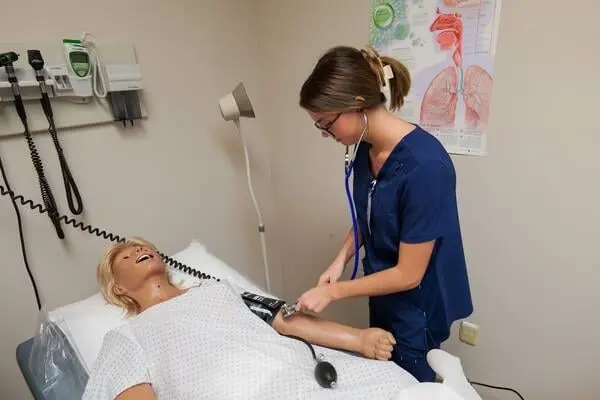
The long-awaited debut of Workforce Pell has finally arrived, marking a historic shift in how federal financial aid can be utilized for career and technical education. Later this month, Ivy Tech Community College in Indiana will begin distributing federal financial aid dollars to eligible students enrolled in an intensive, eight-week clinical medical assistant program. When these funds are finally disbursed, Ivy Tech will cement its place as one of the first colleges in the nation to successfully accept Pell Grants as direct payment for short-term, career-oriented training programs that have historically been excluded from federal student aid.
This milestone follows years of intense policy debate and legislative maneuvering. In the summer of 2025, Congress officially passed legislation allowing federal Pell dollars—traditionally reserved for low-income students pursuing degrees lasting a full academic year or longer—to be applied toward programs spanning between eight and 15 weeks in length. That legislative breakthrough triggered a frantic, yearlong sprint for federal and state leaders. Together, they had to figure out how to collaborate, establish regulatory frameworks, and determine precisely which short-term programs would qualify for official approval by state governments and the U.S. Education Department.
Despite the enthusiasm surrounding the policy, the nationwide rollout has been remarkably slow so far. Since the policy officially took effect on July 1, the Education Department has approved just 21 programs across a modest six states: Florida, Indiana, Iowa, Nebraska, North Carolina, and Texas. For higher education institutions, however, realizing the promise of Workforce Pell means that the work does not stop simply because a program receives formal federal and state approval.
College leaders across the country are discovering that they must ensure their financial aid offices and complex software systems are fully equipped to process federal grants for these non-traditional, short-term programs. Furthermore, institutions must actively communicate this brand-new funding opportunity to prospective students, many of whom have never needed to fill out the Free Application for Federal Student Aid, or FAFSA, when enrolling in short-term, career-focused certificates or credentials.
"This is a pretty substantial policy change and policy implementation ask of states and institutions and even ED," said Iris Palmer, director of the community college initiative at New America, a left-leaning think tank based in Washington. Now, as more programs gradually win approval, Palmer notes that "this is going to take a huge lift from [college] financial aid offices."
Colby Shank, vice president of financial aid and student accounts at Ivy Tech, knows that reality firsthand. He recalled that the sprawling community college system submitted an application for its certified medical assistant program on July 7 and received official approval on August 19.
"We were very excited, but then we also recognized that that’s just kind of the beginning," Shank said, acknowledging that there were immediately "a lot of questions on how we take approval to implementation."
When Ivy Tech officially begins accepting Pell Grants for the program in late October, the funds will initially support up to a dozen students on just one of the community college system’s 19 campuses. However, Shank noted that he expects two other Ivy Tech campuses to adopt Workforce Pell for the certified medical assistant program in the near future.
"It’s rewarding to be able to offer a new avenue for financial aid when, on the short-term-program side, the options have historically been fairly limited," Shank said. "But right now, we expect it will be a lot of manual work."
Shank explained that Ivy Tech’s existing administrative software system is not natively configured to process financial aid for programs of this short duration. Because of these technical limitations, financial aid officers are forced to manually identify eligible students, calculate their specific Workforce Pell awards based on individual financial need and the exact length of their program, and personally oversee the disbursement of funds to the students.
"We’re starting to explore what it will take with our software systems to scale this, which is what we want to see happen," Shank said. "लेकिन in the meantime, to get us off the ground, we plan on doing quite a bit of this work manually just so that we can serve students as quickly as possible."
Other institutions have experienced different operational hurdles. Iowa Central Community College, whose 14-week emergency medical technician program earned the distinction of being the first in the country to be approved for Workforce Pell, did not face the exact same financial aid software challenges as Ivy Tech. Stacy Mentzer, the college’s vice president of instruction, pointed out that Iowa Central already offered a Pell-eligible commercial driver’s license program. Because of that prior experience, their administrative systems were already capable of calculating financial aid based on clock hours rather than traditional credit hours, making it significantly easier to implement the adjustments required for Workforce Pell.
Iowa Central is currently in the process of recruiting students for its upcoming instructional cycle. Administrators are actively encouraging prospective enrollees to complete the FAFSA to determine if they qualify for the newly available Workforce Pell funds, with plans to launch the course as soon as a sufficient cohort is enrolled, Mentzer said.
For other institutions, the primary challenge lies less in administrative infrastructure and more in public awareness. College leaders emphasize that eligible students will not benefit from the program if they do not know it exists.
Janet N. Spriggs, president of Forsyth Technical Community College in North Carolina, said she has been deeply focused on figuring out how to inform as many local students as possible about the new funding option. Forsyth Tech has successfully secured approval for six distinct programs: welding, certified nursing assistant training at both levels one and two, a fire academy, emergency medical technician training, and an electrical line worker program. Spriggs noted that Forsyth Tech plans to enroll its first wave of students utilizing Workforce Pell starting in January.
"It is another pathway forward for our students to be able to get the skills that they need for careers that are going to give them family-sustaining and family-thriving wages," Spriggs said. "The most important part is not letting this wonderful opportunity be a secret."
To combat this, Spriggs explained that Forsyth is actively collaborating with high school career coaches, local employers, and various community organizations to spread the word about Workforce Pell far and wide. While she readily acknowledges that the federal initiative will not solve financial barriers for every single student or support training for every imaginable career pathway, she remains optimistic about its localized impact.
"For those that it will," Spriggs said, "it’s going to have a huge impact."