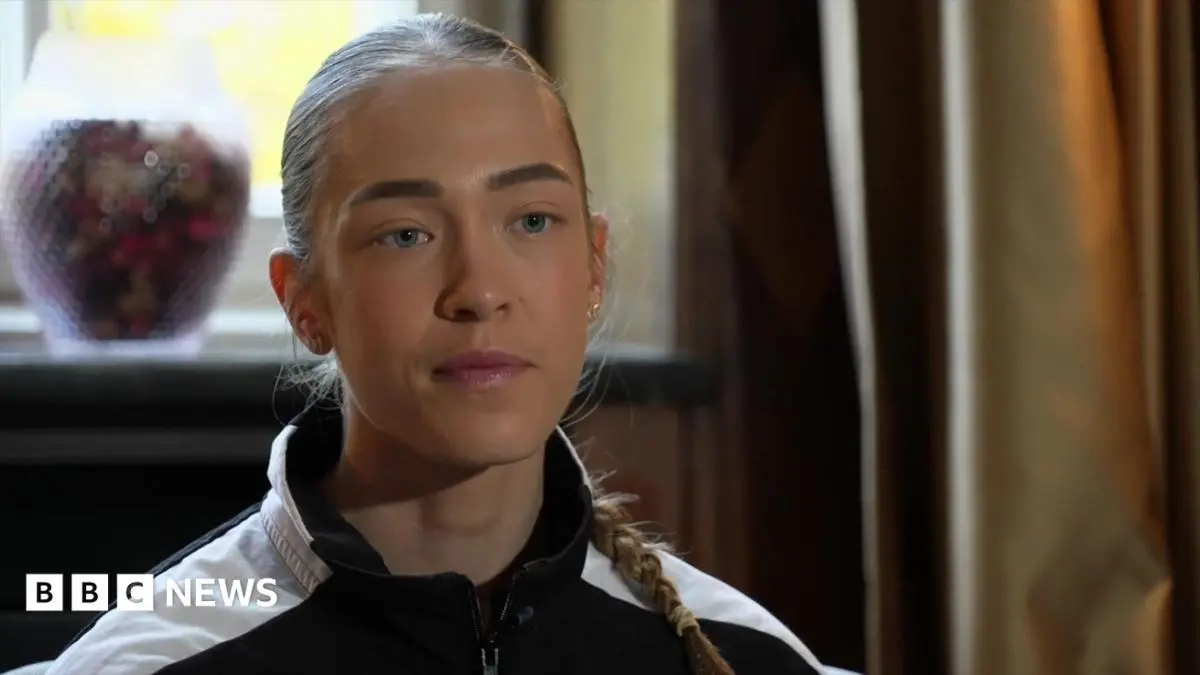
An Australian athlete has publicly admitted that her singular focus on victory led her to make a profound lapse in judgment, placing other competitors at risk during a high-profile endurance event. Joanna Wietrzyk, a 24-year-old athlete who holds a world record in the rapidly growing sport of Hyrox, has spoken out about the controversy that erupted after she continued to compete despite suffering a severe bout of diarrhoea during a race in Beijing last September.
Speaking exclusively to the BBC ahead of her return to competitive sports, Wietrzyk reflected on the incident, acknowledging that her internal drive to win had clouded her decision-making process at a critical juncture. "It was my decision to continue racing, so I take full responsibility for that," she stated. When pressed on why she chose to remain on the course rather than withdrawing immediately, she admitted that her tunnel vision had blinded her to the consequences for those around her. "I didn’t really think about those around me… the decision that I made in hindsight was the wrong decision, and I’m truly sorry for everyone that I did affect."
The incident has proven to be a watershed moment for the athlete, who described the subsequent global backlash as "traumatic." Wietrzyk revealed that the intensity of the public scrutiny even led her to consider walking away from the sport entirely.
Hyrox, which has seen its popularity explode since its founding in Hamburg in 2017, is a grueling test of physical endurance that blends running with specialized fitness stations. Participants must complete eight one-kilometre runs, alternating with functional fitness exercises such as the sled push, burpee broad jumps, indoor rowing, and lunges while carrying heavy sandbags. The nature of the competition—which is primarily held in indoor arenas—means that athletes operate in close proximity, frequently sharing equipment and navigating the same lanes.
Roughly halfway through the race in Beijing, Wietrzyk suffered an unexpected bout of diarrhoea. In the aftermath, images capturing the physical reality of the situation were shared widely across social media platforms, sparking an intense debate about hygiene, sportsmanship, and the responsibility of race officials. When asked whether organizers should have intervened to remove her from the course, Wietrzyk noted that at the time, no officials had encouraged or mandated that she stop.
The fallout from the event has forced a change in organizational policy. Hyrox co-founder Moritz Fürste issued a formal apology, acknowledging that it was a mistake for the organization not to react immediately when the situation became apparent. In response to the incident, new rules have been implemented, granting race directors the explicit authority to remove athletes from the competition if their bodily fluids—including vomit, urine, or faeces—pose a contamination risk or threaten the welfare of the athlete or their fellow competitors.
Wietrzyk, who initially appeared defiant in a now-deleted Instagram post, issued a formal apology the week following the Beijing event. She subsequently announced that she would forfeit the win and retroactively withdraw from the competition. As she prepares to return to the circuit in Hamburg this Friday, she admitted to feeling "nervous" about the transition back into the competitive environment. She expressed a deep desire that this single, high-profile incident would not come to define her entire athletic career. "I don’t want it to become my identity," she said.
Reflecting on the immediate aftermath of the race, Wietrzyk expressed regret over her initial social media posts, which included phrases such as "Go hard or go home" and "a win is a win." At the time, she was seeking medical attention at a hospital and, by her own account, was operating in "fight or flight mode." She explained that she had been severely disconnected from how her actions and subsequent words would be perceived by the public. "I didn’t really account for what the public would have seen that situation as," she admitted.
Addressing critics who questioned whether her eventual apology was merely an exercise in damage control, Wietrzyk maintained that she had not anticipated the sheer scale of the global exposure the incident would receive. "I needed those days to reflect on it and process it," she stated, adding that the intensity of the reaction was entirely unexpected.
The incident has also provided a window into the intense, often narrow-minded psychology of elite athletes. Wietrzyk spoke candidly about the mindset required to compete at the highest level, noting, "They’re so hyper-vigilant on winning and doing the best that they can, putting their training to good use and showcasing their fitness to the world." However, the ordeal has forced her to recalibrate her priorities. "There is more to life than just racing and just winning," she said.
The digital vitriol directed at Wietrzyk following the leak of the images became so severe that Hyrox felt compelled to issue a statement, warning that anyone sending abuse or threats to the athlete would be banned from future events. Wietrzyk confirmed that while there had been an outpouring of support from those concerned for her well-being, the experience had also highlighted the "toxic" nature of modern social media. The scrutiny extended beyond just the athlete herself, with Wietrzyk noting that her family had also been targeted with threats.
"It was very eye-opening for me to see the effect of social media nowadays, especially from someone who’s 24, just out there racing," she said. Despite acknowledging her own error in judgment, she remained firm in her belief that the intensity of the backlash was disproportionate. "Yes, I did make the wrong decision, but I don’t believe I should have received such backlash and such scrutiny online… at the end of the day, I’m only human."
In the weeks following the event, Wietrzyk attempted to disconnect from the internet and "isolate herself from the world," though she acknowledged that such a strategy is not sustainable in the long term. As she looks toward the future and her return to competition, she believes that the experience, while painful, will ultimately test and strengthen her resolve. "I still have so much more I can achieve in this sport," she concluded, "so I think, for me, my mental resilience is the key here where I can inspire others through what I’ve been through."