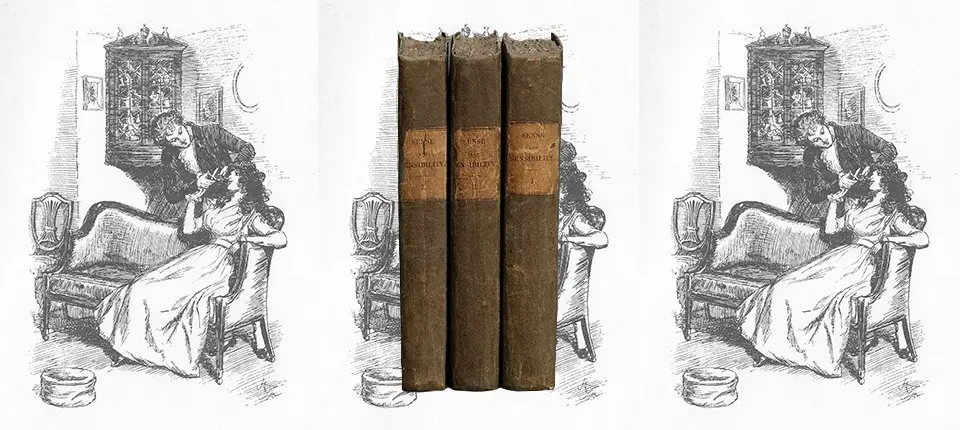
TODAY: In 1811, Jane Austen’s Sense and Sensibility is published.
As the literary world reflects on the enduring power of classic fiction, today marks a monumental anniversary in the history of English literature. It was on this day in 1811 that Jane Austen’s very first published novel, Sense and Sensibility, officially made its way into the hands of the reading public, quietly laying the groundwork for a literary legacy that would span centuries and captivate millions of readers across the globe.
The publication of Sense and Sensibility by Thomas Egerton of the Military Library in Whitehall represented a significant, albeit understated, milestone. At the time of its initial release, the novel did not bear the name of its actual author. Instead of proudly displaying Jane Austen on the title page, the original editions simply noted that the work was written "By a Lady." This veil of anonymity was common for female writers of the era, many of whom faced societal pressures and critical biases that sought to diminish the professional standing of women in the arts. Yet, despite the lack of a known authorial identity, the brilliance of the narrative could not be entirely concealed, and the book slowly began to find its audience within Regency society.
The genesis of Sense and Sensibility stretches back well before its late-autumn publication date in 1811. Austen had originally drafted an early epistolary version of the story, titled Elinor and Marianne, between 1795 and 1796 when she was still in her late teens. Over the subsequent decade and a half, she undertook significant revisions, transforming the epistolary manuscript into a polished third-person narrative and giving it the iconic title by which it is known today. This careful and deliberate refinement process allowed Austen to sharpen the psychological depth of her characters and hone the brilliant, biting social satire that would become her signature style.
At its core, the novel explores the contrasting temperaments and romantic trials of the Dashwood sisters, Elinor and Marianne. Elinor, representing "sense," is governed by prudence, reason, and emotional restraint, carefully managing her feelings even in the face of profound disappointment and heartbreak. Marianne, representing "sensibility," embodies unchecked emotion, romantic idealism, and intense passion, yielding entirely to her impulses and suffering deeply as a result. Through the parallel journeys of these two distinct sisters, Austen crafts a complex exploration of the balance between intellectual judgment and emotional authenticity, forcing both characters—and the reader—to recognize the limitations and virtues of their respective worldviews.
The novel’s themes of financial precariousness, social standing, and the constraints placed upon women in nineteenth-century England remain as resonant today as they were over two centuries ago. When Mr. Dashwood passes away, leaving his second wife and their daughters in a vulnerable financial position due to the strictures of the era’s inheritance laws, the family is forced to navigate a rigid social hierarchy where marriage is often the only viable means of economic security. Austen uses this dramatic tension not merely to construct a compelling romance, but to offer a sharp, observant critique of the society around her, highlighting the absurdities of class, propriety, and matrimonial calculation.
In the decades following its modest debut, Sense and Sensibility has transcended its origins as a three-volume sensation of the Regency period to become a cornerstone of global literature. Its characters have been endlessly analyzed by scholars, adapted for stage and screen, and celebrated by generations of devoted readers who continue to find fresh insights within its pages. On this anniversary of its publication, the literary internet and communities of book lovers worldwide pause to celebrate the enduring brilliance of a novel that proved, even anonymously, that a sharp wit and deep emotional intelligence could alter the course of literary history forever.