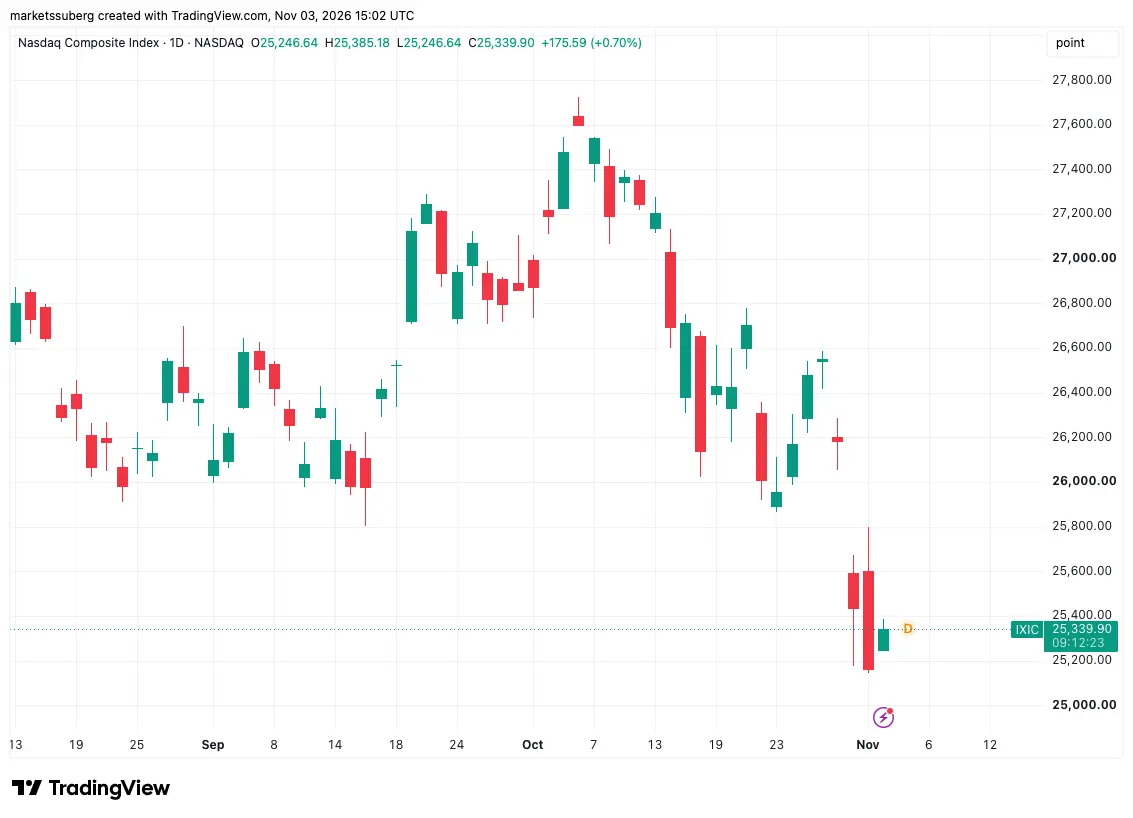
Bitcoin headed higher at Tuesday’s Wall Street open, finding a degree of stability as tech stocks initiated a rebound in the shadow of mounting uncertainty surrounding the United States midterm elections.
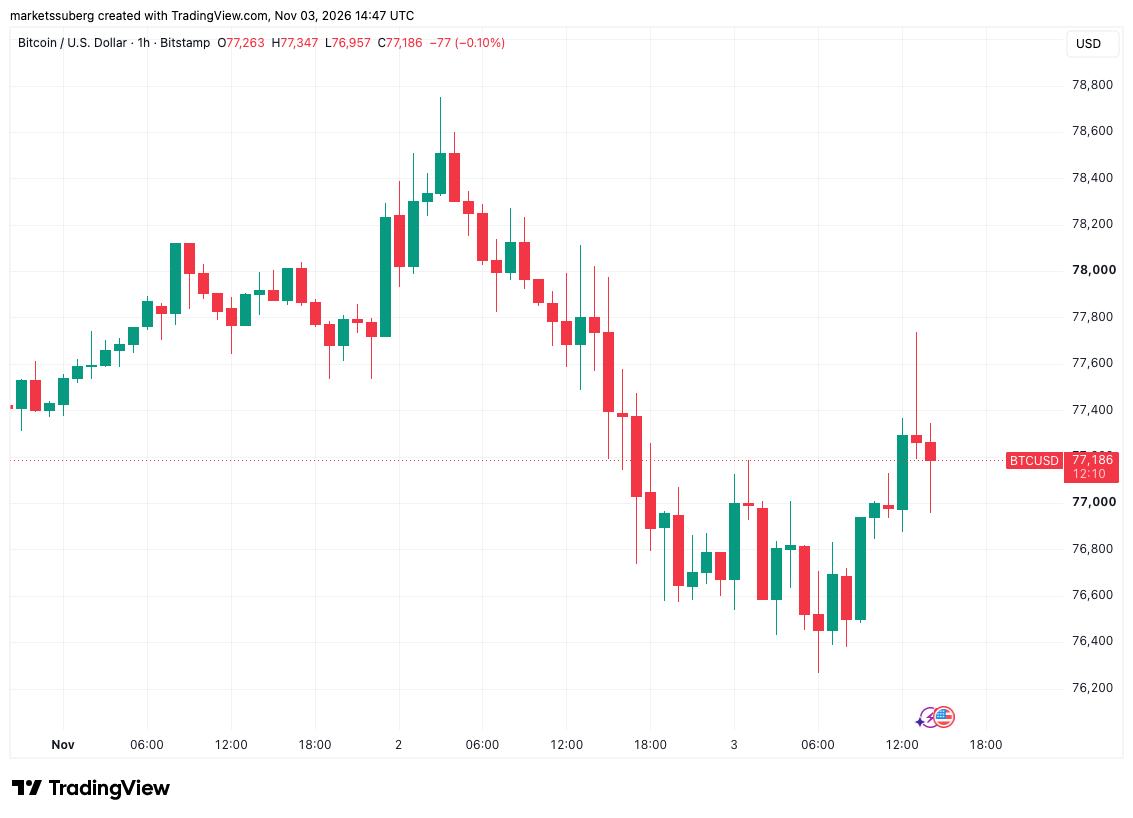
Data from TradingView indicated that the BTC/USD pair was hovering around the $77,000 mark. The leading cryptocurrency managed to retain local lows near $76,300 that were initially established late last week, reflecting a period of relatively cooled price volatility despite broader macroeconomic and political headwinds rippling through global financial markets.
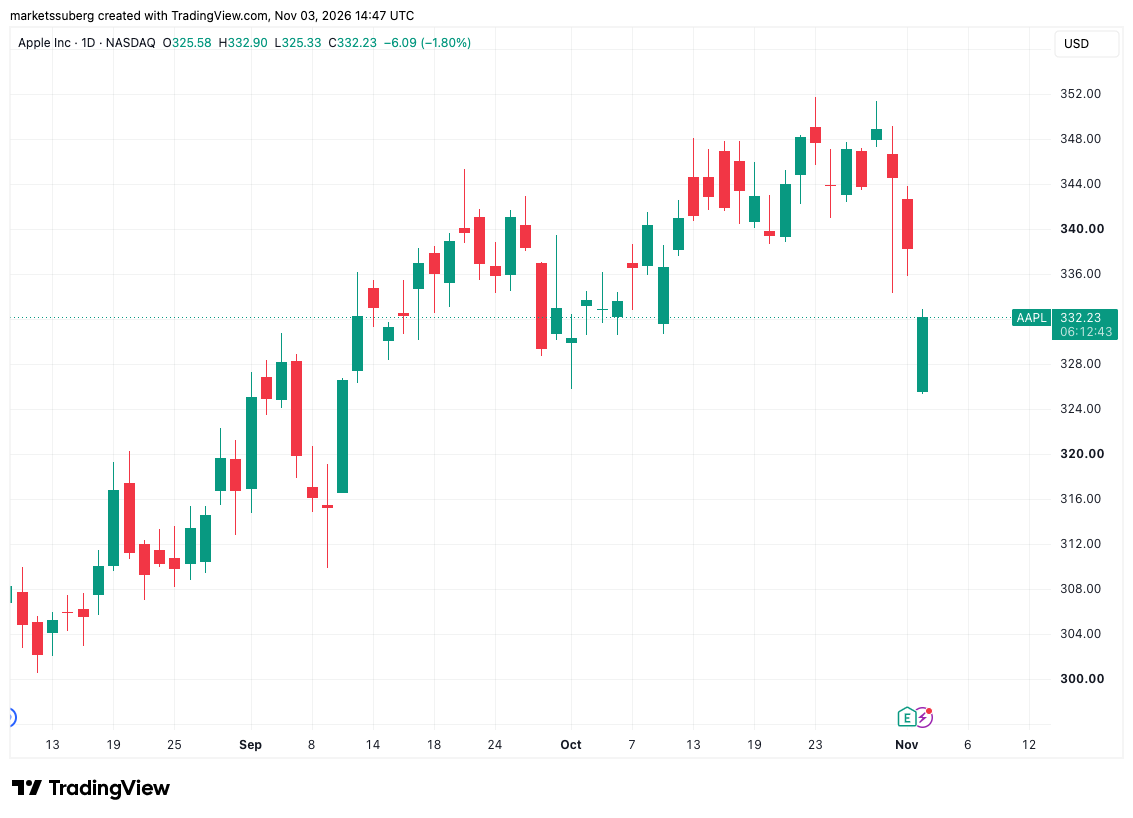
The start of the US trading session presented investors with a complex web of conflicting forces. Traditional equities attempted to find their footing following a turbulent stretch driven by corporate earnings reports and shifting political dynamics. Apple shares, for instance, sought to pare earlier losses after falling roughly 4% in premarket trading. The tech giant revealed that it was forecasting gross margins of 45% to 46% for the upcoming December quarter, representing a notable decline from the 47.9% reported in the previous quarter. The company attributed the tighter margins directly to rising memory-chip costs, underscoring the ongoing supply chain and input cost pressures facing major technology firms.
At the same time, financial markets were heavily weighing the potential fallout of the US midterm elections on the future balance of power in Congress. While early polling data suggested the possibility of significant Democratic gains, a number of political analysts and market strategists quickly cautioned that the actual election results could prove considerably less decisive than headline polls implied.
Tobin Marcus, head of US policy and politics at equity research firm Wolfe Research, highlighted this skepticism in comments to CNBC. Investors, he noted, appeared to harbor a significant dose of doubt regarding whether the ultimate electoral outcome would tilt as heavily in favor of Democrats as pre-election polling suggested. Wolfe Research added that public polls were likely overstating overall Democratic strength, leaving room for unexpected shifts in legislative control.
The broader stock market had already begun reflecting this unease at the start of the week. Both the benchmark S&P 500 and the tech-heavy Nasdaq Composite Index finished Monday down 0.5% and 1.1%, respectively. Analysts at trading resource The Kobeissi Letter argued that overarching US political uncertainty—rather than narrow concerns over artificial intelligence spending alone—was acting as the primary catalyst driving recent market weakness.
In a post on social media platform X, The Kobeissi Letter asserted that the market was actively pricing in a major transformation of the domestic political landscape. According to the analysis, the growing likelihood of a divided Congress pointed toward frequent legislative impasses, creating an operational environment where future policy decisions would become substantially less predictable for corporations and investors alike.
A change in the political landscape always brings with it a distinct layer of uncertainty, and financial markets notoriously despise unpredictability. From an objective standpoint, market participants appeared to be in the process of pricing in a full two years of political gridlock, setting the stage for a potentially constrained legislative agenda in Washington.
Oil Digests Latest Iran Strike After 7% Drop
While equities and digital assets navigated political and corporate earnings headwinds, the global energy market was busy digesting fresh geopolitical developments in the Middle East. Oil prices brushed off a targeted US military attack on Iran’s Qeshm Island, which serves as a critical military control outpost overlooking the vital Strait of Hormuz oil shipping route.
The military action unfolded just days after US Secretary of State Marco Rubio indicated that President Donald Trump remained open to resolving the ongoing US-Iran conflict through diplomatic channels. Those diplomatic overtures had initially triggered a sharp 7% sell-off in West Texas Intermediate (WTI) crude oil on Monday, as traders dialed back risk premiums associated with potential supply disruptions in the region.
WTI crude experienced notable whipsaw action over the multi-day stretch. The commodity had initially surged toward $98.80 per barrel before experiencing a sharp downward correction that pulled prices below the $94 threshold by Tuesday. This decline marked the lowest valuation for WTI crude oil since October 15, illustrating how quickly energy markets can reprice geopolitical risk when diplomatic signals shift against a backdrop of volatile global supply chains.