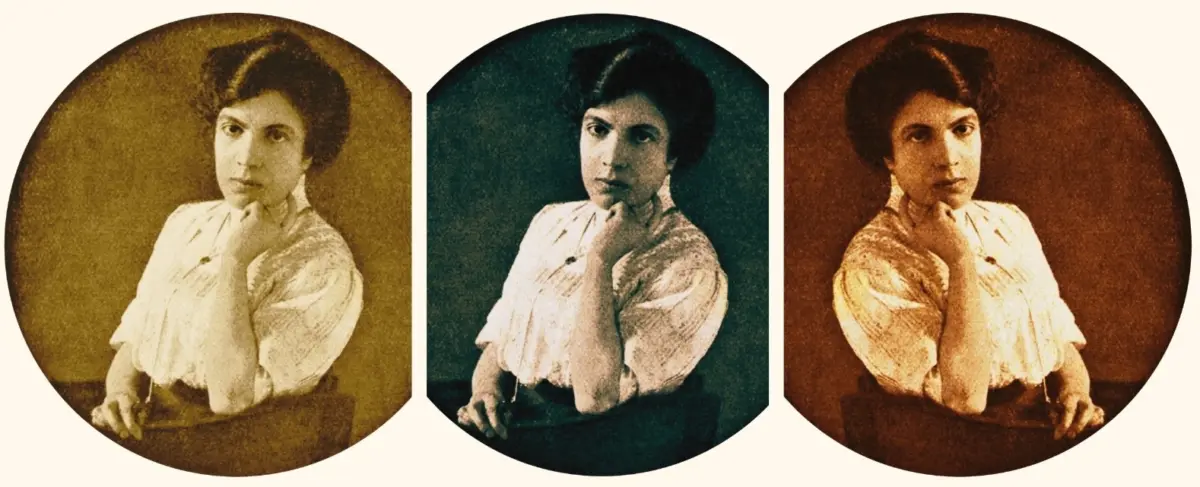
“Cross the sea,” a young Grazia Deledda wrote in an evocative poem addressed to Americans in 1893, “and tell everyone that the island of Sardinia is still waiting to be discovered and known.”
Now, approaching the 100th anniversary of her monumental 1926 Nobel Prize for Literature, the powerful legacy of Deledda stands like a literary apparition, waiting once again for the English-reading world and American audiences to finally rediscover her remarkable works.
Long before she captured the global literary spotlight, Deledda was hailed in American newspapers in 1902 as the “George Sand of Sardinia”—though, as literary historians often note, George Sand never won the Nobel Prize. Deledda’s unique role in regional and international literature occupied an entirely distinct realm. “Why should anyone feel doubtful about the future of fiction,” an American reviewer enthusiastically noted at the turn of the century, “when young authors are rising every day, to show us the world as it appears.”
That world, however, appeared vastly differently to a young female writer living in the rugged, isolated interior of Sardinia around the dawn of the 20th century. After completing her elementary education and subsequently studying with a private tutor, she began publishing short stories as a teenager. This early literary ambition arrived much to the chagrin of her traditional family, who viewed such an intellectual pursuit as entirely scandalous for a young woman of her social standing. Undeterred by the societal pressure of her surroundings, Deledda never looked back.
Her foundational first novel, Fior di Sardegna (Flowers of Sardinia), was published in 1892 when she was just twenty-one years old. Her narrative scope quickly expanded into daring social territory. “In the ‘stranger’s room’ of the Porru house a woman sat crying,” began Deledda’s celebrated novel, After the Divorce, published in 1902. The work critically questioned the hidden realities of Sardinian life for women, exploring these themes some five hundred years after Eleonora d’Arborea famously reigned as the de facto leader of the island. Notably, it stood as one of the very first European novels to deal directly with the controversial theme of divorce.
Over the course of her prolific career, she went on to write more than sixty works of fiction, nonfiction, and poetry.
In 1926, Deledda achieved international acclaim when she became only the second woman in history to be awarded the Nobel Prize in Literature. According to the official citation from the Nobel committee, the honor was bestowed for her “idealistically inspired writings which with plastic clarity picture the life on her native island and with depth and sympathy deal with human problems in general.”
Despite this supreme international recognition, contemporary outside perspectives on her subject matter were often dismissive. An American news story from the era remarked that it was “strange” the author continued to write obsessively about Sardinia even after she relocated her life to Rome. The article went on to assert that “Sardinia holds very little interest for the world in general. It is not rich in artistic treasures as is most of Italy. Sardinia’s charm, perhaps, is its isolation; civilization has not as yet dulled it or cut it down to the standardized pattern.”
Such dismissive attitudes toward Sardinia and its ancient, multifaceted contributions to Mediterranean and Italian literature plagued the reception of Deledda’s work for her entire life. Fellow Sardinian literary giants—including political philosopher Antonio Gramsci, Emilio Lussu, Salvatore Satta, and contemporary writer Michela Murgia—subsequently encountered similar cultural biases regarding their homeland and its distinct societal fabric.
This outsider gaze was famously exemplified by the notorious British novelist D.H. Lawrence, who arrived in Sardinia in 1921 for a journey that lasted less than a week. Lawrence proudly took no notes during his travels. From his initial arrival in the port city of Cagliari—which he described as a “naked town rising steep”—he and his wife navigated local buses and trains, traveling first to Mandas, “where there is nothing to do,” and then onward to Sorgono, a place he characterized as full of “degenerate aborigines, the dirty-breasted host” and “sordid villagers.” They crossed the imposing mountain ranges until they finally arrived in Nuoro, the birthplace of Deledda, only to declare that “there is nothing to see.”
Upon returning to his temporary home in Sicily, where he claimed he similarly found himself with nothing to do, Lawrence wrote Sea and Sardinia in just a few weeks, completing it in a single draft. Originally conceived under alternative titles like Sardinian Films or Sketches in Sardinia, the book leaned heavily on his seasoned novelist’s instincts. Lawrence conjured breathtaking scenes of untamed nature, particularly during the rattling train ride through the Gennargentu mountains, while praising ordinary Sardinians for being “downright” and “manly.” In many respects, however, Sea and Sardinia served as a theatrical stage for a series of humorous yet abrasive character sketches, reading at times as though Lawrence were merely casting actors for a fictional novel rather than chronicling a real culture.
Lawrence’s travelogue was first introduced to American readers through excerpts published in Dial magazine. Soon after, the New York Times launched its own review with high praise, declaring that anyone wishing to travel to Sardinia “would find no better guidebook.”
Even a century after its 1921 publication, Sea and Sardinia stubbornly remained the single best-known English-language work concerning the island—overshadowing the vast and profound literary output of Grazia Deledda herself.
Yet, during that exact same pivotal year of 1921, Deledda published another major three-book novel, standing just five years away from capturing her historic Nobel Prize. Her cultural footprint was already expanding into other artistic mediums; five years earlier, in 1916, legendary Italian theatrical diva Eleonora Duse had starred in the era’s prominent silent film adaptation Cenere, which was directly based on Deledda’s famous novel of the same name.
Reflecting on Deledda’s deep-rooted life in Nuoro, Sardinian literary critic and author Giulio Angioni coined a specific term to describe the conjoined role of history and personal memoir running through her narratives, referring to it as her “sort of sardography.” This unique literary vision—capturing Sardinia strictly through the authentic interior lives and stories of Sardinians themselves—offered a brilliant cultural splendor that remained quietly awaiting discovery by outsiders across generations.
“To discover a prolific, but forgotten novelist is like stumbling upon a new species,” social critic Todd Gitlin wrote in the Chicago Tribune in 1998. Gitlin’s commentary followed an accidental encounter when his wife discovered a novel by Grazia Deledda resting on a lonely, forgotten pile of books in the corner of a New England bookstore. Prompted by the find, he began searching extensively for the rest of her bibliography, discovering that her books were largely relegated to small independent and university presses. He publicly declared that a comprehensive “literary resurrection” of the once-famous writer, celebrated for the immense “emotional power” of her prose, was long overdue. Even after an exhaustive search, he managed to locate only five of her thirty-three translated novels.
Following her death on August 15, 1936, her grieving family members made a startling discovery inside her personal study. Tucked away in the drawer of her desk was a carefully wrapped package containing the complete, pristine manuscript of Cosima, written entirely in ink on delicate light-blue paper. Titled after her own middle name, Cosima serves as a deeply intimate, semi-autobiographical account detailing a young woman’s arduous, solitary struggle to carve out an identity as a writer within the confines of Nuoro, surrounded by the colorful yet stifling characters of the village and the surrounding countryside.
Much like the protagonist of her final manuscript, Deledda always preferred to let her written words stand entirely on their own merits, shunning the trappings of celebrity. True to form, during the official Nobel Prize award ceremony in Stockholm, Deledda simply accepted the prestigious honor without delivering the customary acceptance lecture.
Back home, the reaction from her island’s premier newspaper, L’Unione Sarda, was remarkably subdued. The publication tucked a brief, few-line mention of her historic Nobel win away at the bottom right-hand corner of the front page, appearing almost as hesitant and ambivalent toward Deledda’s unprecedented global success as her own family had been decades prior. Later, when the Italian dictator Benito Mussolini invited the newly minted Nobel laureate to his official office in Rome, his attempts to engage the fiercely independent author in political discourse fell completely flat. Deledda brushed past the political pleasantries entirely, using the rare audience simply to request that Mussolini grant the release of a friend of hers from Nuoro who was currently being held as a political prisoner.
With that single request handled, Deledda promptly left the building.
A century after her meteoric rise to international acclaim, the enduring legacy of the Sardinian Nobel Laureate remains an enigma to many contemporary readers, yet it ultimately stands as a priceless literary treasury well overdue for another profound read.