Rain has long been celebrated as the great equalizer in Formula 1. In a sport where technological supremacy and aerodynamic perfection often dictate the pecking order long before the lights go out, slippery, unpredictable weather strips away the engineering advantages and places the burden of success squarely back onto the driver. When the heavens open, raw talent, spatial awareness, and adaptability suddenly matter far more than horsepower and downforce.
Formula 1 spectacularly rekindled that legendary wet-weather magic at the Autódromo José Carlos Pace during the São Paulo Grand Prix in Brazil. As the historically dominant Mercedes-AMG Petronas team dramatically faltered under the changing elements, 2025 world champion Lando Norris displayed exceptional poise and tactical discipline through a chaotic, drying, and ultimately re-drenched circuit to secure his third Grand Prix victory of the season.
For a sport that has increasingly found its wet-weather weekends paralyzed by caution, the action-packed weekend at Interlagos offered a refreshing departure from recent trends. In recent years, heavy downpours have frequently halted on-track action entirely or led to rolling starts behind the safety car, frustrating fans who miss the days of drivers wrestling high-powered machines through sheets of spray. In São Paulo, however, the conditions hit a sweet spot: the track was slick enough to punish every minor miscalculation, yet visibility remained manageable enough to allow drivers to actually race.
The dramatic tone for the weekend was established early during Saturday’s qualifying sessions, which previewed both the perils and the excitement of wet-weather competition. A torrential downpour struck the circuit ahead of the schedule, forcing officials to delay the start of Q1 by more than an hour as standing water pooled across the asphalt. Once the track was deemed safe enough for action, the fans were treated to one of the most compelling and unpredictable qualifying hours of the entire season.
The slippery conditions allowed wily veterans to punch well above their weight class. Seasoned champions and veteran competitors like Fernando Alonso and Nico Hülkenberg masterfully dragged their statistically subpar machinery deep into the final pole-position shootout. They were joined in the high-stakes segment of Q3 by Red Bull’s heavily scrutinized young prospects, Liam Lawson and Isack Hadjar, culminating in a remarkable session where nine different teams successfully locked out spots in the top ten.
The fight for pole position ultimately came down to a frantic, one-lap shootout as a fresh storm front aggressively closed in on the circuit. Norris initially set the pace, putting his McLaren on provisional pole position with a brilliant flyer. Mercedes driver George Russell, eager to respond and snatch the top spot away, found his momentum disrupted when he was impeded on track by Williams driver Alex Albon. Reassured by the Mercedes pit wall that he had time to cycle around and squeeze in one more fast lap before the heavy rain returned, Russell pushed forward.
However, the approaching meteorological shift proved too rapid. The heavy showers arrived ahead of schedule, rendering a second flying lap completely impossible. Frustrated by the missed opportunity and the traffic that ruined his initial attempt, Russell lashed out over the team radio in a fit of total exasperation. The outburst was sharp enough that Mercedes team principal Toto Wolff had to personally intervene over the comms, stepping in to calm his visibly shaken driver down before parc fermé procedures.
The Cream Rose to the Top
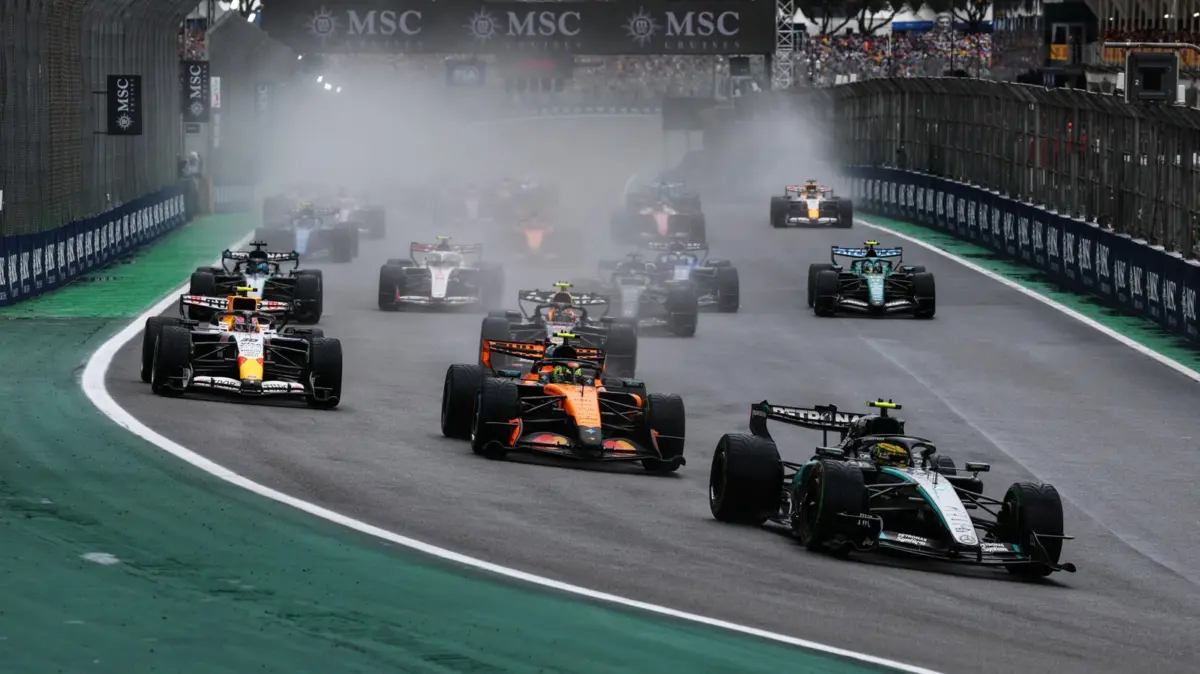
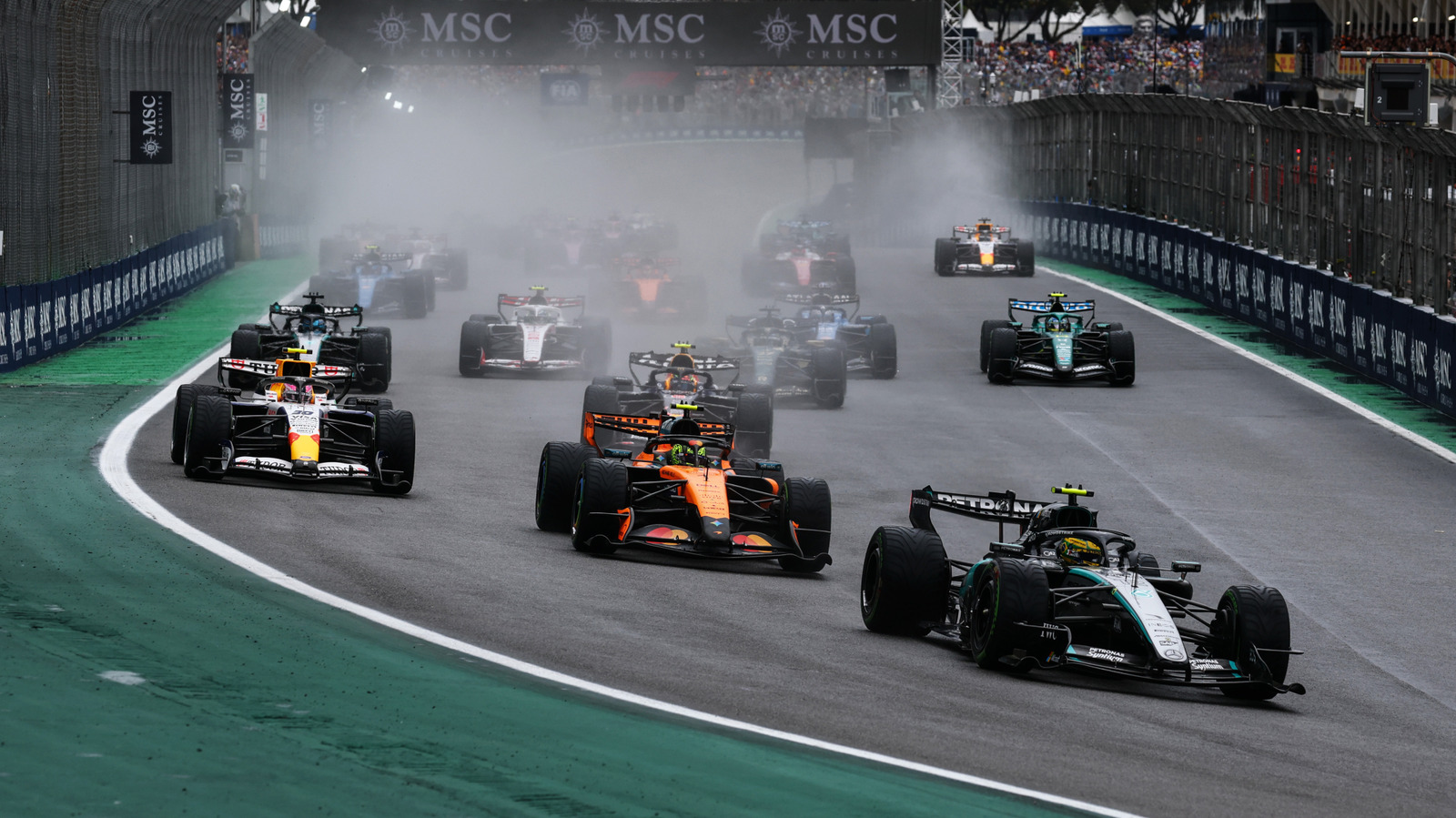
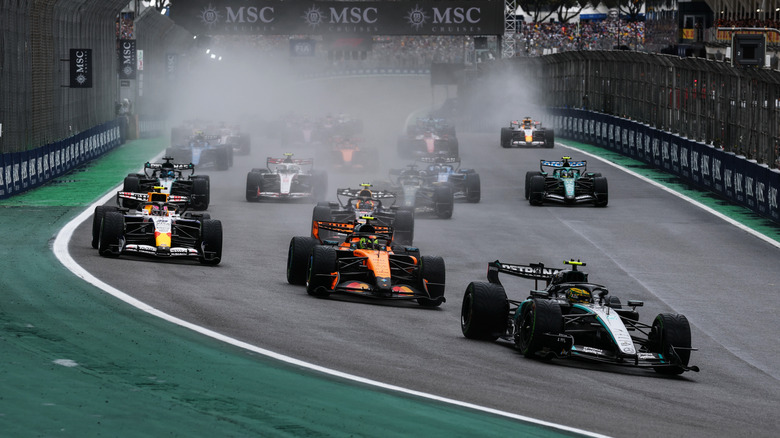
Sunday’s Grand Prix brought entirely new variables as the field lined up on the grid with the track still damp from earlier precipitation, forcing every team to start the 71-lap race on intermediate Pirelli tires. The chaotic nature of wet starts immediately claimed a victim near the front when Mercedes’ newly crowned world champion, Kimi Antonelli, suffered a frightening moment on his reconnaissance lap, sliding off the slick asphalt.
Despite that pre-race scare, Antonelli lined up in his second-place grid box with strong traction when the lights went out. He launched brilliantly off the line, sweeping past pole-sitter Norris into Turn 1 to grab the early race lead. Red Bull’s Liam Lawson slotted neatly into second position behind the young Italian, while absolute chaos erupted further down the order.
Lewis Hamilton, starting from a dismal 20th place after a miserable Saturday, put on a masterclass in racecraft right from the opening moments. The seven-time world champion sliced and diced his way through the midfield traffic with surgical precision, climbing all the way up to ninth position by the end of the opening lap alone. Max Verstappen, similarly buried deep in the pack after starting 21st, carved his way forward in tandem, fighting his way up to 11th by the completion of the first tour.
As the race progressed, F1’s elite tier of drivers leveraged their wet-weather prowess not just through pure speed, but through superior tactical adaptation to the evolving track surface. Hamilton, constantly communicating with the Ferrari pit wall and reading the trajectory of the drying asphalt, became the brave pioneer on lap 14. He called for a switch to slick dry-weather tires, becoming the very first driver in the 71-lap contest to make the gamble.
Driving his 400th career Formula 1 start, the seasoned champion was immediately the fastest driver on the circuit as he carved into the deficit. However, the transition was fraught with peril. With the ambient and track temperatures lingering at low levels, getting the slick tires up into their optimum operating window proved to be an immense tightrope walk. Russell spun his Mercedes at the pit lane exit immediately following his own stop, while several other drivers were caught out, sliding wide and spearing harmlessly into the asphalt runoff areas lining the circuit’s trickiest corners.
The most consequential moment of the race’s middle phase befell early leader Antonelli. On lap 19, the young Mercedes driver lost control and spun his car around at Turn 1, handing the race lead directly back to Norris. Over the team radio, Antonelli reported a strange mechanical anomaly, noting that his Mercedes was mysteriously pulling heavily to one side under hard acceleration. It was a gremlin that would soon plague his teammate’s car as well.
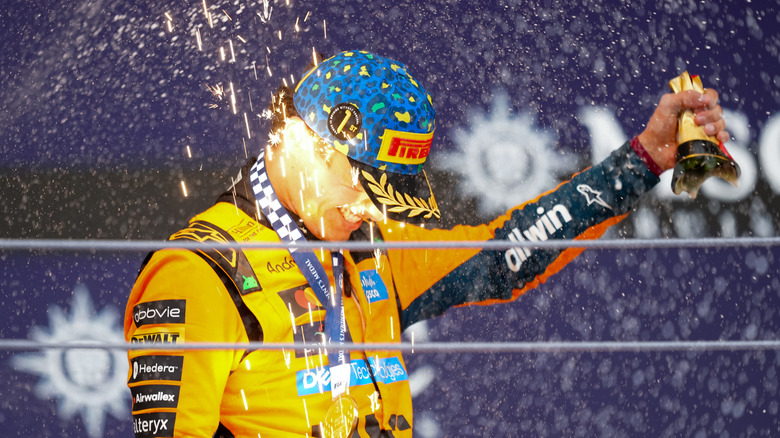
With the race settling into a rhythm, the unpredictable Brazilian weather threw one final curveball with just ten laps remaining on the board. Rain began to fall once again, slicking the tarmac and threatening to upend the finishing order in the closing stages. Norris handled the meteorological shift with absolute composure, calmly swapping back onto intermediate tires and managing his gap to cruise comfortably to the checkered flag. The only minor mishap of the winner’s afternoon occurred on the podium, where an overly enthusiastic celebration led to Norris accidentally shattering his heavy champagne bottle during the festivities.
Mercedes Stumbled to Its Coronation
While the São Paulo weekend ultimately served as the backdrop where Mercedes officially clinched the World Constructors’ Championship, the legendary factory team did not exactly put on a championship-caliber weekend. The sheer volume of operational errors in the garage and mistakes behind the wheel made it impossible to ignore the team’s struggles, even though Russell and Antonelli managed to salvage respectable fourth and fifth-place finishes, respectively.
In the immediate aftermath of the race, team engineers and drivers alike admitted they were baffled by the erratic behavior of their W-series cars. Speaking to The Race about the strange handling traits that caused multiple spins and mechanical complaints, Russell offered some insight into the team’s working theories.
"Maybe it’s a small theory because we were the first ones onto the inters, even just on that outlap on the driest track, you damage the tires and the temps go up and you’re in this negative spiral," Russell explained. "As of now, that’s the only explanation."
The sheer unpredictability that wet weather injects into a Grand Prix weekend remains one of motorsport’s greatest spectacles, making it all the more disappointing that fans so rarely get to witness it under modern regulations. The São Paulo Grand Prix thankfully fell into that elusive golden window where the track surface could remain thoroughly soaked without the massive rooster tails of spray completely destroying on-track visibility.
When the FIA previously trialed experimental wheel covers during testing in 2024 to combat visibility issues caused by water spray, the initiative ultimately proved ineffective. The engineering flaw behind the concept was that it ignored the fundamental reality of modern ground-effect aerodynamic floors, which naturally suck massive amounts of water beneath the chassis and violently shoot it out of the rear diffuser. Short of drastically reducing the top speeds of the cars—a solution that would face universal rejection from both fans and competitors—heavy rain will likely remain a logistical and safety hurdle for modern F1.
For one weekend in Brazil, however, the elements aligned perfectly to deliver a masterclass in driver skill, tactical bravery, and unpredictable racing.