Tesla’s nascent and highly anticipated robotaxi service has officially extended its reach into Texas, launching operations in San Antonio. The deployment marks another incremental step for the electric vehicle manufacturer as it tests and
scales its autonomous vehicle network in real-world urban environments.
According to reports from Axios and official announcements from the company, the service went live on Monday morning in Alamo City. The official Tesla Robotaxi account signaled the launch on social media with a concise advisory posted early Monday, stating that the service would be available starting at 5:00 AM. Simultaneously, updates to the official Tesla robotaxi webpage confirmed that autonomous vehicles are now active within San Antonio, adding another pin to the company’s growing map of operational cities.
Despite the official rollout, precise operational figures remain under wraps. It is not yet clear how many autonomous vehicles Tesla currently has in operation within the San Antonio market, nor has the company disclosed the exact size of the initial fleet deployed to the city’s streets. The phased and quiet nature of the launch reflects Tesla’s broader strategy for deploying its autonomous technology, which has typically relied on gradual market entry rather than massive, overnight saturation.
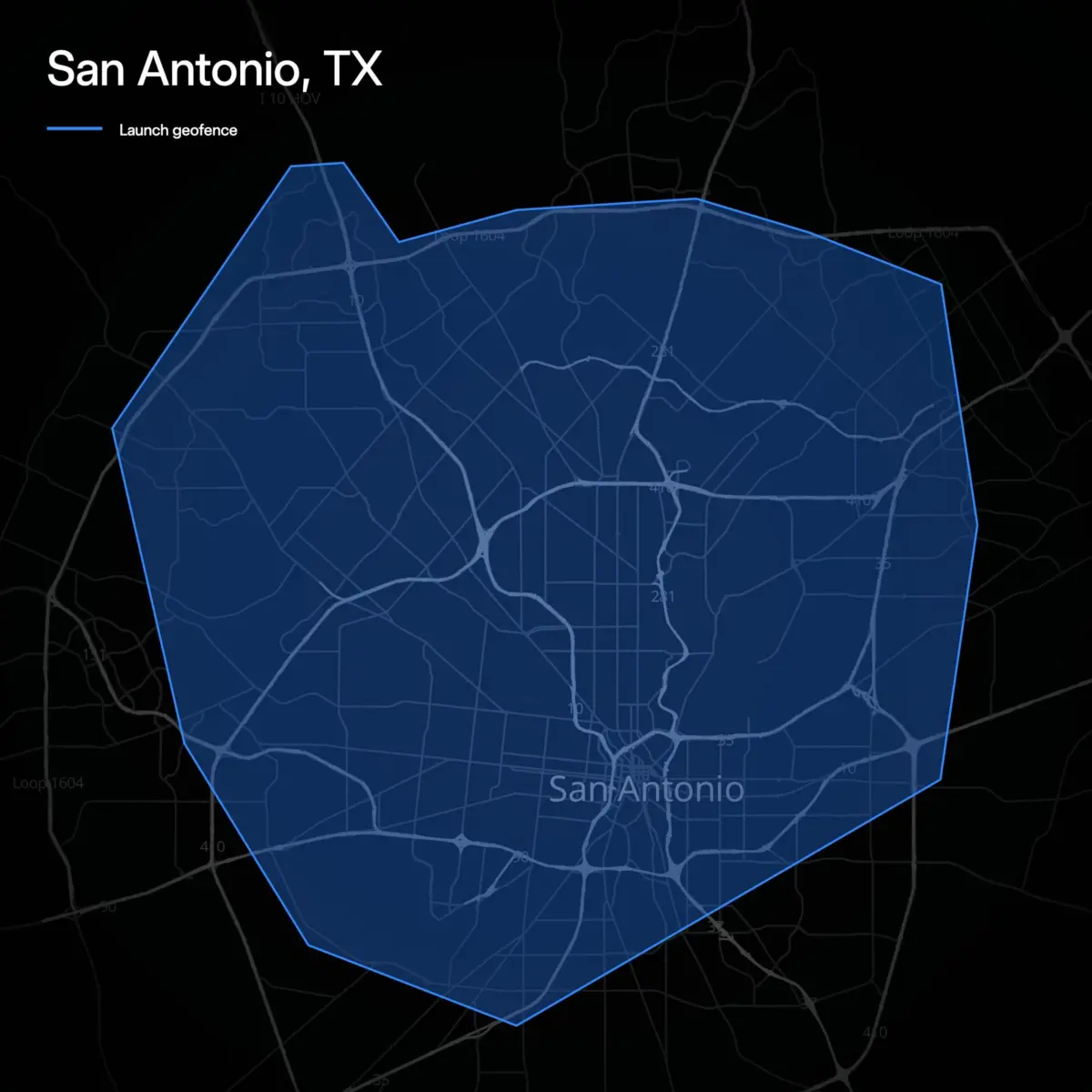
The newly established service area covers key commercial and cultural districts across the city. According to geographical details released alongside the launch, Tesla’s autonomous coverage zone encompasses downtown San Antonio and surrounding neighborhoods. The service area extends northwestward, covering major destinations such as The Shops at La Cantera and the Six Flags Fiesta Texas amusement park on the city’s Northwest Side.

However, the current operational boundaries leave out notable high-traffic transit hubs. Most prominently, Tesla’s robotaxis do not yet service the San Antonio International Airport. This exclusion draws a clear operational contrast with established competitors in the autonomous vehicle sector, such as Waymo, whose robotaxi operations already service the airport and provide direct transportation options for incoming and outgoing travelers. The omission of airport routes indicates that Tesla’s current geographic geofencing in San Antonio is focused primarily on urban commuting, shopping, and entertainment districts rather than major aviation gateways.
The expansion into Alamo City is part of Tesla’s broader effort to establish a commercial footprint for its autonomous ride-hailing vision. As the company continues to refine its Full Self-Driving technology and deploy specialized vehicles tailored for ride-hailing networks, expanding into additional Texas markets serves as a crucial testing ground. San Antonio joins a select group of cities where Tesla is attempting to prove the viability and safety of its autonomous fleet in diverse traffic conditions and urban layouts.

Industry observers and transportation analysts are closely monitoring the rollout to gauge consumer adoption, regulatory reception, and the technical reliability of Tesla’s autonomous platform in real-world scenarios. As the fleet logs its initial miles in San Antonio, attention will likely turn to whether the company plans to expand its service boundaries to include the airport and other outlying residential and commercial sectors in the near future.