In the four years that have passed since designer Daniel Herranz presented Sentimiento, his inaugural collection for the brand Zurce at Mexico Fashion Week, he has steadily evolved his label from a predominantly knitwear-focused venture into a sophisticated wardrobe of everyday pieces. Today, Zurce is recognized for a distinct design language that elevates daily wear through an unexpected, avant-garde take on fabrics, silhouettes, and proportions.
Finding a distinct and recognizable identity is, of course, an integral part of building any contemporary fashion brand, particularly during its fragile early years. To achieve this, Herranz has turned inward and backward over the course of his last three collections, adopting a deeply literary approach. He has consistently looked to classic books that have left a lasting, formative impression on him for creative inspiration, translating the themes, motifs, and emotional resonance of literature into tangible garments.
The first literary touchstone for the brand was Prosper Mérimée’s dramatic novella Carmen, which provided a rich tapestry of color, passion, and theatrical flair. This was followed by a collection inspired by the haunting, magical realist story of Juan Rulfo’s Pedro Páramo, grounding the brand’s aesthetic in deeply resonant cultural and literary landscapes. For his latest presentation, Herranz chose to draw inspiration from the whimsical, surreal, and trippy universe of Lewis Carroll’s Alice’s Adventures in Wonderland, a text with profound personal significance for the designer.
“It was the first book my grandmother gave me when I was around seven,” Herranz recalled, reflecting on the deeply personal roots of the collection. “Revisiting the text, interpreting it in a different way, and bringing it into what we do at the brand was incredible.”
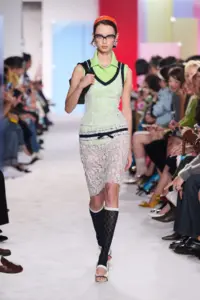
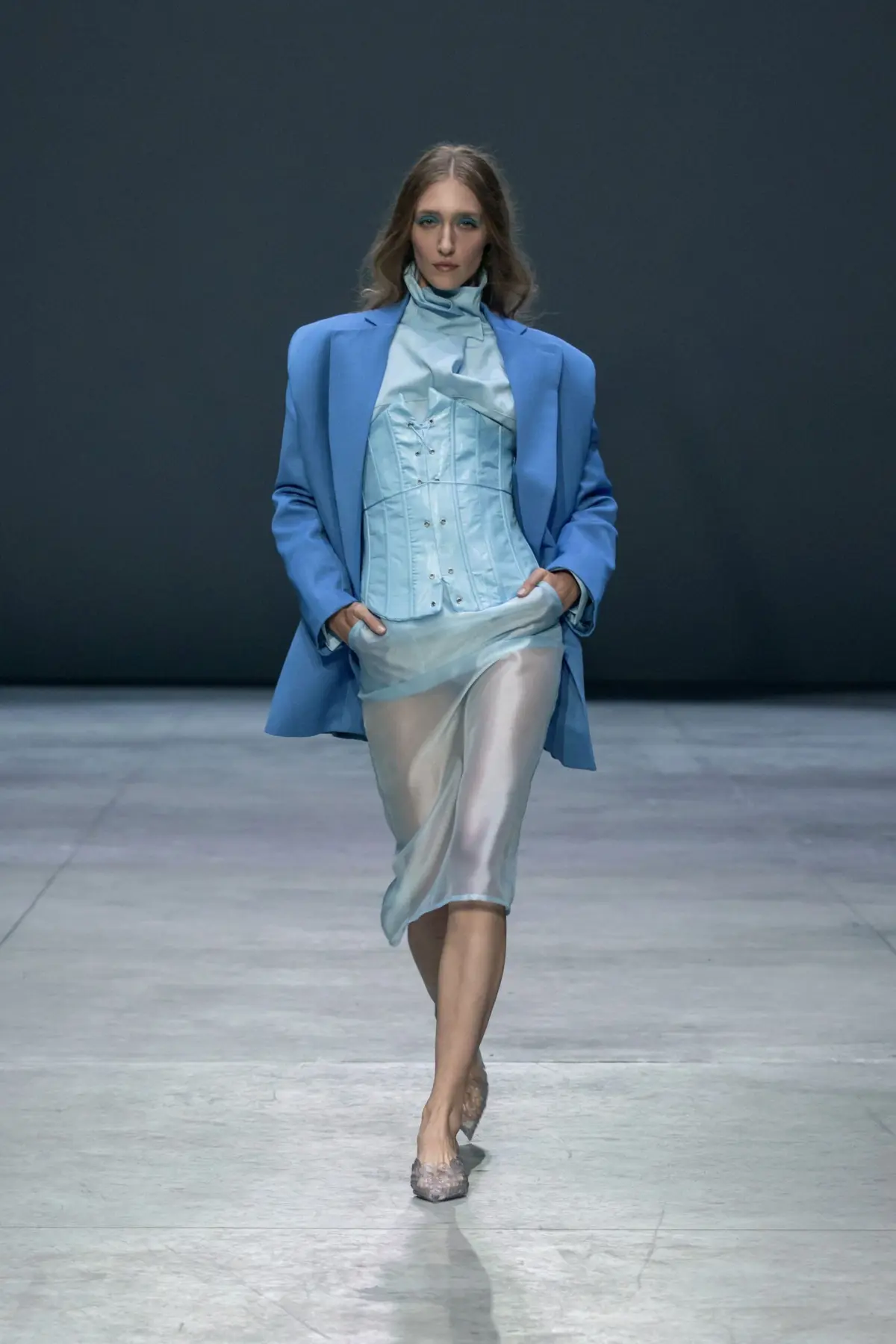
The resulting collection was a masterclass in duality, conceived in a manner that allowed the garments to be styled to feel either wonderfully elaborate or remarkably practical, depending on the wearer’s intent. Sheer pastel skirts floated down the runway alongside crisply tailored shirts featuring built-in fastenings designed to securely hold the tie in place, merging functionality with surrealist whimsy. Meanwhile, heavily sequined pieces caught the light, successfully evoking the playful, surreal spirit of La Hora del Té, the specific chapter from Alice’s Adventures in Wonderland that served as the primary inspiration for the collection’s title.
Alongside these whimsical and theatrical elements, sophisticated tailoring introduced a more structured, yet equally creative, dimension to the lineup. Fluid pleated pants moved effortlessly with the body, paired with matching jackets that intentionally played with proportions to sculpt and redefine the traditional silhouette. This balance between structure and fluidity has become a hallmark of Zurce’s evolving design philosophy under Herranz’s creative direction.
The conceptual framework of the collection was deliberately conceived in chapters, mirroring the episodic nature of the literary source material. In one notable chapter, the designer boldly set color entirely aside to explore infinite variations in shape, structure, and proportion rendered solely through a stark, graphic palette of black and white. While crochet has historically been a foundational element of Zurce’s identity, it has become considerably less prominent in the brand’s recent outings than it once was. However, it was thoughtfully revived here in a series of charming, tactile sweaters that added warmth and texture to the lineup. Perhaps more compelling, though, was its subtle, almost hidden presence as an unexpected design code layered discreetly beneath a classic trench coat.
Beyond the runway and the literary references, Herranz remains deeply grounded in the commercial and cultural realities of his home country. The designer is acutely focused on ensuring that the brand maintains a strong, authentic connection to its roots while speaking to a modern audience.
“We want to build a brand that feels Mexican, made for Mexico,” Herranz said, emphasizing the domestic foundation and cultural pride that underpins his creative output. “We want to create clothes people actually wear, because at the end of the day, you can wear a jacket to work. That’s the versatility we’re looking for.”
In many ways, this pragmatic yet imaginative vision mirrors the very nature of the literary works that inspire him. Much like Lewis Carroll’s multifaceted work, modern Mexico can be read and experienced from a multitude of different perspectives—none of them entirely uniform, and all of them full of unexpected turns, rich textures, and vibrant complexities that continue to fuel Zurce’s creative evolution on the global fashion stage.