For automotive enthusiasts who harbor a distinct fondness for the mundane, the marketplace occasionally yields unexpected treasures. There is a deeply specific appreciation within certain enthusiast circles for well-preserved, ordinary commuter cars from decades past—vehicles that once populated every suburban driveway and grocery store parking lot, only to vanish quietly through the relentless churn of attrition and the scrap yard. When these everyday survivors emerge decades later in remarkably unmolested condition, they command a unique kind of fascination.
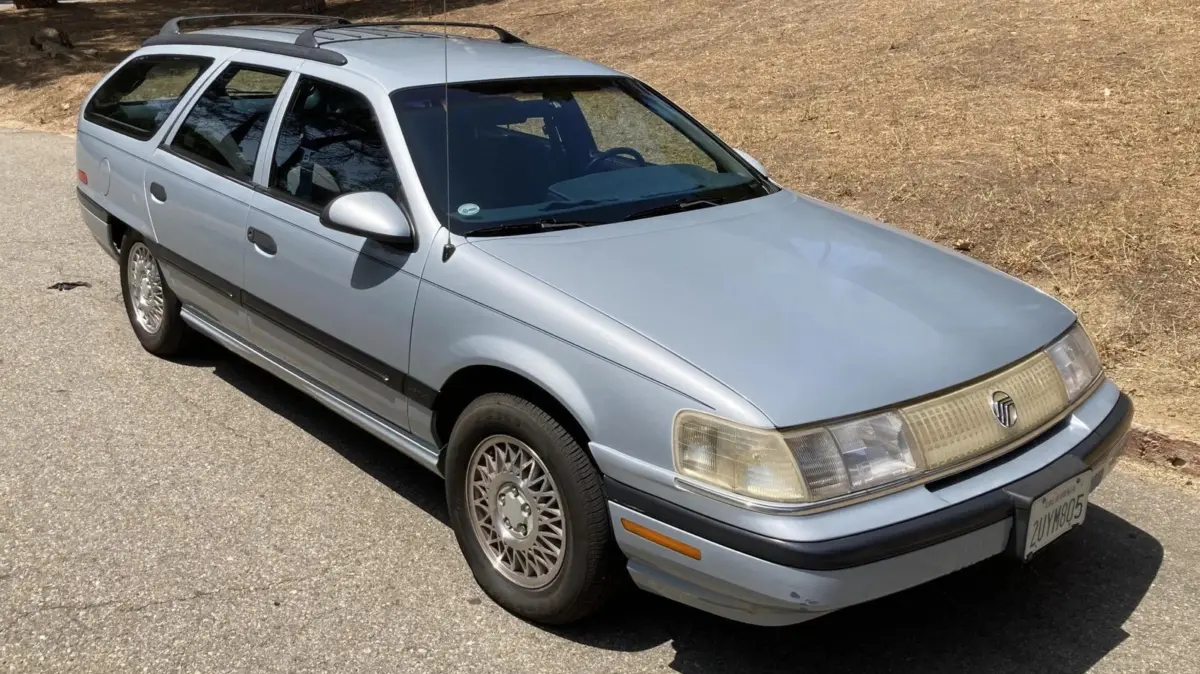
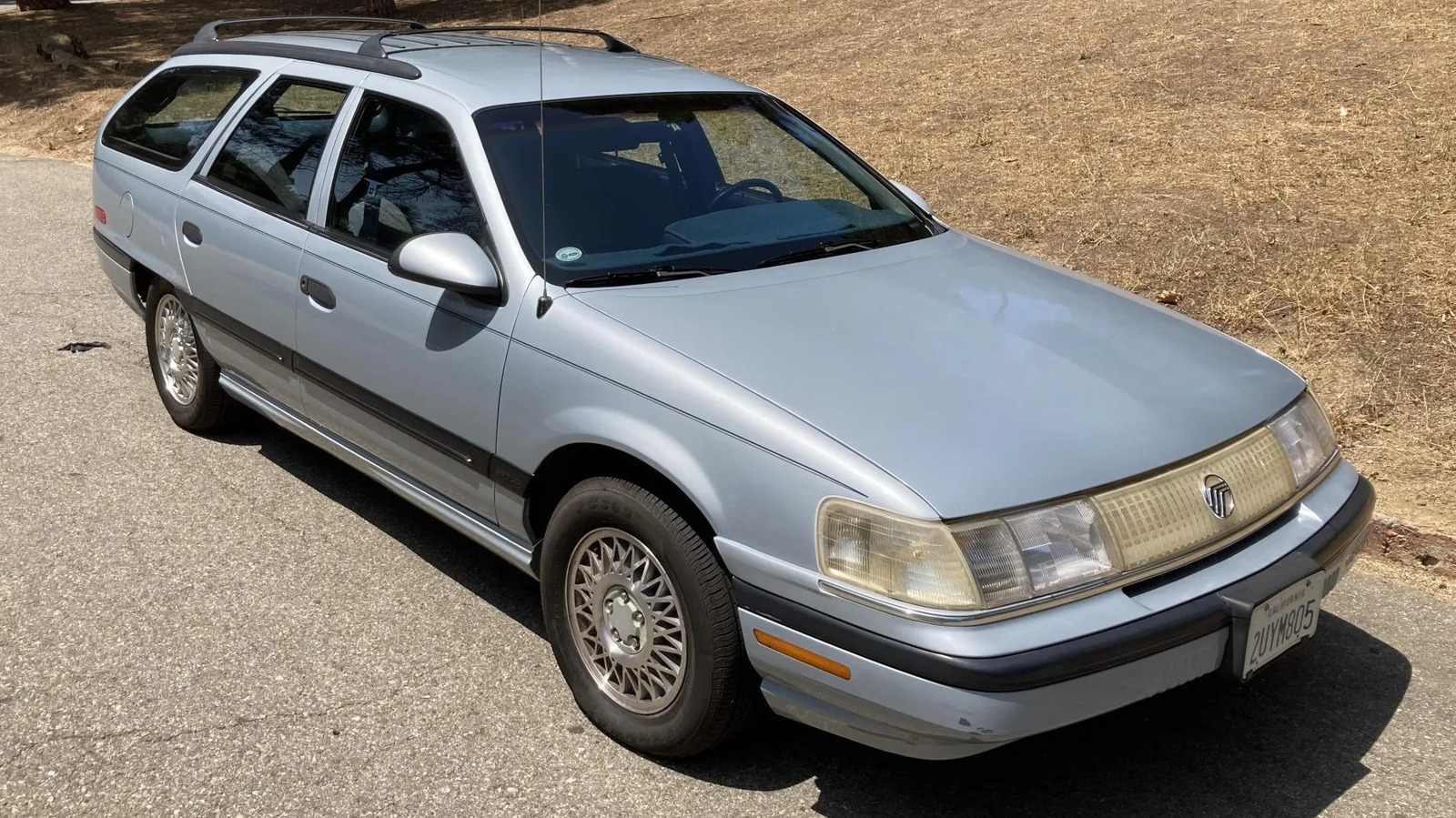
Such is the case with a striking Crystal Blue Metallic 1990 Mercury Sable GS Wagon that has recently been listed for auction on Bring a Trailer. Showing just 68,000 miles on its odometer, this blue-on-blue time capsule offers a potent dose of late-twentieth-century nostalgia. Yet, beyond the aesthetic appeal of its retro styling and remarkably preserved interior, the listing served to illuminate a rather startling gap in automotive trivia for the writer: an unexpected realization regarding the literal meaning of the word "sable" and the origins of the moniker chosen by Mercury.
The vehicle in question immediately captures attention through its adherence to a design language that defined an entire era of American family transportation. One of the most distinctive signature styling elements of Mercury vehicles during that period was the full-width front light bar, a futuristic design choice that predated the LED-heavy light strips dominating modern automotive design by decades. While the light bar on this particular 1990 wagon shows a modest degree of yellowing with age, the accompanying auction documentation notes that the headlight filler panel remains illuminated, indicating that the complex electrical feature still functions as intended.
While the exterior bears the honest patina of a car that has lived a gentle life rather than spending its entire existence sealed in a museum-grade climate-controlled bubble, the interior presents an entirely different story. It remains a remarkably factory-fresh environment, upholstered in rich blue cloth and featuring a power-adjustable front bench seat alongside the nostalgic, rear-facing third-row jump seats that once served as prime real estate for generations of children. Complete with 15-inch mesh-style aluminum wheels and the delightfully retro Mercury Sable GS decal adorning the bottom of the rear hatch, the car stands as an authentic rolling artifact of 1990s suburbia.
Growing up during the peak era of the Mercury Sable, these aerodynamic sedans and station wagons were an absolute constant on public roadways. They were the ubiquitous background noise of suburban traffic, often overshadowed by their mechanical sibling, the Ford Taurus, with which they shared a platform. Yet, despite decades of automotive familiarity—including a near-miss encounter with an Arizona Beige 2004 Mercury Sable Wagon later in life—a fundamental question had somehow never crossed the observer’s mind: What, precisely, is a sable?
As it turns out, a sable is an adorable small omnivorous mammal
A deep dive into etymology and zoology reveals that a sable is, in fact, an adorable small omnivorous mammal belonging to the marten species. Physically, these creatures are reminiscent of a weasel, characterized by a bushy tail, large paws, and partially retractable claws that aid in navigating their native environments. Sables are primarily indigenous to the dense forest environments of Russia, Siberia, and northern Mongolia, with natural geographic distributions that brush against several neighboring Asian nations.
In terms of physical dimensions, adult male sables typically measure between 15 and 22 inches in length, complemented by a tail ranging from 3.5 to 4.7 inches. Females are characteristically slightly smaller, and taxonomists recognize about 17 different species and regional variants of the animal. Historically, the pelt of the sable was fiercely coveted during the Middle Ages, maintaining a high economic and social value that persists to this day within certain sectors of the modern luxury fashion industry. While the animal world also features a distinct breed of goat known as the sable goat, the executive decision-makers at Mercury chose to name their futuristic mid-size car after the forest-dwelling relative of the weasel rather than farm livestock.
Mercury manufactured the Sable across multiple generations from 1986 through 2005, before briefly resurrecting the nameplate for the 2008 and 2009 model years. During the 1980s and 1990s, Mercury frequently utilized animal-themed nomenclature for its vehicle lineup. This naming strategy included the brand’s most iconic and enduring sports car, the Cougar, as well as the shorter-lived Lynx, which essentially served as an upscale, Mercury-badged iteration of the first-generation Ford Escort.
The appearance of this low-mileage, blue-over-blue 1990 Mercury Sable GS Wagon on the auction block offers a rare opportunity to acquire a pristine piece of mainstream automotive history. It bridges an era when domestic station wagons were the undisputed kings of family road trips, wrapped in a design that genuinely shocked the conservative automotive market when it debuted in the mid-1980s. For collectors and enthusiasts of everyday automotive history, this preserved wagon proves that you are never too old to learn something new about the cars of your youth—even if it requires researching a Siberian weasel to fully understand the badge on the trunk.