Faculty members and students at the University of Science and Arts of Oklahoma are sounding the alarm following a series of dramatic policy shifts that many within the campus community believe directly undermine the institution’s core mission as a public liberal arts college. The controversy centers on recent decisions made by the university’s leadership and Board of Regents, which have triggered widespread pushback, including a faculty vote of no confidence, student walkouts, and open acknowledgments from top administrators regarding political pressures from state leadership.
The unfolding situation at the public institution highlights the growing friction between higher education governance and state-level political directives, particularly concerning traditional academic protections like tenure and the operational structures of specialized public universities.
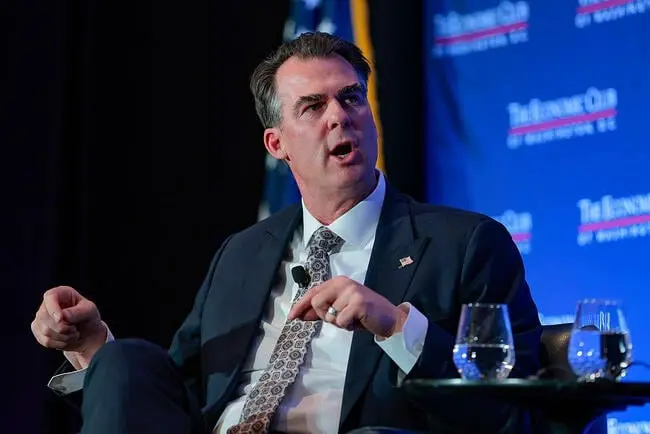
The most contentious development occurred when the USAO Board of Regents voted to stop offering tenure to incoming faculty members. According to University President Kayla Hale, this sweeping policy change was enacted to align with an executive order issued by Republican Governor Kevin Stitt, which aims to phase out the practice of academic tenure across state-supported higher education institutions.
While the elimination of tenure applies directly to incoming faculty hires, the policy shift has sent shockwaves through the campus community. Tenure has long been defended by academic professionals as a vital safeguard for academic freedom, allowing educators and researchers to explore controversial topics, challenge prevailing orthodoxies, and teach rigorous curricula without fear of arbitrary dismissal. The abrupt removal of this cornerstone of academic employment has left many educators questioning the long-term stability and prestige of the university.

However, during a campus town hall meeting covered by KOSU, President Hale offered a glimmer of potential future relief for faculty members concerned about the permanent loss of the traditional academic safeguard. Hale told attendees that tenure could potentially return to the institution if Governor Stitt’s successor chooses not to renew the executive order when Stitt leaves office early next year.
During the candid town hall discussion, Hale also openly acknowledged the external political forces driving the transformation at USAO. She pointed directly to the political motivations behind the policy changes sweeping across the university, explaining the complex and delicate position occupied by campus administrators who must balance institutional integrity with state oversight and funding.
"Some of the things that are really driving the sort of intrusion into our university, they are very politically driven," Hale told town hall attendees during the meeting. "Those politicians, or those people, who are driving these conversations are the ones that hold the purse strings to our university."
The candid remarks underscore the intense financial and political pressures facing public universities in Oklahoma, where leadership often finds itself navigating mandates handed down from state officials who control budgetary allocations and legislative appropriations.
In addition to phasing out tenure, the USAO Board of Regents approved another controversial policy change targeting low-enrollment courses. Beginning next spring, any class at the university with fewer than ten enrolled students will require special administrative approval to be held. Under the new guidelines, if a low-enrollment course receives the necessary administrative clearance to proceed, it will no longer be counted as part of a professor’s regular teaching load.

Instead of receiving standard compensation for these classes within their regular contracts, faculty members teaching approved low-enrollment courses will be paid at an adjunct rate. According to the university’s updated policy framework, this adjunct compensation will be calculated at a rate of $225 per student per semester. Faculty critics argue that this financial restructuring penalizes professors for teaching specialized, upper-level, or niche courses that are frequently essential to a comprehensive liberal arts education, potentially forcing departments to cancel critical classes simply because they do not meet arbitrary enrollment thresholds.
The combination of the tenure phase-out and the new policy on low-enrollment courses has provoked an immediate and fierce reaction from both professors and students. Earlier this month, the USAO Faculty Association responded to the administrative decisions by passing a formal vote of no confidence against President Hale and Vice President of Academic Affairs Makenna Garrison.
In their vote and accompanying resolutions, faculty leaders accused the top administrators of failing to abide by established shared governance processes. They argued that bypassing traditional faculty consultation undermines academic freedom and threatens the long-term institutional stability of the university. Shared governance—the practice of involving faculty in key academic, budgetary, and operational decisions—has long been considered a foundational principle of higher education administration, and professors argue that its sidelining during these sweeping policy changes represents a fundamental breach of trust.
The campus unrest has not been limited to the faculty ranks. Students have also mobilized to register their disapproval of the regents’ decisions. Last week, students staged a walkout from classes, marching to protest the policy changes and express solidarity with their professors. The student demonstrators argued that measures like the restriction of low-enrollment courses and the elimination of tenure will degrade the quality of education at USAO, potentially driving away top-tier faculty talent and narrowing the academic offerings that make the public liberal arts college unique within Oklahoma’s higher education landscape.
As the spring semester approaches and the political landscape in Oklahoma prepares for a gubernatorial transition early next year, the campus community remains on high alert. The ongoing friction between state-level directives, administrative compliance, and faculty resistance highlights a turbulent chapter for the University of Science and Arts of Oklahoma, with profound implications for the future of public higher education in the state.