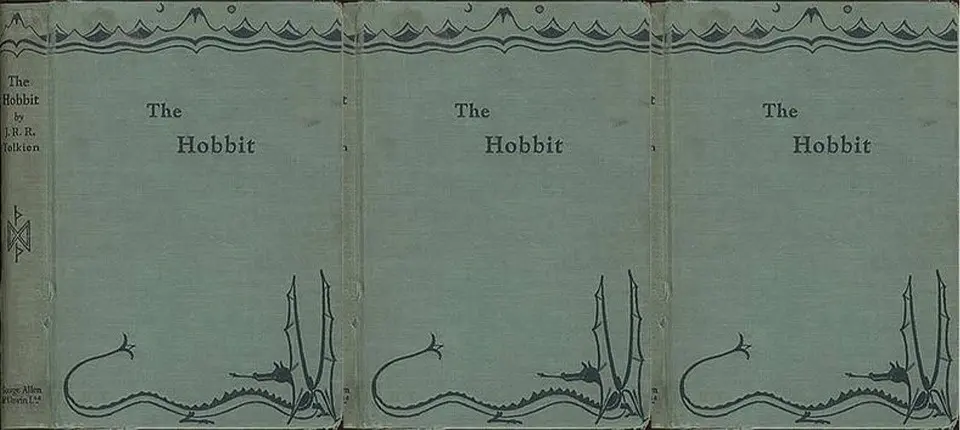
Today in literary history marks a monumental anniversary that continues to resonate across generations of readers, scholars, and fantasy enthusiasts worldwide. On this day in 1937, J.R.R. Tolkien’s enduring masterpiece, The Hobbit, was officially published for the very first time, forever altering the landscape of modern literature and giving birth to an entirely new realm of imaginative fiction.
The publication of The Hobbit by George Allen & Unwin in the United Kingdom marked the quiet beginning of a cultural phenomenon that would eventually span decades, inspiring countless adaptations, academic studies, and a global fandom. What initially began as a whimsical fireside tale crafted by a university professor for his own children blossomed into one of the most beloved and influential works of the twentieth century.
To fully understand the significance of this literary milestone, one must look back at the humble origins of Middle-earth. John Ronald Reuel Tolkien, a distinguished Oxford professor of Anglo-Saxon and philology, never initially intended for his bedtime stories to become a commercial success. The narrative of Bilbo Baggins—a comfort-loving, unassuming hobbit dragged into an epic quest by the wizard Gandalf and a company of thirteen dwarves—was originally scrawled on loose sheets of paper and shared orally with his children.
The breakthrough came when a former student of Tolkien’s, Elaine Griffiths, brought a typed manuscript of the unfinished story to the attention of Susan Dagnall, an employee at the publishing house George Allen & Unwin. Recognizing the undeniable charm and originality of the manuscript, Dagnall encouraged Tolkien to finish the tale. Upon completion, the manuscript was reviewed by the publisher’s ten-year-old son, Rayner Unwin, whose enthusiastic approval famously helped seal the deal for publication.
When The Hobbit finally hit bookstore shelves in September 1937, it was met with immediate critical acclaim. Reviewers praised its unique blend of myth, fairy-tale elements, linguistic richness, and dry British humor. The first printing, consisting of around 1,500 copies, sold out rapidly, prompting the publisher to commission a second printing shortly thereafter. Despite paper shortages during the Second World War, the book steadily grew in popularity, establishing a dedicated readership that eagerly awaited any continuation of the saga.
The success of The Hobbit placed an immense responsibility on Tolkien’s shoulders, leading his publishers to request a sequel. That request eventually culminated in the creation of The Lord of the Rings, a far more expansive and darker epic that transformed Middle-earth from a children’s fairy-tale setting into a complex, fully realized mythological universe complete with its own languages, histories, and geographies. Yet, despite the massive scope of its successor, The Hobbit has retained a special place in the hearts of readers as a welcoming gateway into Tolkien’s imaginative world.
In the decades following its initial publication, the book has never truly been out of print. It has been translated into dozens of languages, selling tens of millions of copies worldwide and cementing its status as a cornerstone of modern fantasy literature. Generations of writers have cited Tolkien’s work as a foundational influence, proving that tales of ordinary individuals facing extraordinary circumstances possess a timeless, universal appeal.
As the literary internet reflects on this historic date, discussions naturally turn to the enduring legacy of Bilbo’s journey out of the safety of Bag End and into the wider, perilous world. From academic analyses of Tolkien’s constructed languages to celebrations of modern cinematic and theatrical adaptations, the cultural footprint of The Hobbit remains as vibrant today as it was nearly a century ago.
The journey that began with a simple phrase written on a blank page—"In a hole in the ground there lived a hobbit"—continues to captivate the imagination of readers young and old, reminding us all of the profound magic found within the written word and the enduring power of a well-told adventure.