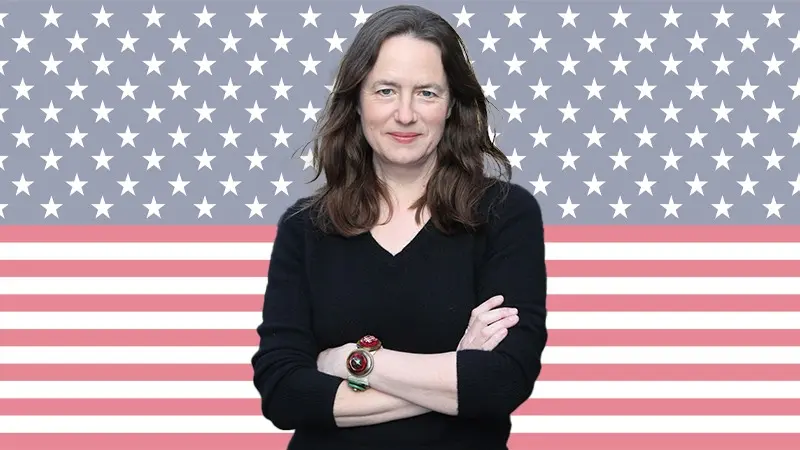
The award ceremony, which was live-streamed on Zoom on Saturday, September 19, drew an engaged audience with viewers tuning in from watch parties held across the country. The virtual event underscored the national resonance of Richardson’s work and provided a platform for a broader conversation about the responsibilities of writers and public intellectuals during politically volatile and transformative times. Following the formal presentation of the award, Richardson engaged in an in-depth conversation with acclaimed writer Siri Hustvedt, who is also a founding member of Writers for Democratic Action.
In announcing the accolade, Writers for Democratic Action highlighted the profound impact of Professor Richardson’s ongoing literary and public scholarship, drawing particular attention to her widely read nightly newsletter. For the last seven years, Professor Richardson has published her nightly Letters From An American, offering readers an acute historian’s reading of contemporary current events framed within the rich and often complex context of the nation’s past. Fully sourced and consistently crediting fellow journalists, researchers, and writers, her daily dispatches have breathed new life into the old journalistic adage that journalism is the rough draft of history, though observers note that in Richardson’s case, her work arrives with a distinct polish, as style and wit have become true hallmarks of the HCR Letters.
The newly minted Gitlin-Auster Defender of Democracy Award was expressly designed to underscore the vital public responsibility held by writers during a period of unprecedented social, political, and democratic crisis. Furthermore, the honor celebrates the enduring power of words to not only record history as it unfolds, but to actively participate in shaping and changing it. In bestowing the inaugural prize upon Richardson, WDA emphasized that in a dangerous and deeply polarized time, the historian has upheld those essential democratic values magnificently, making it a distinct honor for the organization to recognize her contributions.
The establishment of the award in honor of Todd Gitlin and Paul Auster connects Richardson’s contemporary public education efforts to a legacy of committed intellectual activism. Both Gitlin and Auster were towering figures in American letters and cultural criticism who dedicated significant portions of their lives and careers to defending democratic institutions, free expression, and social justice. By linking their names to an award celebrating contemporary defense of democracy, Writers for Democratic Action seeks to institutionalize the expectation that writers must remain engaged with the civic challenges of their era rather than retreating entirely into the ivory tower or purely academic pursuits.
Richardson’s Letters From An American has grown over the past seven years from a modest digital endeavor into a massive public phenomenon, read by hundreds of thousands of subscribers each night. By breaking down complex legislative battles, historical precedents, and daily news cycles into accessible, deeply contextualized narratives, she has filled a critical gap in modern media consumption. Her ability to contextualize twenty-first-century political developments through the lens of nineteenth-century American history—particularly the Civil War and Reconstruction eras, which serve as her primary academic areas of expertise—has provided millions of citizens with a framework for understanding the fragility and resilience of American democracy.
The virtual gathering on Saturday afternoon served as both a celebration of Richardson’s individual achievements and a collective reaffirmation of the mission shared by the members of Writers for Democratic Action. As viewers participated from decentralized watch parties nationwide, the event mirrored the grassroots nature of Richardson’s readership, which has organically expanded through word-of-mouth and a shared desire for reasoned, historically grounded discourse. The ensuing dialogue between Richardson and Siri Hustvedt offered attendees a deeper look into the intersections of history, literature, and civic duty, rounding out an evening dedicated to recognizing those who use the written word to safeguard democratic principles during times of national testing.