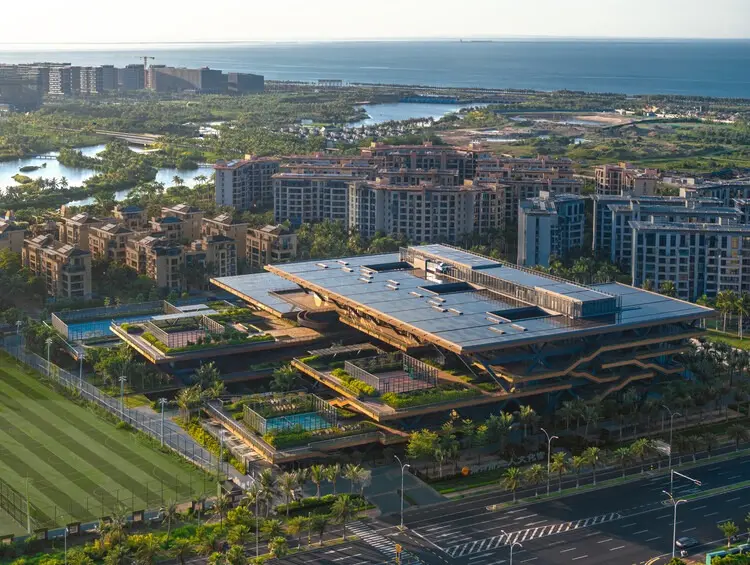
Located on the picturesque tropical shores of Hainan Island, the coastal city of Haikou is widely recognized for its vibrant culture, rapid urban development, and notably hot and humid climate. It is within this challenging environmental context that the newly completed Haikou Workers’ Activity Center—also known as the Workers’ Cultural Palace—has officially opened its doors, introducing a fresh paradigm for civic architecture in southern China. Designed by the Green Architecture Design & Research Institute of CADG, the project successfully merges advanced sustainable engineering with a deeply community-focused spatial program, establishing an inspiring benchmark for climate-responsive public infrastructure in the region.
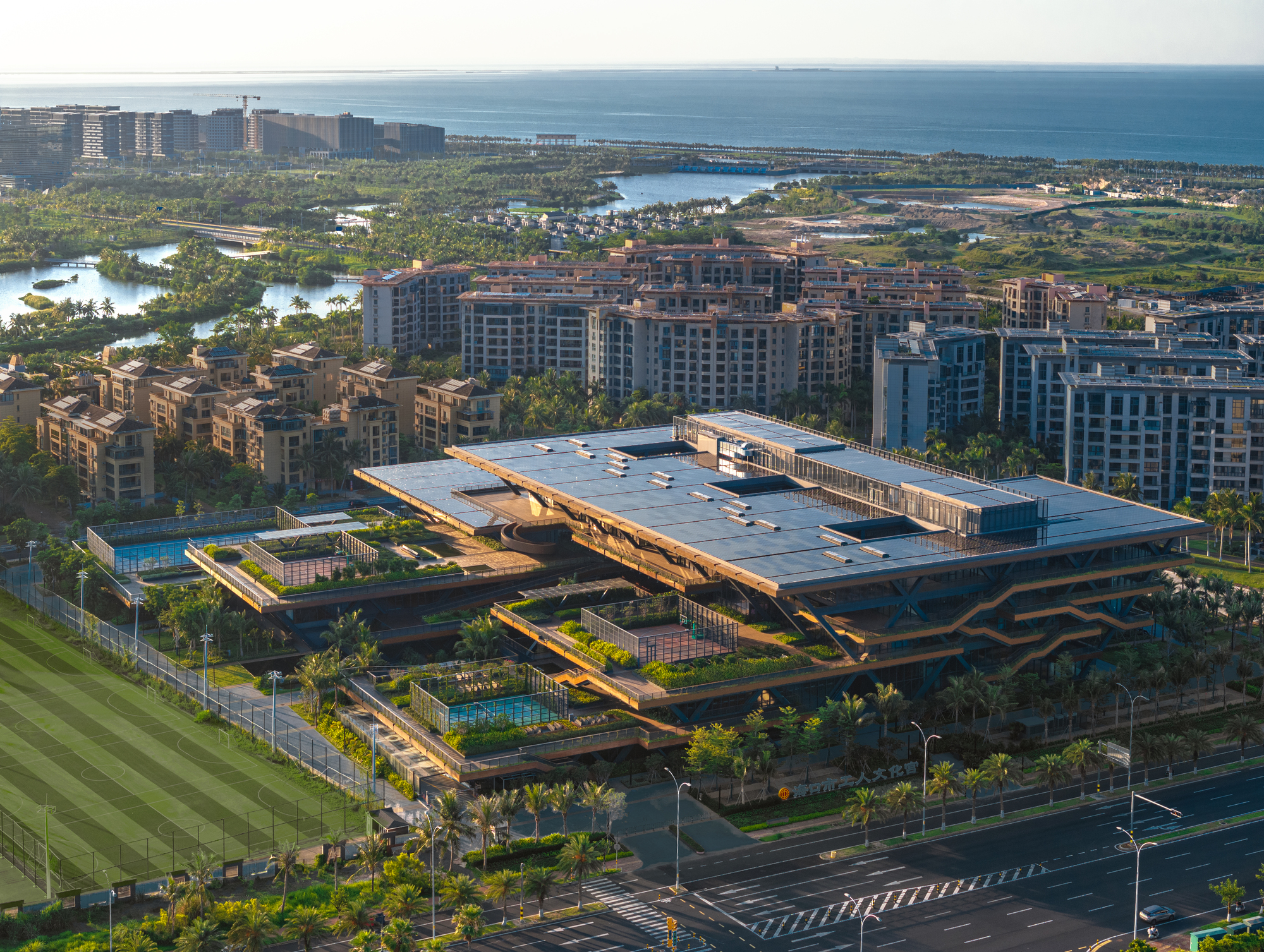
More than just a standard civic facility, the newly minted complex functions as an integrated hub combining cultural programming, athletic spaces, and vocational training programs under one expansive architectural vision. Curated to serve the diverse needs of the local workforce and the wider urban populace, the center transcends its traditional civic typology. Instead of a monolithic institutional building, the architects have conceived the complex around the organic concept of the "Tree of Life," structuring the entire urban composition as an "Ecological Settlement." This foundational design philosophy allows the architecture to mimic natural systems, creating a welcoming, breathable urban oasis that is deeply attuned to its tropical surroundings, highly community-oriented, and remarkably low-carbon in its daily operation.
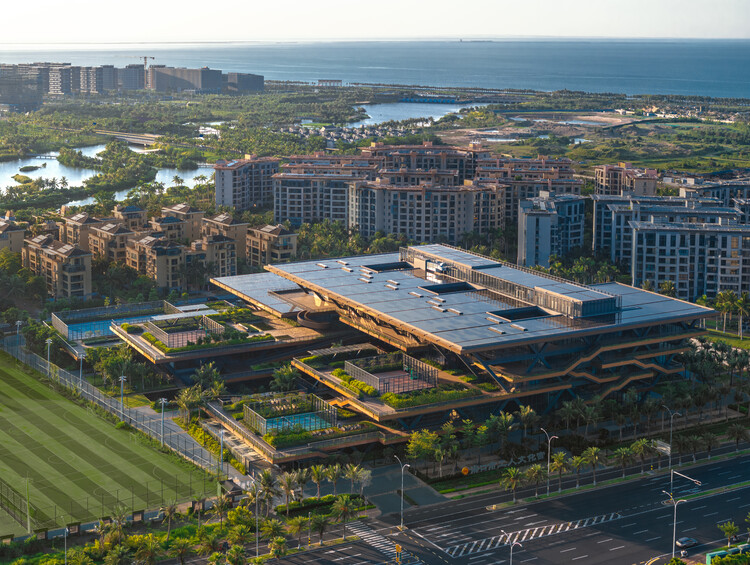
The physical realization of the Haikou Workers’ Activity Center is a direct response to the intense climatic demands of Hainan Island. Dealing with relentless sunshine, high humidity, and coastal weather patterns requires a meticulous approach to building envelopes, ventilation, and spatial sequencing. The Green Architecture Design & Research Institute of CADG addressed these environmental realities by integrating sophisticated passive design strategies with cutting-edge sustainable technologies. The building’s overarching "Tree of Life" motif translates practically into a series of interconnected volumes and shaded outdoor transitions that encourage natural cross-ventilation, mitigating the need for excessive mechanical cooling while offering shelter from the tropical elements.
By organizing the complex as an "Ecological Settlement," the design team avoided a single, massive enclosure, opting instead for a porous, campus-like layout. This layout fosters a seamless dialogue between the interior program and the surrounding landscape, welcoming cooling sea breezes into public plazas, courtyards, and circulation paths. The architecture serves as a living, breathing machine that filters light and air, ensuring that visitors traversing the cultural, sports, and training spaces remain comfortable throughout the year. This sensitivity to microclimate not only significantly reduces the building’s operational energy consumption but also redefines how public structures can harmonize with fragile tropical ecosystems.
The integration of diverse functional programs within the complex was a central priority for the design team. Modern workers’ cultural palaces across China have evolved far beyond historical precedents, transitioning from simple recreational halls into multifaceted civic incubators. The Haikou Workers’ Activity Center reflects this modern evolution by housing a comprehensive array of amenities designed to enrich the daily lives of the city’s residents. From state-of-the-art indoor sports facilities and recreational areas to dedicated spaces for cultural performances, art exhibitions, and professional skills training, the building acts as a catalyst for personal growth, social cohesion, and community engagement.
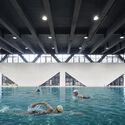
Throughout the development, the spatial arrangement prioritizes accessibility, openness, and intuitive wayfinding. The interplay between solid volumes and open, shaded public areas encourages spontaneous social interactions, transforming the center into a lively civic living room. Whether workers are gathering for after-hours continuing education classes, participating in competitive athletic events, or attending community cultural festivals, the architecture provides a versatile and inspiring backdrop. The careful curation of materials further reinforces this welcoming ethos, utilizing durable, tactile finishes that weather gracefully in the humid coastal environment while maintaining a clean, contemporary aesthetic.
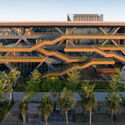
As Haikou continues to position itself as a key urban center within the Hainan Free Trade Port, the completion of the Workers’ Activity Center arrives at a pivotal moment. The city’s rapid expansion demands architectural solutions that prioritize environmental stewardship without compromising on civic utility or aesthetic ambition. By successfully balancing low-carbon operational goals with a rich, multifaceted program, the CADG design team has delivered a project that speaks directly to the future of sustainable urban development in southern China.
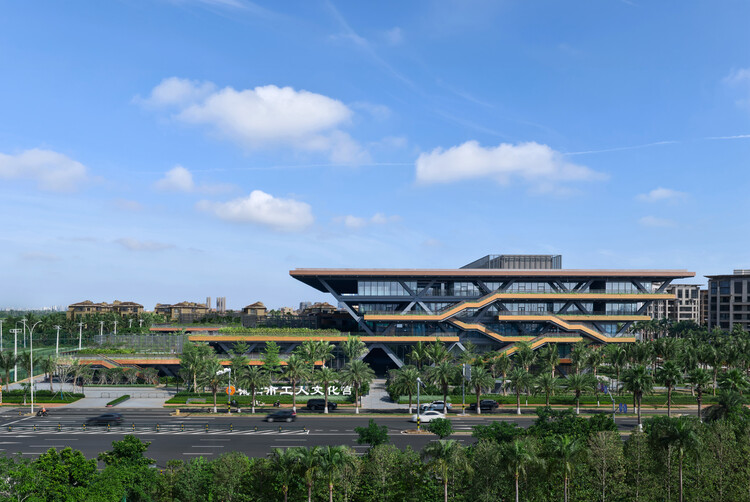
The Haikou Workers’ Activity Center stands as a testament to what is possible when rigorous environmental engineering meets thoughtful, human-centric design. By rooting its identity in the metaphor of the "Tree of Life" and the functional resilience of an "Ecological Settlement," the project offers a compelling model for future public architecture across tropical and subtropical regions. As visitors begin to inhabit its shaded courtyards, engage in its training programs, and utilize its cultural and athletic spaces, the center is poised to become an enduring cornerstone of civic life in Haikou, harmonizing human activity with the natural rhythms of Hainan Island.