When automotive consumers discuss durability and long-term reliability in the pre-owned vehicle market, one luxury brand consistently dominates the conversation. As the luxury division of Toyota, Lexus has long established its reputation on crafting vehicles that withstand the test of time, easily outlasting many of their more temperamental European and American competitors. However, even within a lineup known for longevity, certain models stand out as truly exceptional choices for buyers seeking dependable transportation with minimal mechanical headaches.
Recent insights shared by "The Car Care Nut" (CCN)—a prominent YouTube creator and Toyota Master Diagnostic Technician—shed light on the pre-owned Lexus models that represent the pinnacle of engineering endurance. By combining professional diagnostic experience with automotive industry data, including long-term longevity studies from analysts at iSeeCars, automotive enthusiasts and everyday drivers alike can better navigate the used luxury market. Whether seeking a practical commuter sedan, a spacious family SUV, or a V8-powered cruiser, specific generations of Lexus vehicles have proven themselves to be remarkably resilient investments.
2013-2025 ES 350
While the Lexus ES may not always capture the hearts of driving enthusiasts looking for razor-sharp handling, its restrained, comfort-oriented nature is precisely what makes it one of the most mechanically stout sedans on the market. CCN specifically highlights the ES 350, which shares its architectural roots with the Toyota Avalon rather than the Camry, going as far as to label it a king of reliability. Driven by a robust 3.5-liter V6 engine, the ES 350 debuted during the fifth generation in 2007 and continued its run through the recently concluded seventh generation.
Online automotive communities strongly mirror the technical assessment provided by master technicians. Discussions across platforms like Reddit frequently characterize high-mileage ES 350 models as remarkably difficult to kill, noting that these vehicles easily surpass the 100,000-mile threshold with little more than routine maintenance. Industry experts at iSeeCars support these assertions, reporting an average expected lifespan that approaches 142,000 miles for well-kept examples.
At the same time, automotive researchers advise buyers to exercise caution regarding specific production years. Publications such as CarBuzz recommend steering clear of the earlier iterations of the fifth-generation ES, particularly the initial 2007 model year. For buyers who secure a properly maintained sixth- or seventh-generation model and continue a disciplined maintenance schedule, the ES 350 offers a driving experience rooted in enduring peace of mind.
2010-2022 RX 350
For motorists who appreciate the mechanical philosophy of the ES sedan but require the elevated driving position and utility of a midsize luxury SUV, the RX 350 serves as a natural alternative. Sharing a parallel timeline with its sedan counterpart, the RX 350 first arrived for the 2007 model year. However, professional diagnostic guidance discourages purchasing the initial generation due to chronic power steering leaks. Instead, technicians recommend focusing on models produced from 2010 onward, provided they have received consistent upkeep.
CarBuzz ranks the third-generation RX, manufactured between 2010 and 2015, as the most reliable iteration of the luxury crossover. Furthermore, long-term industry studies by iSeeCars position both gas-powered and hybrid variants among the top-performing long-lasting vehicles on the market. Specifically, the gasoline-powered RX 350 boasts an impressive average reported lifespan of approximately 174,200 miles.
Utilizing a reliable 3.5-liter V6 engine through the 2022 model year and sharing a chassis platform with the Toyota Highlander, the RX 350 bridges the gap between everyday practicality and luxury comfort. For families seeking a spacious cabin and a cushioned ride, these model years offer long-term dependability that rivals almost any competitor in its class.
2001-2006 LS 430
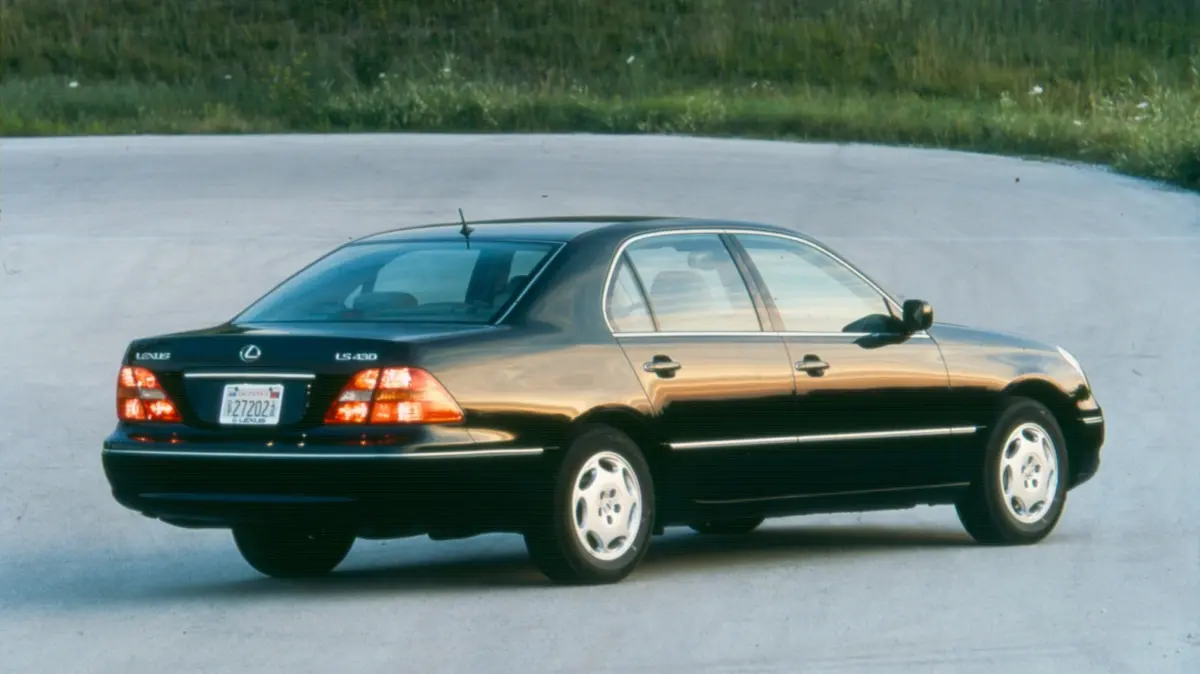
For buyers searching for an older luxury flagship that delivers classic executive styling and engineering integrity, the third-generation Lexus LS 430 stands out as a high point in automotive history. Produced between 2001 and 2006, this full-size sedan was designed to compete directly against established European heavyweights like the Mercedes-Benz S-Class and the BMW 7 Series. Far more than a rebadged mass-market vehicle, the LS 430 served as a technological showcase, becoming the first Lexus in the United States to feature adaptive cruise control.
Enthusiast forums such as ClubLexus have frequently celebrated the LS 430 as one of the most reliable automobiles ever manufactured, with members often remarking that the vehicle is merely broken in after reaching 100,000 miles. Mechanics do offer one notable caveat, however, advising buyers to avoid models equipped with the optional air suspension, which can become costly to repair or replace as the vehicle ages. Data compiled by iSeeCars underscores the model’s exceptional durability, reporting an average lifespan exceeding 228,000 miles.
Automotive historians often debate which era represents the peak of modern vehicle design, frequently pointing to the early 2000s as a sweet spot. During this period, automobiles incorporated enough modern technology and safety features to feel contemporary, yet avoided the overcomplication, stringent emissions regulations, and heavy screen integration that characterize modern cabins. The fact that Lexus engineered its most enduring flagship sedan during this exact era serves as a strong testament to that philosophy.
2003-2009 GX 470
The Lexus GX 470 occupies a legendary space in the realm of rugged, body-on-frame luxury vehicles. Sharing its architecture with the fourth-generation Toyota 4Runner and the internationally marketed Land Cruiser Prado, the first-generation GX 470—produced from 2003 to 2009—has earned a reputation for virtually unstoppable mechanical endurance.
At the heart of its durability is the 2UZ-FE 4.7-liter V8 engine, which CCN describes as one of the finest powerplants ever built by the Toyota and Lexus corporation. This engine served duty across a wide array of heavy-duty trucks and large SUVs from that era, including the upmarket LX 470, the Land Cruiser, the Sequoia, and the Tundra pickup. Industry analysts at iSeeCars place the average lifespan of the GX 470 near 205,000 miles, while automotive outlets have previously hailed it as a benchmark for luxury SUV reliability. This sentiment is continually echoed by dedicated owner communities who rely on its heavy-duty construction for both daily commuting and off-road expeditions.
2006-Present IS 350
Drivers seeking a compact luxury sport sedan that combines spirited handling with long-term mechanical resilience will find a compelling option in the Lexus IS 350. Master technicians emphasize the importance of selecting the 350 designation specifically, as smaller-displacement variants like the IS 250 have historically proven prone to carbon buildup issues over time. Even so, prospective buyers are reminded that performance-oriented components such as tires and brakes will naturally incur higher replacement and maintenance costs compared to their more sedate ES or RX counterparts.
Featuring a naturally aspirated 3.5-liter V6 engine that has remained a staple of the lineup from its second-generation debut in 2006 through current showroom models, the IS 350 offers a powertrain refined over two decades of production. Analysts tracking vehicle longevity report that IS 350 models routinely surpass an average lifespan of 184,000 miles. Consumer advocacy groups and automotive publications have previously recognized the model for its exceptional dependability within the compact luxury segment, while online communities frequently praise its solid, tank-like construction. Despite the slightly higher operational costs associated with maintaining a performance sedan, the foundational reliability of its long-running engine makes it a durable choice for enthusiasts.