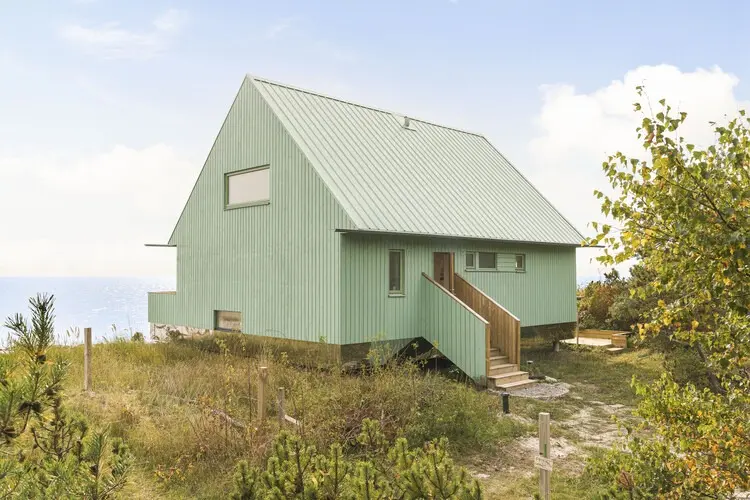
In an era defined by shifting environmental realities and rising sea levels, contemporary residential architecture is increasingly tasked with anticipating the challenges of tomorrow. A striking new coastal residence designed by architect Sebastian Honnér offers a compelling glimpse into the future of coastal living, merging thoughtful spatial design with essential climate resilience. Captured through the lens of architectural photographer Martin Smedsen, the newly unveiled project demonstrates how modern design can address the volatile nature of coastal landscapes without compromising on aesthetic refinement or connection to the surrounding environment.
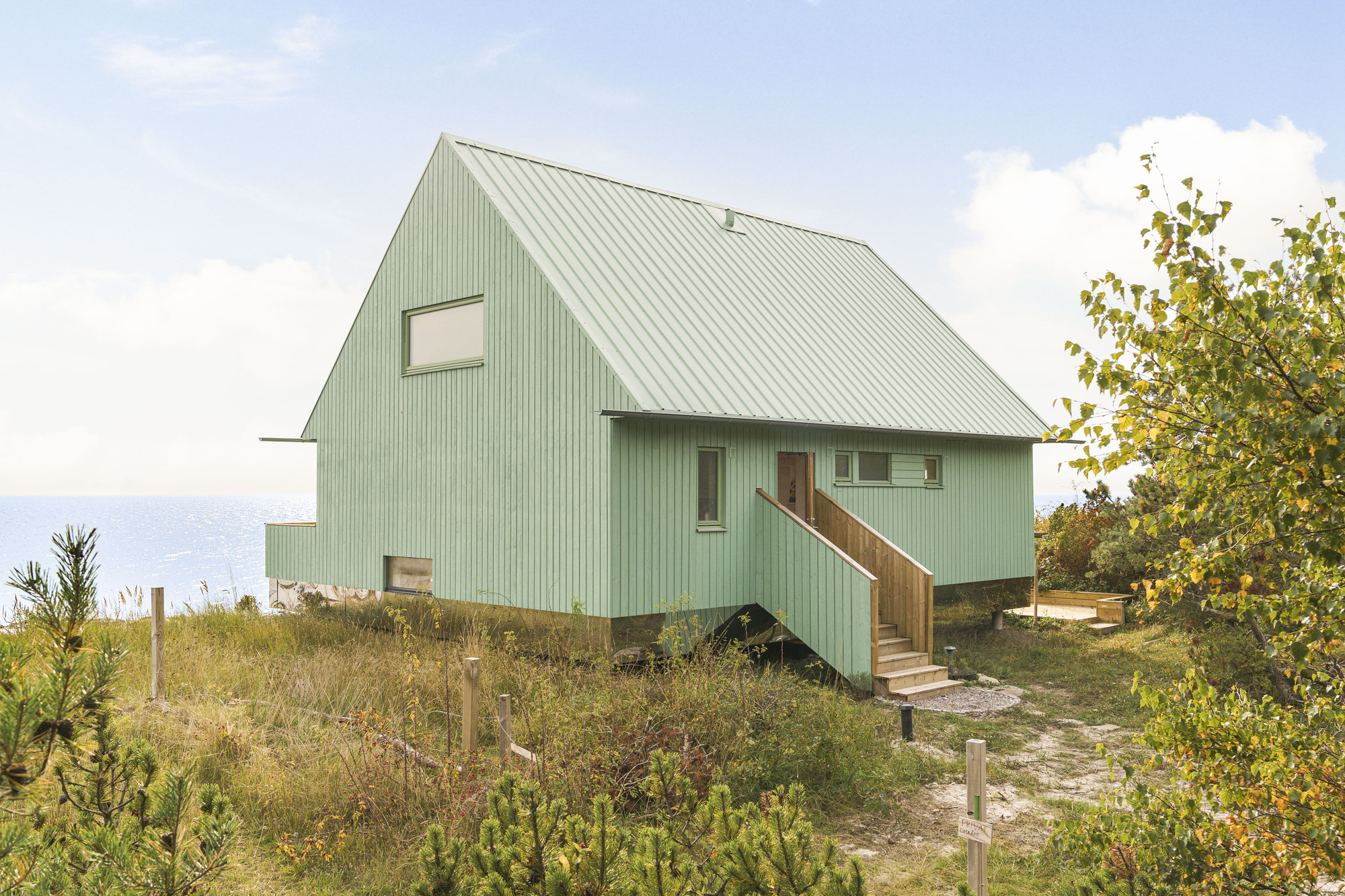
At the core of the project’s architectural strategy is a direct response to future climate change, most notably the escalating threat of rising waters and severe weather events. Situated along a delicate coastal ecosystem characterized by shifting sands and natural formations, the residence is elevated deliberately on sturdy piers. This elevated structural approach allows the building to effectively withstand future storm surges, lifting the primary living spaces safely above potential flood lines. Beyond its protective engineering function, the pier foundation creates a striking visual illusion, leaving the structure with the ethereal impression that it is hovering effortlessly above the native dunes.
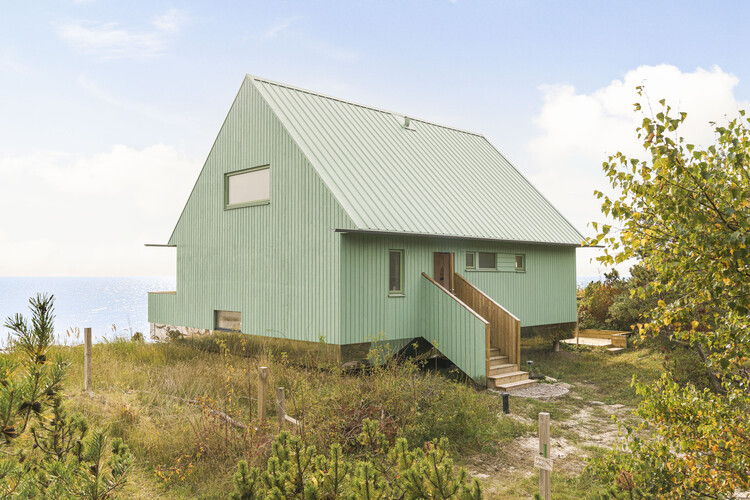
The integration of the house into its natural context represents a careful balancing act between human habitation and environmental preservation. By raising the bulk of the building envelope, the design minimizes its physical footprint on the fragile dune topography, allowing native vegetation and natural sand movement to remain largely undisturbed beneath the structure. This strategy reduces the need for aggressive site grading or hard-armor shoreline interventions, fostering a more harmonious relationship between the man-made dwelling and the dynamic coastal landscape it inhabits.
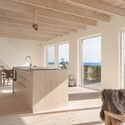
Inside, the residence continues the dialogue between rugged exterior conditions and refined domestic interiority. Natural materials dominate the material palette, creating a warm and grounded atmosphere that complements the sweeping vistas of the adjacent shoreline. The interior photography by Martin Smedsen highlights a seamless flow between functional living zones, including an integrated kitchen, an open dining area, and transitional wooden decking that extends the living space outward. These exterior decks and elevated walkways act as intermediate zones, bridging the gap between the enclosed sanctuary of the home and the exposed, windswept beauty of the beach environment.
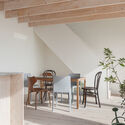
The spatial arrangement inside is optimized to maximize both natural light and panoramic views of the horizon. Large expanses of glazing frame the shifting moods of the sea and sky, turning the natural environment into a dynamic, living backdrop for daily life. The use of exposed wood throughout the interior and transitional spaces reinforces a tactile connection to nature, aging gracefully under the influence of the salty coastal air.
As architectural practices worldwide grapple with the pressing realities of global climate shifts, projects like Sebastian Honnér’s beach house provide a valuable precedent for resilient design. By acknowledging the inevitable vulnerabilities of coastal locations and addressing them through proactive engineering rather than reactive defense, the project points toward a sophisticated path forward for architecture at the water’s edge. Through its careful elevation, sensitivity to the local topography, and understated material expression, the residence stands as both a secure private retreat and a thoughtful meditation on living responsibly in a changing world.