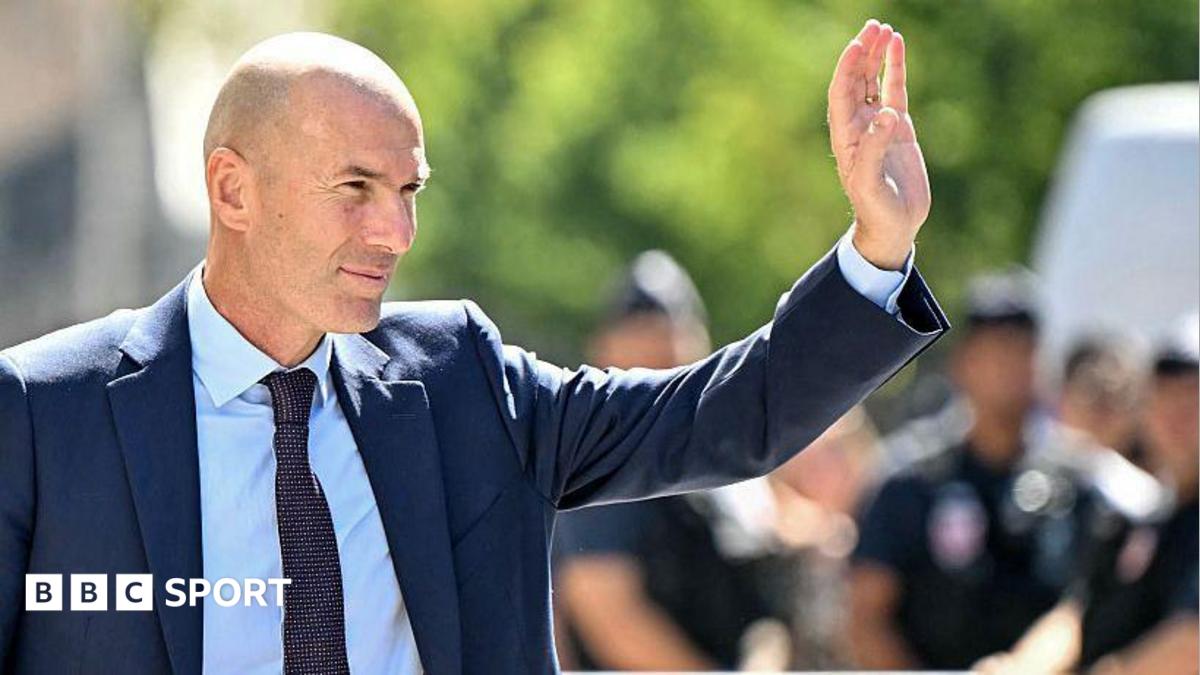
For the first time in fourteen years, the French national football team will step onto the pitch without Didier Deschamps at the helm. As the squad prepares for their upcoming clash against Turkey this Friday, the eyes of the footballing world are fixed on the man tasked with steering one of the sport’s most talented rosters: Zinedine Zidane.
The appointment of the former Real Madrid manager has been the worst-kept secret in international football. Speculation regarding his succession of Deschamps began in earnest as early as February 2025, following the announcement that his former teammate would step down after the conclusion of the 2026 World Cup. Even as France navigated the final stages of that tournament—eventually settling for a fourth-place finish after a tense play-off loss to England—the shadow of Zidane loomed large over the French Football Federation. Now, that transition is complete, and the "Zizou" era has officially begun.
A Long-Awaited Homecoming
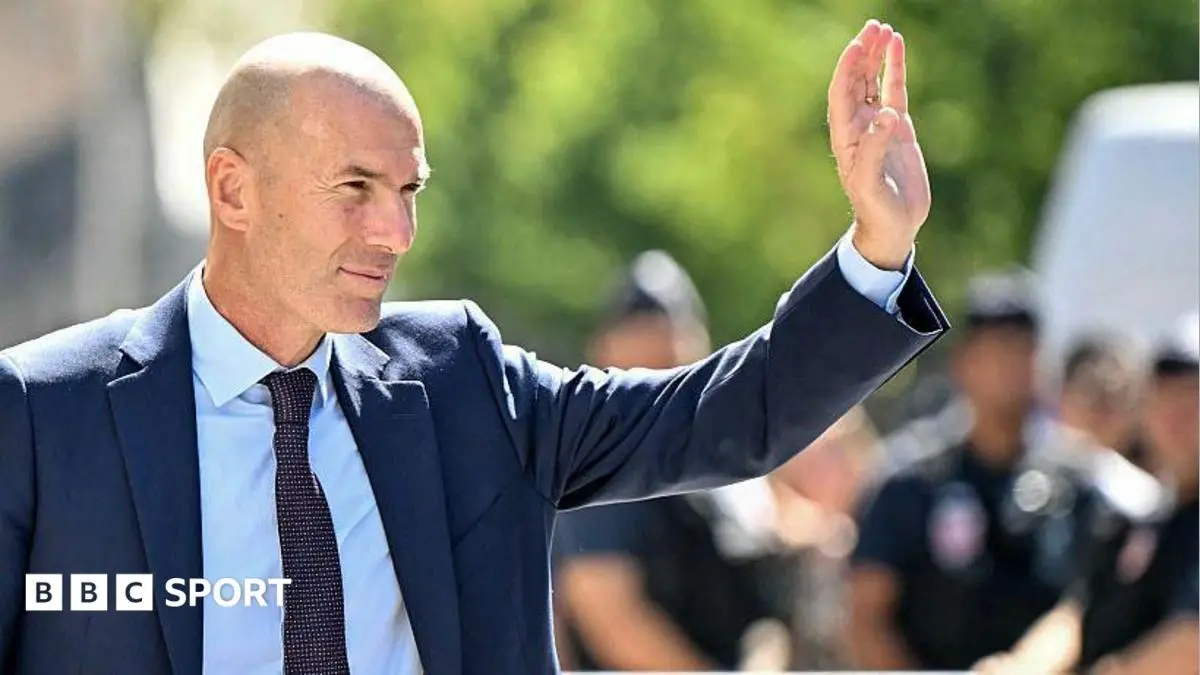
During his introductory news conference in Paris, a visibly emotional Zidane spoke with a sense of purpose that suggested he had been mentally preparing for this role for years. For a manager of his caliber, the transition to the international stage is not merely a job change; it is a destiny fulfilled.
"I had several offers in the last four or five years, but I turned them all down," Zidane told the assembled media, his tone reflecting the gravity of the moment. "The national team is the only thing I wanted."
This patience was a hallmark of his approach to his career since leaving the Santiago Bernabéu. Despite the intensity of his unveiling—a scene marked by throngs of supporters and the glow of flares outside the federation headquarters—Zidane remained characteristically measured. He offered few tactical blueprints, preferring to focus on the human element of his new responsibilities. When prompted to discuss how he would manage the captaincy of Kylian Mbappé, he politely declined to dive into the specifics of his leadership structure, noting that the priority for his star forward was recovery. "The most important thing for him now is to rest," Zidane said. "We’ll have the chance to speak in September."
Mbappé, for his part, has been glowing in his assessment of his new manager. In a recent interview with the Spanish newspaper AS, the forward described the prospect of playing under the legendary midfielder as "like a film," capturing the sentiment of a generation of players who grew up idolizing the man who once defined the French game.
Zidane the Player: A Legacy of Brilliance
To understand the weight of expectation on Zidane’s shoulders, one must look back at the icon he was on the pitch. Retired since 2006, Zidane stands as one of the most sublime attacking midfielders to ever grace the game. His career was defined by a rare combination of elegance and lethal efficiency, qualities that allowed him to dominate in the most demanding environments in Europe.
After cutting his teeth at Cannes and Bordeaux, Zidane’s trajectory shifted toward greatness. The mid-90s almost saw a detour to the English Premier League with Blackburn Rovers, a move that famously collapsed when then-owner Jack Walker reportedly questioned the need for the Frenchman when he already had Tim Sherwood. It is a footnote in history that now seems almost impossible to fathom. Instead, Zidane went on to secure legendary status at Juventus, before his world-record £45.8 million transfer to Real Madrid solidified his place in the pantheon of the game’s elite.
His international career was equally storied. He was the architect of France’s 1998 World Cup triumph, scoring twice in the final against Brazil to capture the nation’s imagination, and he was subsequently named the best player at Euro 2000. While his playing days ended on a tumultuous note—the infamous red card for his headbutt on Italy’s Marco Materazzi in the 2006 World Cup final—his legacy remains untarnished by the bitterness of that final moment. He remains, for many, the ultimate expression of French footballing excellence.
Zidane the Manager: Navigating the Expectations
Transitioning from a player of such stature to a manager is a challenge few master. Yet, Zidane’s tenure at Real Madrid, where he secured three Champions League titles, proved he could manage not just tactics, but the outsized egos and personalities that accompany elite squads.
There are similarities in the tactical pragmatism shared by both Zidane and his predecessor, Deschamps. Both men are products of the 1998 generation, and both understand that international management often requires a delicate balance between structure and allowing creative freedom. Deschamps leaned into a laissez-faire approach during the latter stages of the most recent World Cup, and Zidane seems poised to build upon that foundation.
"I was a number 10 as a player," Zidane remarked, hinting at his philosophy. "What motivates me is the game, it’s scoring goals."
With a team that netted 20 times in North America, the attacking infrastructure is arguably already in place. Zidane inherits a squad in significantly better psychological health than the one Deschamps took over in the wake of the 2010 World Cup disaster. The team is stable, successful, and filled with young, high-potential talent. However, the five-year hiatus from management is a legitimate question mark. While his pedigree is undisputed, international football is a different rhythm than the daily grind of club management.
Zidane himself acknowledges the shift. "It’s new to me, but I’m not scared. This is what I wanted," he insisted.
Shaping the Future of Les Bleus
The immediate challenge for Zidane will be to imprint his own identity on a group that has long been accustomed to the Deschamps way. He has already signaled a desire to "do things differently," evidenced by the surprise call-ups of five uncapped players for this international window. This move suggests that while he intends to respect the continuity of the current setup, he is not afraid to disrupt the status quo to foster competition.
The support he enjoys is profound. Bixente Lizarazu, his former teammate, expressed the sentiment of many within the French football hierarchy when he told France Info that Zidane is "more than fit to manage Les Bleus," emphasizing his proven ability to handle high-pressure environments.
As the squad prepares for the upcoming Nations League fixtures—four matches over the next three weeks against Turkey, Belgium, and Italy—the players are effectively participating in a crash course on Zidane’s methodology. The match at the Stade de France on October 2nd against Italy will be a significant milestone, serving as his official homecoming.
The goodwill surrounding his appointment acts as a shield, granting him a degree of leeway that few managers receive. Whether he chooses to utilize that time to experiment with new tactical shapes or continues the evolution of the current core remains to be seen. What is clear, however, is that the nation is watching with baited breath. For Zinedine Zidane, the wait is over; now, the real work begins to ensure that the star power of this generation translates into the sustained silverware that the French public expects.