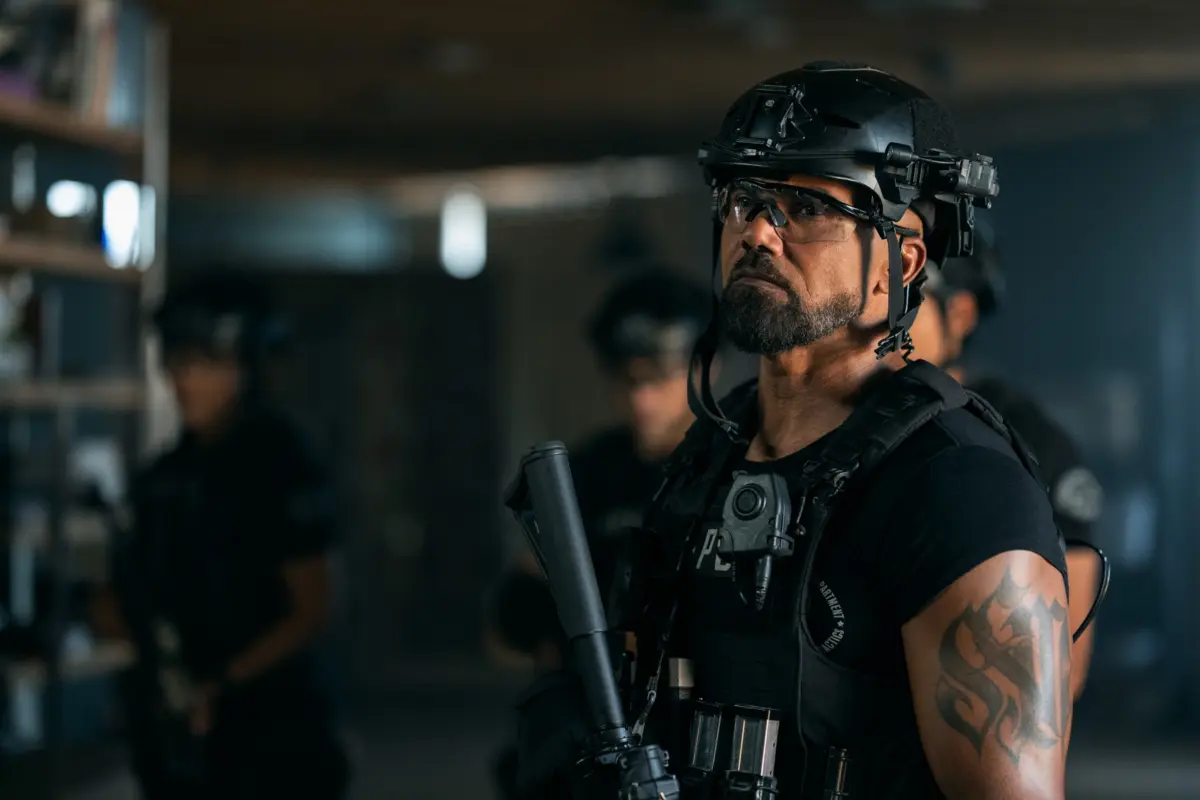
Just one year after the curtain fell on the acclaimed eight-season run of CBS’s "S.W.A.T.," the iconic Sergeant II Daniel “Hondo” Harrelson Jr. is trading the familiar halls of the LAPD for a new, high-stakes battlefield. Shemar Moore, who cemented himself as a household name through his portrayal of the stoic and righteous leader, returns to the screen in "S.W.A.T. Exiles," a new spinoff series debuting on Starz. Created by Jason Nig, the show picks up two years after the conclusion of the original series, finding Hondo in a landscape that is both physically and emotionally unrecognizable from the life he once knew.
For fans of the original procedural, the transition marks a significant shift in tone. Hondo is no longer the man in charge of a tight-knit, well-oiled machine. Instead, the series begins with a man stripped of his title, his team, and his sense of purpose. Following a disastrous, botched raid that resulted in the tragic death of one of his younger squad members, Hondo was ousted from the LAPD in a scandal that left him bitter, divorced, and drifting. His days are currently spent working as a reluctant bodyguard for Los Angeles’ most insufferable billionaire tech entrepreneurs—a far cry from the high-octane tactical work he once defined.
The premise of the new show hinges on a sudden shift in Hondo’s fortunes. LAPD Commander Robert Hicks, with Patrick St. Esprit reprising his authoritative role, reaches out to the disgraced veteran with an offer that seems too good to be true: the chance to command a new, specialized unit. While Hondo is initially driven by a deep-seated resentment toward the department that pushed him into forced retirement, his natural instinct to serve eventually wins out. He begrudgingly accepts the position, only to discover almost immediately that the assignment is a political minefield. He has not been brought back because of his legendary status; he has been brought back as a PR maneuver, a pawn in a larger game where he is seemingly being set up to fail.
The 10-episode first season, of which four episodes were provided for review, meticulously establishes this new status quo. The opening sequences offer a stark, quiet look at Hondo’s life in the aftermath of his career collapse. His home is a hollowed-out space; the kitchen is cluttered with dirty dishes, and the walls are adorned with the innocent doodles of his young daughter—the only vibrant remnants of a life that has otherwise gone cold. He moves through his daily routine on autopilot, his only outlet for his lingering anguish being a punishing, repetitive regimen of push-ups. When the call from Hicks comes, it provides a lifeline, but one that comes with heavy strings attached. The LAPD is struggling with a public image crisis, and the department’s brass is hoping that Hondo’s name recognition can serve as a bandage for their systemic wounds.
As Hondo enters the new headquarters, he realizes that he is not being given a elite team of seasoned veterans. Instead, he is handed a group of misfits and unpredictable Gen Z recruits who are as difficult to manage as they are talented. This unit, which Hondo dryly refers to as the "Exiles," serves as the heart of the show. The group is a diverse mix of personalities, each grappling with their own demons, much like their leader.
Among the new 44 Squad is Sammy Bishop, played by Lucy Barrett. A firearms expert with a massive social media following, Bishop embodies the modern challenges Hondo faces in this new era; to his utter horror, she possesses no qualms about live-streaming from the tactical headquarters. Then there is Malik Henderson, portrayed by Adain Bradley, a Marine veteran who is a devoted husband and father. On the surface, he appears to be the most reliable of the bunch, and Hondo quickly designates him as the unit’s Scout—the vital point person for their missions. However, the show hints that even the most stable of the Exiles carries skeletons in their closet.
The team is rounded out by an eclectic mix of talent. Ethan Cole, played by Freddy Miyares, is a neurodivergent tech savant whose quiet demeanor masks a high-level observational skill that others often overlook. Cassidy Han, played by Zyra Gorecki, brings an intense, disciplined energy to the group. She is determined that her prosthetic leg will not define her career or her capabilities, though her reserved nature keeps her colleagues at a distance. Finally, the squad is completed by Jude Callan, played by Ronen Rubinstein, a character who initially projects the persona of a charming, cocky bad boy, but who quickly reveals layers of unexpected depth.
At the start of the season, the narrative focuses on Hondo’s attempt to flex his rusty leadership muscles, trying to forge this ragtag group into a cohesive unit. While the show utilizes the typical procedural scaffolding that made the original series a success—incorporating high-stakes cases involving gun smugglers, cartel assassins, and kidnapping plots—"S.W.A.T. Exiles" distinguishes itself by remaining grounded in the current cultural and political climate. The tension is heightened when Hondo begins to suspect that his team is being actively undermined. He discovers that someone on the inside is feeding sensitive information to the mayor’s office, clearly aiming to orchestrate his downfall. This conspiracy arc stretches across the entire first season, and the showrunners promise that the identity of the mole is far more complex than a standard reveal.
What sets "S.W.A.T. Exiles" apart from its predecessor is its willingness to abandon the rigid, formulaic structure of standard action-dramas. A standout moment occurs in the fourth episode, titled "Get Clear." Instead of relying on a traditional action-heavy mission, the episode centers on a tense hearing before the Force Review Board. The unit is forced to testify regarding a prior, bungled assignment. Through a series of flashbacks, the episode cuts between the present-day interrogation and the past, detailing a hostage situation that devolved into an ICE raid gone completely wrong. The tragedy of that day, which ended with an unarmed civilian being shot by Hondo’s own hand, hangs over every character. As the officers recount the incident, the episode masterfully balances the emotional weight of their shared trauma with the ongoing mystery of the mole in their midst.
While the series does not necessarily reinvent the wheel for the police procedural genre, it succeeds by focusing on the evolution of its protagonist. Shemar Moore remains as commanding and earnest as ever, bringing a weary, weathered quality to Hondo that makes his struggle to mentor this new generation of officers feel deeply personal. The show is as much about the recruits navigating their own pasts and personal lives as it is about the tactical missions they undertake.
Starz clearly has high confidence in the franchise’s future. Even before the premiere, "S.W.A.T. Exiles" was greenlit for a second season, signaling that the network views this gritty, character-driven approach as a long-term anchor for its programming slate. For viewers who appreciated the balance of action and heart in the original series, this new chapter offers a compelling, albeit more cynical, look at what it means to uphold the law in a world where the lines between the good guys and the bad guys are increasingly blurred.
"S.W.A.T. Exiles" is scheduled to make its debut on September 25 on Starz, with the remaining episodes of the first season set to air weekly on Fridays.