Arthur Arbesser’s fall 2026 collection, presented through his signature see-now, buy-now format, functions as a profound sartorial interpretation of kintsugi, the traditional Japanese art of repairing broken ceramics by mending their fractures with seams of gold. For the designer, this season is deeply personal, reflecting a period of profound transition both in his private life and within the operational framework of his eponymous brand.
"2026 has been a year of major changes in my life, and inevitably in the life of the brand too. In a way I needed to put some pieces back together, and I did it using only fabrics we already had in the archive," Arbesser explained, discussing the conceptual foundation of the new lineup. "It was exciting to realize that we were sitting on a pile of old fabrics that could become something new."
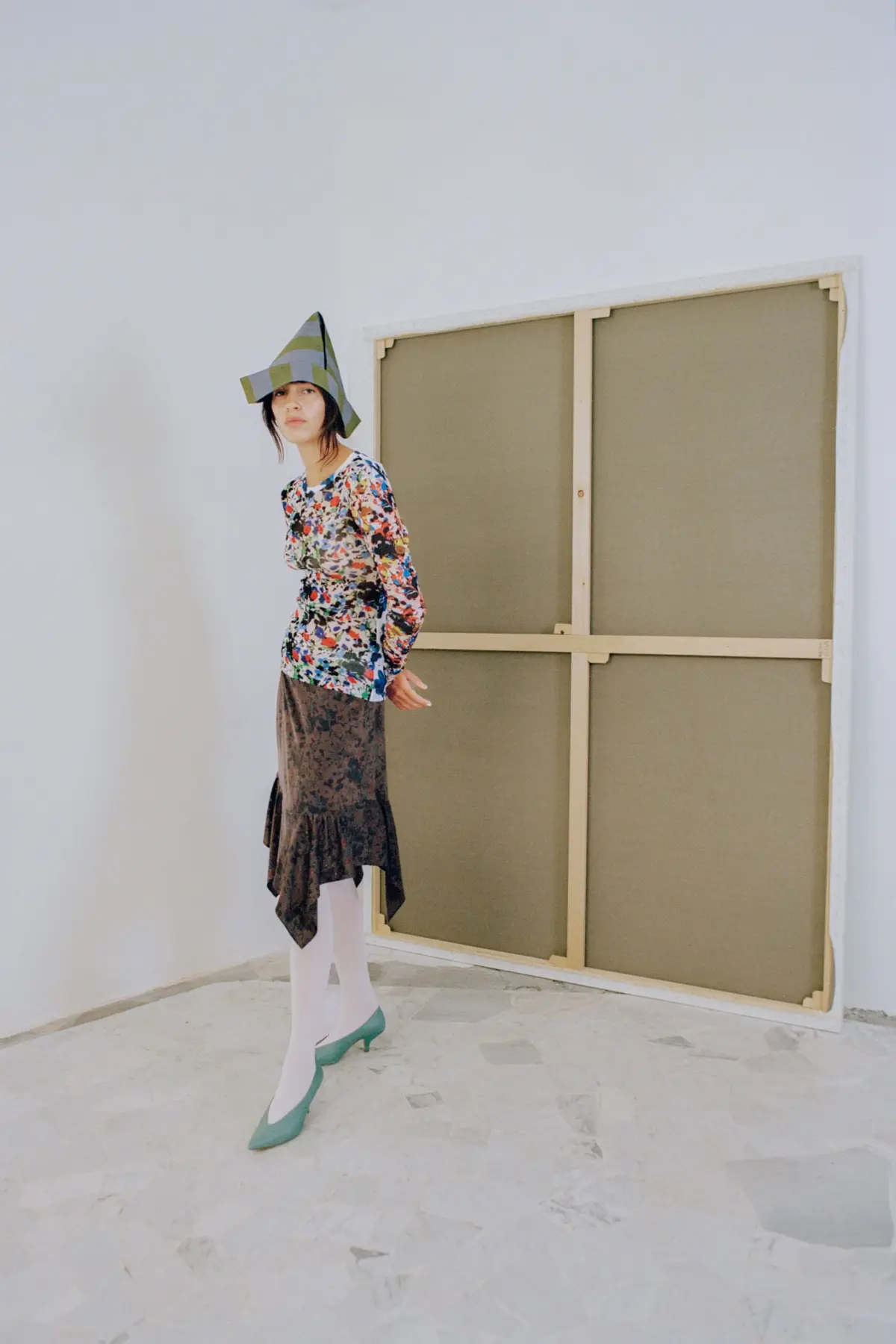
This sustainable and introspective approach required a meticulous and exhaustive inventory process. Over the course of several weeks, Arbesser and his team went through every single roll of fabric stored in their archives, driven by a zero-waste philosophy and a determination not to let a single scrap of material go unused. This comprehensive sorting effort yielded creative solutions for various quantities of leftover textiles. When certain fabrics did not exist in sufficient yardage to produce standard garments in multiples, the design team cleverly pivoted, repurposing the remaining material for accessories or integrating it as intricate finishing details on larger pieces. Among these inventive accessories is a standout scarf directly inspired by the triangular bunting traditionally used at children’s parties.
Rather than completely discarding the past, the collection functions as a retrospective archive revival, thoughtfully recontextualizing iconic prints and textiles from previous seasons. The lineup brings back the striking baroque print first introduced in fall 2022, the crisp striped cottons from spring 2025, the vibrant multicolored checks and the distinctive photographic print featuring drinking glasses from fall 2024, alongside the geometric patterns that have steadily evolved into a core visual signature of the brand. By weaving these past elements into a contemporary narrative, Arbesser creates a bridge between his label’s history and its evolving future.
A significant portion of the collection underwent a specialized garment-dyeing process at a small, independent dye house located just outside Milan. This artisanal facility is uniquely equipped for treating finished garments, operating with a specialized setup of just six washing machines that allow for unique textural and chromatic developments. Each resulting piece was meticulously designed to take on an entirely new life through dynamic layering, unexpected combinations, and the sophisticated interplay of contrasting prints and colors.
To introduce movement and dimension, Arbesser relied heavily on lightweight, sheer fabrics. Polka dots, diamond mesh, striped mesh, and multicolored check tulle were juxtaposed against more tactile and daring textures, including cobra-print satin, jacquard viscose, classic gingham, zigzag crinkle crepe, and various animal prints. This rich texturing emphasizes the designer’s ongoing fascination with visual friction and harmonious dissonance.
The atmosphere surrounding the creation of the collection was as eclectic and layered as the garments themselves. As Arbesser discussed the nuances of the fall 2026 line inside the creative studio space that has served as the operational and conceptual heart of the brand for the past few years, his longtime friend and collaborator, artist Marcela Gutiérrez, was actively painting on a massive canvas. This ongoing artwork will eventually be scanned and transformed into an exclusive print for the brand’s subsequent collection, highlighting a continuous loop of artistic inspiration.
Adding to the distinct atmosphere of the studio, an old boom box played classical music softly in the background, contrasting with the contemporary energy of the fashion workspace. "It feels like a horror movie," Arbesser joked, reflecting on the eerie combination of classical compositions and avant-garde fashion design. "लेकिन I’m always looking for something that clashes, so I’m happy with that."