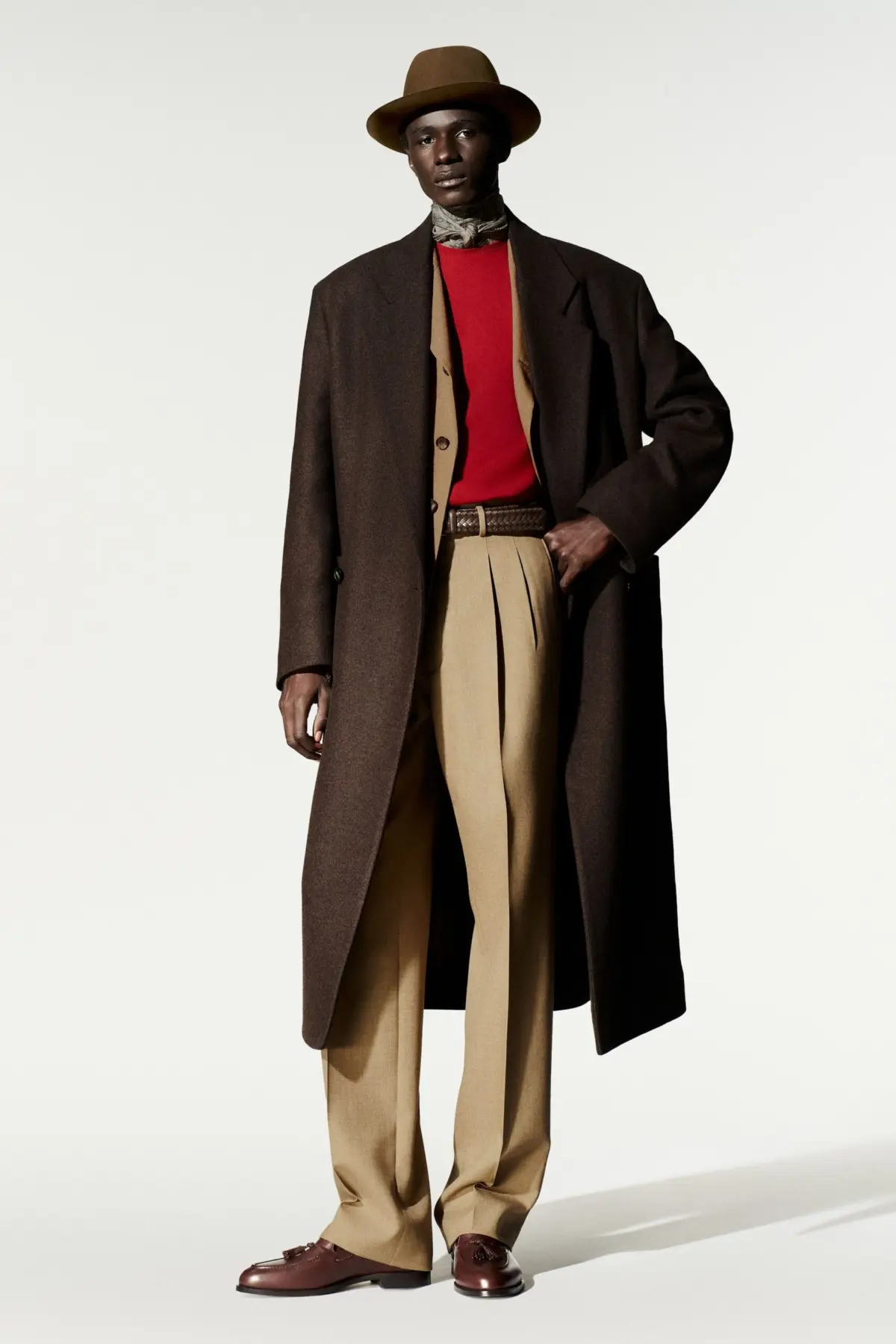
MILAN — Amidst the hushed silence and the towering, ancient leather-bound tomes of Milan’s Biblioteca Nazionale Braidense, luxury house Loro Piana chose a fittingly literary setting to unveil its latest collection. Yet, rather than evoking the solemnity of classical prose or historical manuscripts, the conceptual framework of the presentation borrowed heavily from a decidedly modern genre: the self-help section.
In a departure from traditional runway presentations that typically group garments by standard apparel typologies—such as outerwear, tailoring, evening wear, or knitwear—the esteemed Italian house organized its latest lineup according to the psychological challenges and daily hurdles the pieces ostensibly promised to empower the wearer to overcome. It was a tongue-in-cheek yet deeply sophisticated premise, framing high fashion not merely as aesthetic ornamentation, but as a wardrobe of functional armor for the complexities of modern life.
Naturally, the tribulations addressed by the collection were firmly rooted in the realm of privilege, reflecting the lifestyle of the brand’s discerning clientele. Rather than curing deep-seated existential dread, the garments were proposed as sartorial remedies for the minor, everyday dilemmas of the upper crust. The classic camel blazer, a staple of understated luxury, was presented as "a solution for natural authority." A rugged yet refined hunting jacket was billed as "a solution for following your goals," while a sharply cut pleated skirt offered "a solution for natural fluidity." Other pieces tackled more tangible environmental and situational demands: the field jacket addressed the timeless necessity of "adaptation," while an airy summer tailleur was designed to take on the perennial aristocratic problem of staying completely unflustered in the relentless summer heat.
Beneath the playful titles and the carefully styled hats, however, lay a collection that demanded serious sartorial study. When one looked past the conceptual framework, the actual craftsmanship revealed garments of extraordinary depth, material innovation, and technical prowess. Several pieces in the collection felt so covetable that if they were actually available to check out from the metaphorical Loro Piana library, they would prove remarkably difficult to return to the shelves.
Among the standout pieces was a hunting jacket rendered in a striking burnt orange, expertly layered under an olive-green gilet. Built with a full utility apparatus—featuring a functional hood, adjustable drawcords, generous pockets, and sophisticated protective layering—the garment was executed entirely in Storm System silk. This proprietary treatment allows a delicate natural fiber to perform with the waterproof and wind-resistant capabilities of high-tech outdoor wear, blending heritage aesthetics with modern utility in a manner that can only be described as exquisite. Elsewhere, a Traveller field jacket crafted from a heathery silk blend offered a softer, distinctly more urbane take on the traditional four-pocket utility silhouette, achieving a rare balance of polished elegance and practical everyday wearability.
This season, these compelling outerwear pieces were joined by familiar house codes that have long defined the Loro Piana identity. Soft tailoring, an extensive palette of pale neutrals, peerless cashmere, rugged field wear, and sophisticated travel clothes formed the backbone of the presentation. However, these foundational elements were successfully enlivened by the introduction of brighter color accents, a series of surprisingly vibrant and baroque golf references reminiscent of British eccentric Ian Poulter, playful embroidery, striking prints, and a renewed, highly visible emphasis on the technical treatment of natural fibers.
Among the technical innovations introduced for the season was the incorporation of banana fiber into fine knitwear. This unexpected material was utilized in pieces such as a classic cricket sweater that was thoughtfully redesigned for the modern golf course, as well as in a contemporary, cropped version of the house’s signature Spagna jacket. These material explorations underscored the brand’s ongoing commitment to pushing the boundaries of sustainable luxury without ever compromising on the tactile pleasure and aesthetic refinement expected by its clientele.
In a notable nod to changing consumer habits, the presentation also featured a dedicated display showcasing scarves—a staple of the house—alongside an extensive array of ties, an accessory category that has not always occupied such a prominent position in recent presentations. A representative for the brand explained that this deliberate inclusion reflected a recently detected, broader renewal of consumer appetite for formal tailoring and classic menswear accessories.
Yet, even when the collection leaned into its most formal, decorative, or technically complex expressions, the overarching narrative consistently led the observer back to a singular, unifying conclusion: these were garments engineered to work extraordinarily hard while maintaining an effortless, relaxed appearance. They were clothes designed to project confidence and ease, completely devoid of ostentation. To possess them, to integrate them into one’s own personal library of attire, would be a quiet and enduring delight.