The ongoing transformation of the global automotive landscape reached a historic milestone in August, as new energy vehicles (NEVs) captured an unprecedented 65% share of the Chinese domestic market. High fuel prices and a relentless wave of new battery electric vehicle (BEV) offerings propelled the market to this new height, though the underlying mechanics of this record-breaking month reveal a stark reality for traditional automakers: the milestone was achieved not merely through surging EV adoption, but through a dramatic, across-the-board collapse of internal combustion engine (ICE) vehicle sales.
While past records in the world’s largest auto market were largely forged on the back of aggressive EV volume growth, the August data tells a different story. The overall Chinese automotive market contracted by 24% compared to the same period last year, sliding to approximately 1.5 million total sales. Amidst a sea of declining figures—which saw plugin hybrids (PHEVs) drop by 30% and extended-range electric vehicles (EREVs) fall by 22%—pure battery electric vehicles stood as the sole powertrain category maintaining positive momentum, rising 1% year-over-year.
When combining the 45% market share captured exclusively by BEVs with the 20% share held by PHEVs, a record 65% of all new cars sold in China during August featured a plug. If this trajectory persists, the broader Chinese automotive market appears poised to achieve full electrification before 2030, with a completely BEV-dominant landscape potentially materializing before 2035. This powerful monthly performance has lifted the cumulative market share for electrified vehicles to 57% for the year 2026, already standing three percentage points higher than the full-year result recorded in 2025. BEVs alone have expanded to claim 38% of the market so far this year, up from 33% in 2025.
Industry projections now anticipate that the final tally for 2026 EV share in China will comfortably surpass 60%, with pure electric models climbing north of the 40% threshold. As the globe’s most influential automotive market accelerates down this path of deep electrification, the traditional ICE industry faces severe structural peril. Consequently, continuing to allocate heavy research and development capital toward conventional internal combustion technology increasingly resembles wasted investment, as legacy automakers will no longer have the runway required to recoup capital expenditures.
A parallel shift is reshaping the internal dynamics of China’s electrified sector, with the balance between pure electrics and plugin hybrids swinging back in favor of BEVs. Earlier in the year, PHEVs benefited from incentive structures that prompted a temporary dip in pure electric adoption. However, BEVs have rebounded aggressively, commanding a 69% to 31% split over plugin hybrids in August, bringing the 2026 year-to-date average to a 67% to 33% distribution.
Historically, this represents the highest BEV concentration since 2023, signaling a gradual return to the 80% to 20% ratio observed during the nascent years of China’s modern EV market. With policy shifts set to eliminate vehicle tax exemptions for plug-in hybrids and range-extended EVs by the end of the year, 2027 could mark the first time since 2022 that the market returns definitively to a heavily BEV-skewed sales breakdown.
Beyond domestic borders, a seismic transformation is underway as local original equipment manufacturers (OEMs) aggressively prioritize exports. In August alone, Chinese automakers exported approximately 888,000 units, marking a staggering 78% surge compared to the previous year. The electrified share of these exports closely mirrors the domestic market, hitting a 58% EV share in August compared to 40% during the same month in 2025.
Driven by these substantial monthly export volumes from Chinese brands alongside the concurrent rise of domestic champions in developing regions—such as Vietnam’s VinFast, Turkey’s Togg, and India’s Tata and Mahindra—legacy global OEMs are finding themselves squeezed on multiple fronts. Struggling profoundly within the world’s largest market, traditional foreign automakers face mounting difficulties abroad as well, rendering obsolete any strategy that relies on keeping conventional ICE models alive in international markets to counter the ongoing EV wave. Furthermore, because these Chinese export volumes are heavily electrified, international markets are experiencing accelerated adoption rates as local brands steadily capture market share.
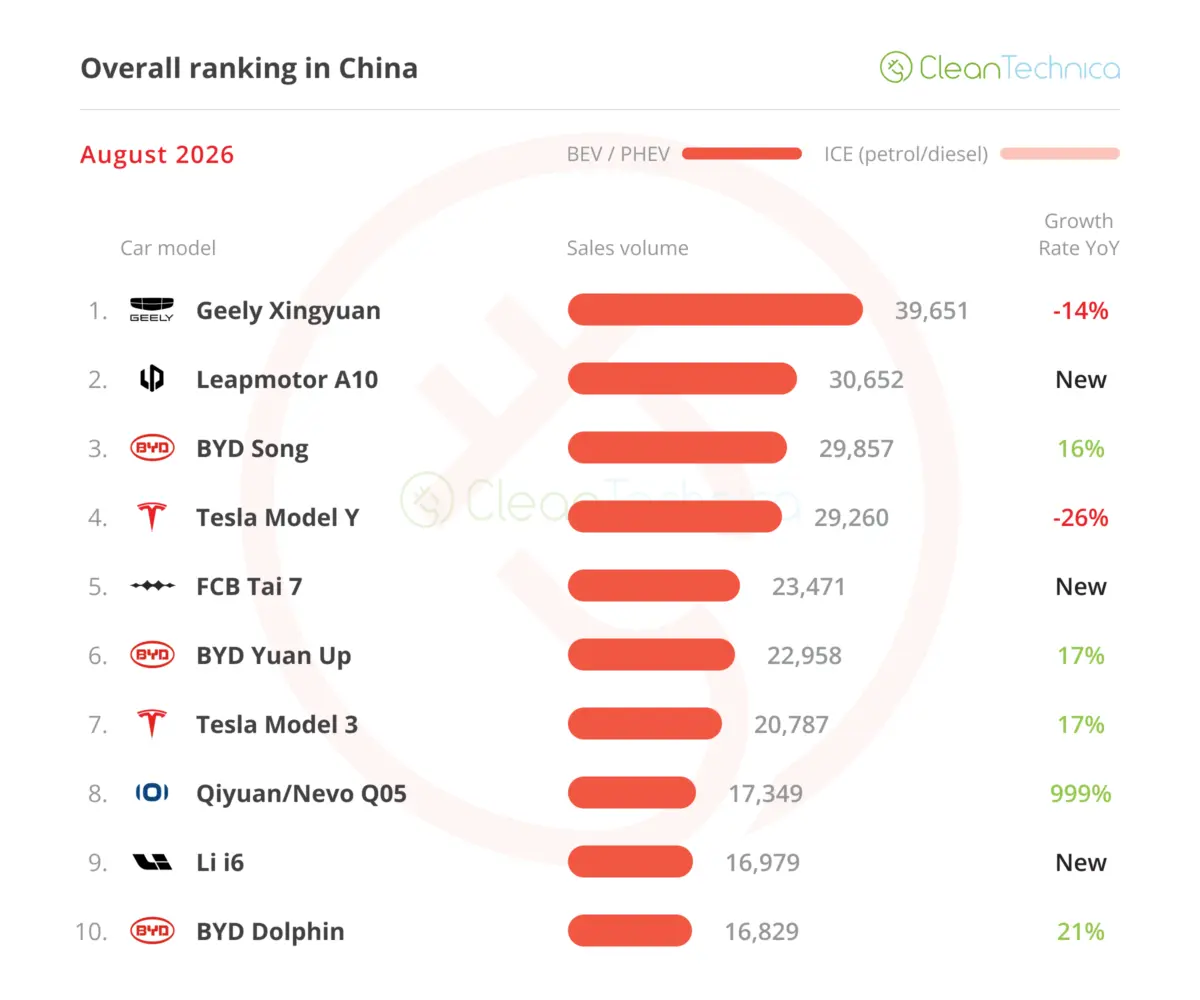
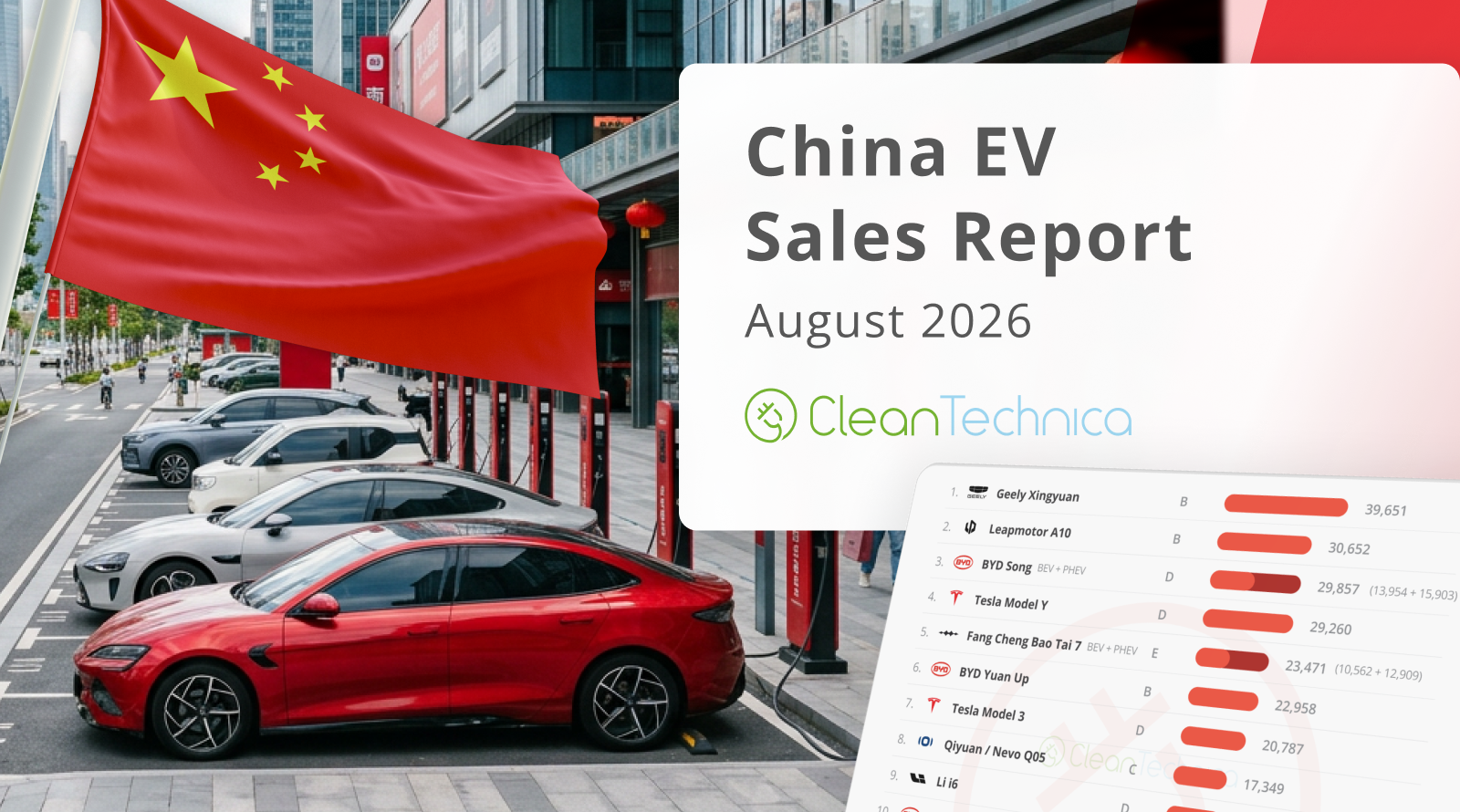
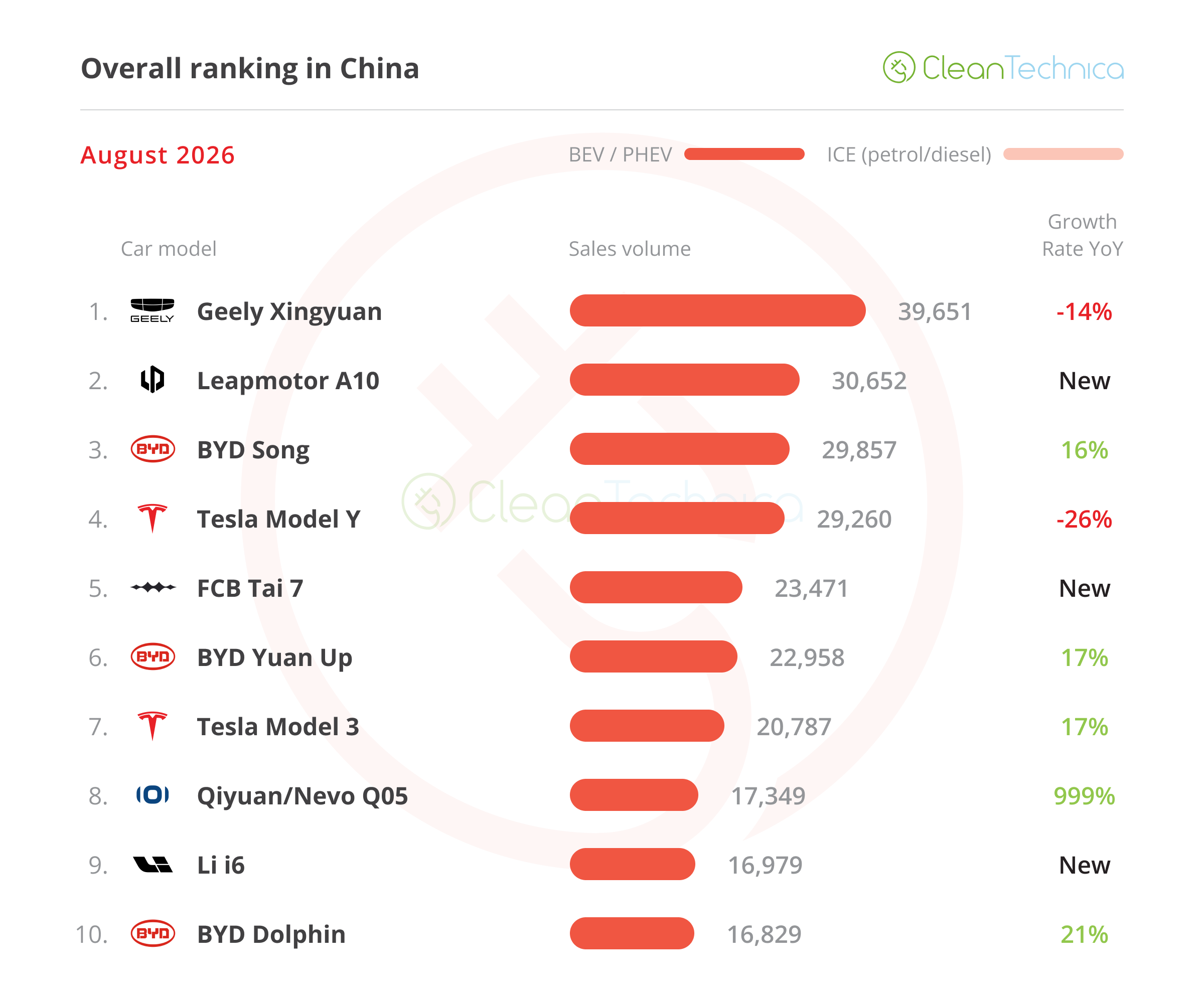
The extinction-level event for ICE vehicles is similarly apparent within overall sales rankings, which featured an entirely electrified top ten list for the mainstream market in August, with eight of those spots occupied by pure electric models.
Best Sellers in Size Categories
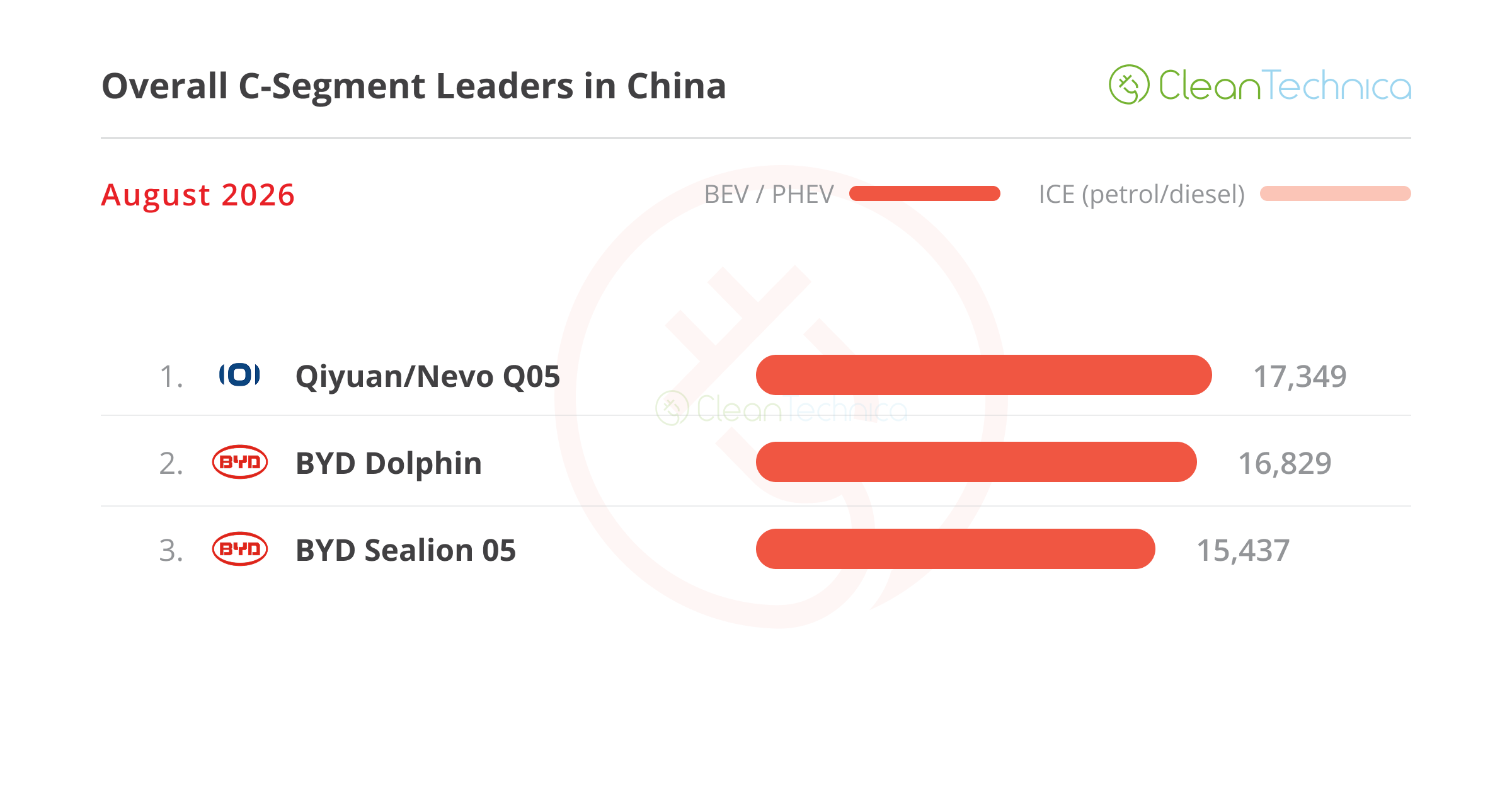
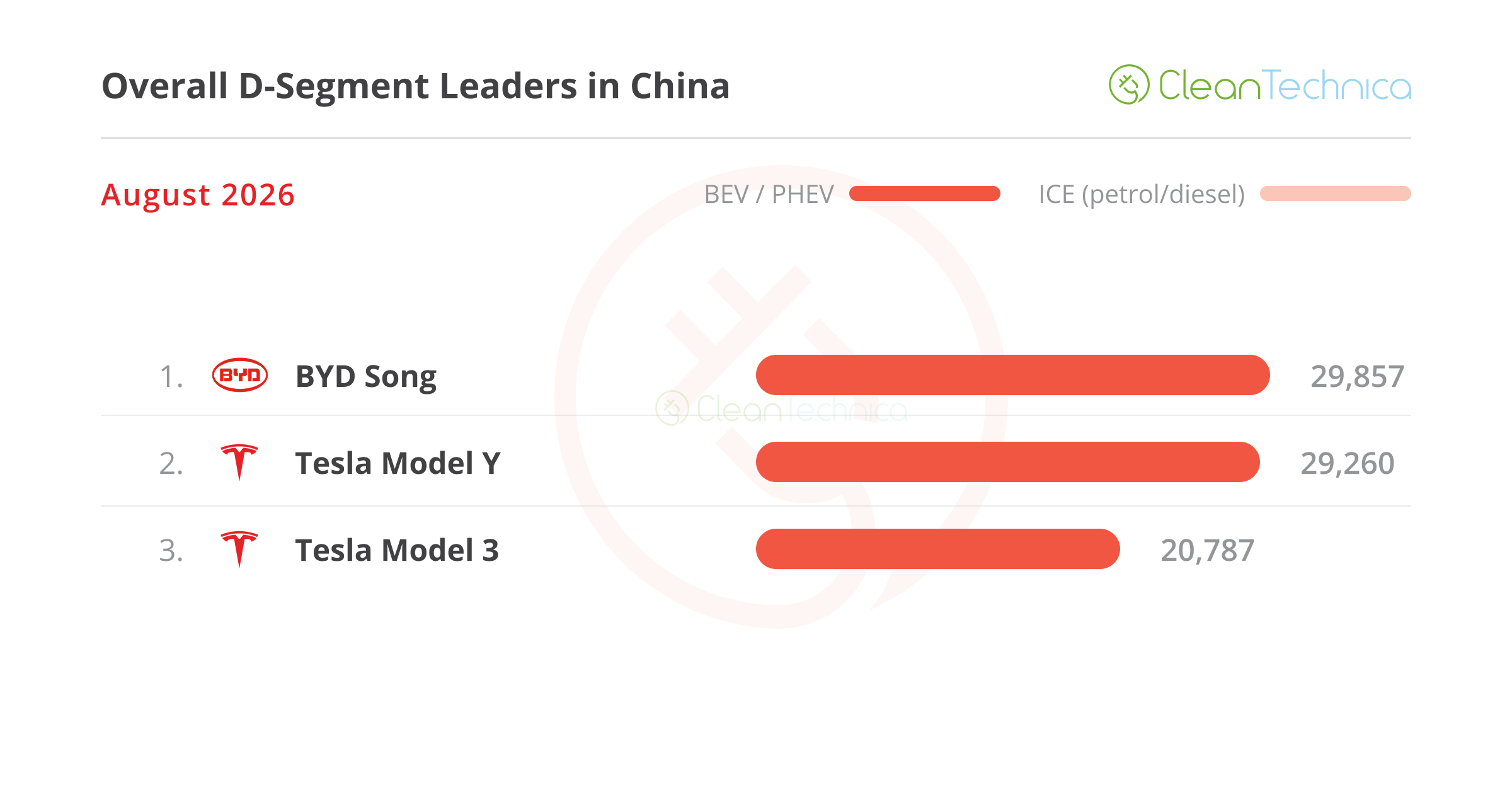
Examining the top-selling vehicles across various size categories highlights the pervasive dominance of electrified powertrains. Every single vehicle segment featured a 100% plugin podium in August, with only three models across these podiums utilizing a hybrid powertrain rather than pure electric systems.
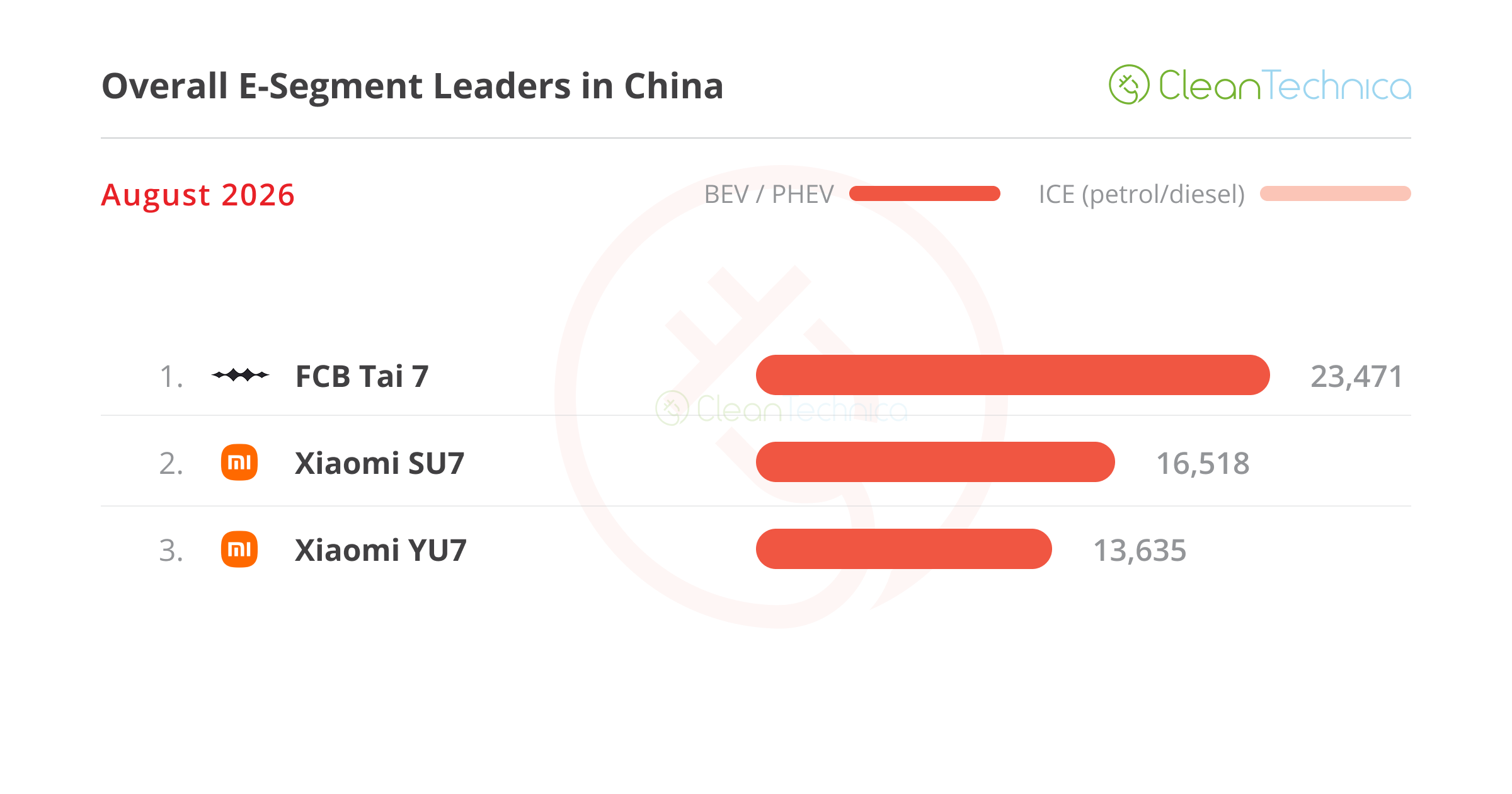
In the midsize and larger categories, the Fang Cheng Bao Tai 7 notably outperformed offerings from Xiaomi. Nonetheless, with the prominent technology company preparing to launch its upcoming lineup of large SUVs, including the Skynomad, N70, and N90 models, the current leadership position held by Fang Cheng Bao may face fierce competition.
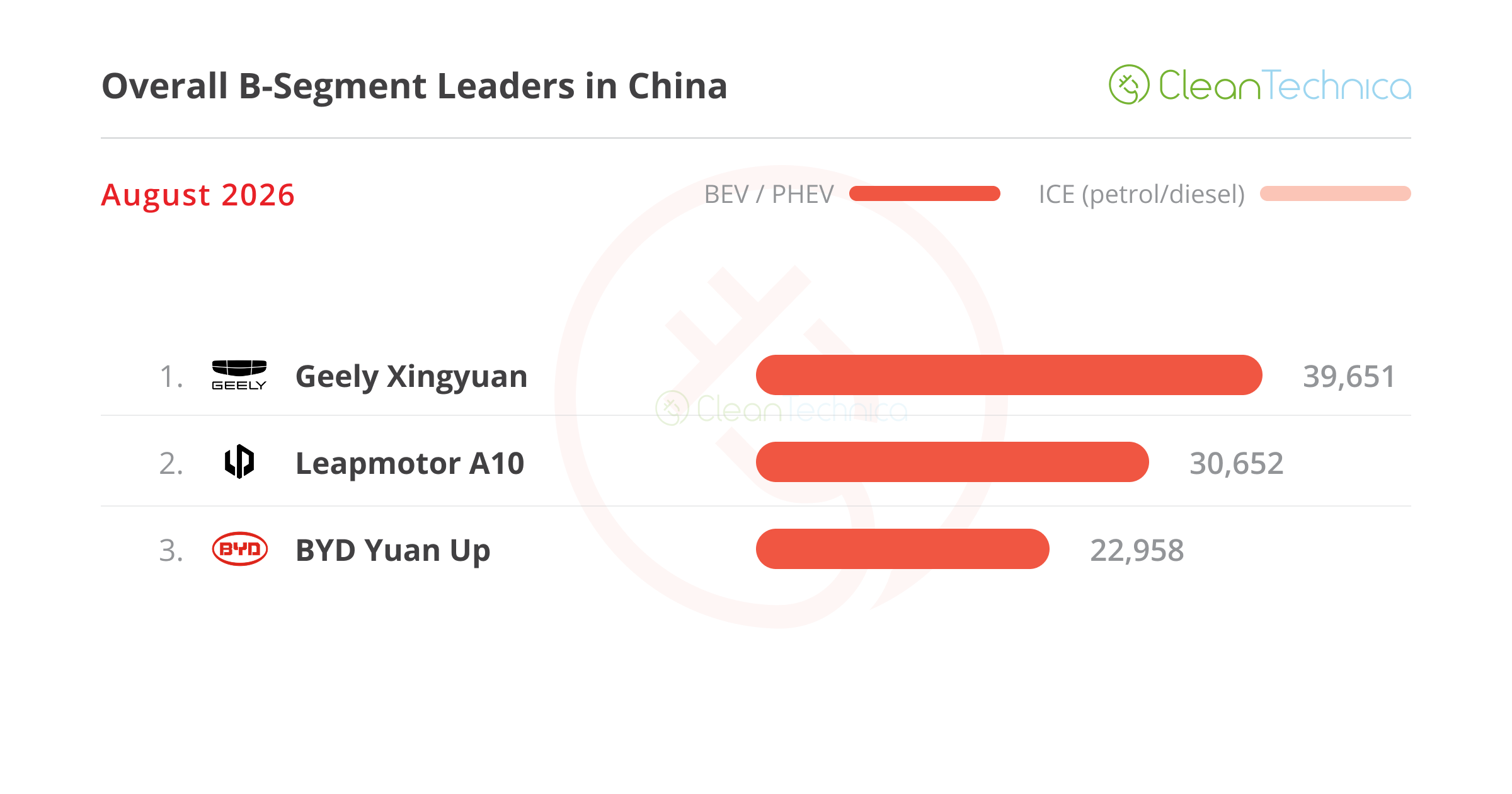
In the subcompact B-segment, heightened competition is driving strong performance as manufacturers attempt to replicate the formula established by the Geely Xingyuan. While the Xingyuan has set a high benchmark, Leapmotor is rapidly closing the gap with its A10 crossover as production scales up. Leapmotor has also introduced the A05 hatchback, a direct competitor to the Xingyuan that secured over 8,000 units in August. Combined with an upcoming new generation of the BYD Seagull engineered specifically to challenge the Xingyuan, the subcompact category has emerged as one of the most fiercely contested battlegrounds in the market.
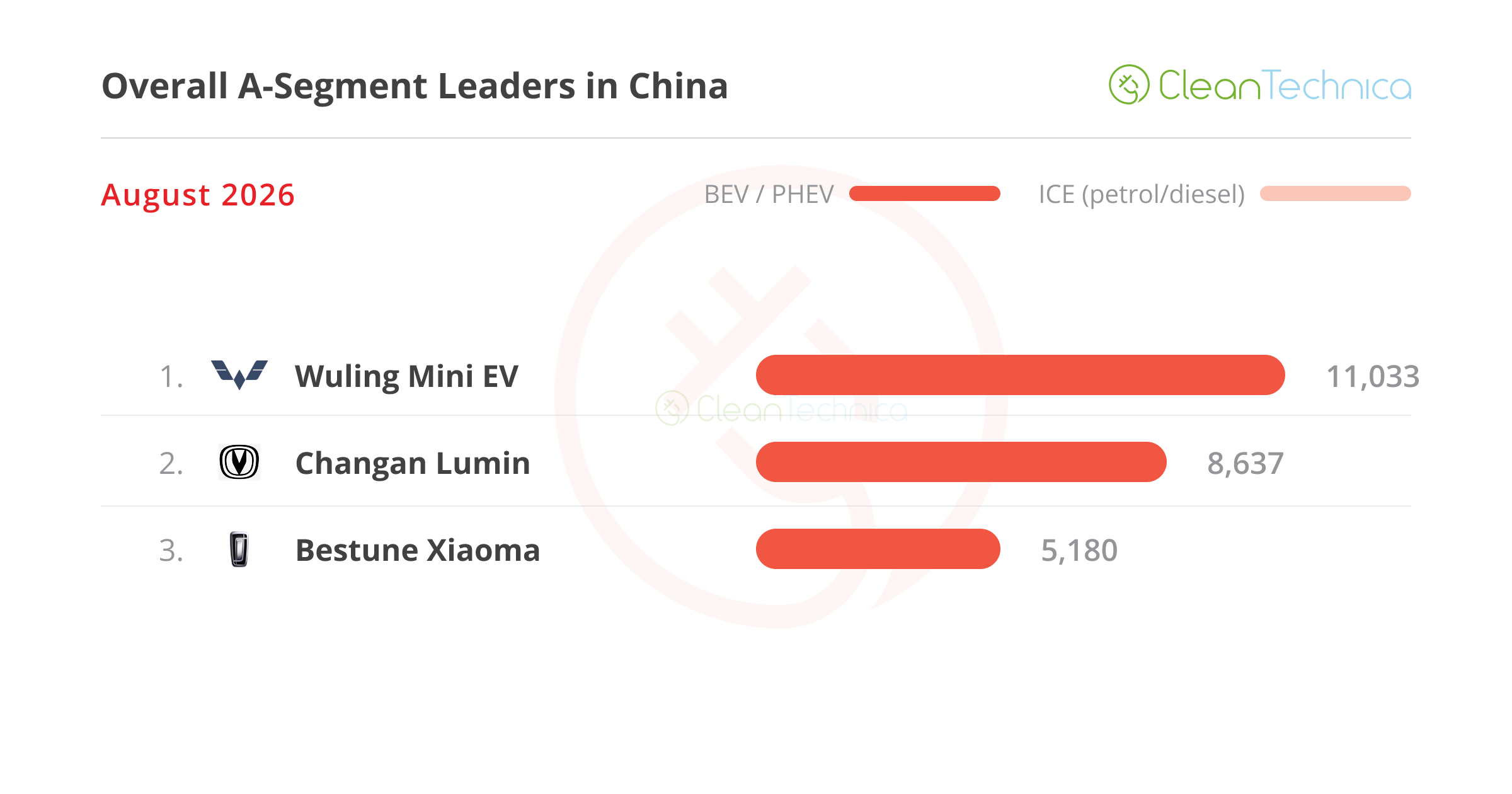
Meanwhile, city car sales continue to navigate headwinds following subsidy adjustments introduced at the beginning of the year. While the Wuling Mini EV maintains its position as the dominant player in the micro-car category, the Changan Lumin reached 8,637 units in August to capture second place, outperforming offerings from Bestune and Geely.
Top-Selling Electric Models in Detail
The Geely Xingyuan secured the top spot in August with 39,651 registrations. Developed around the conceptual brief of offering a BYD Dolphin-sized vehicle at a BYD Seagull price point of roughly $10,000 USD, the small hatchback continues to perform strongly despite facing intense pressure from emerging rivals, including Leapmotor’s B-segment contenders, the new-generation Wuling Bingo, Chery’s QQ3, BYD’s Yuan Up, and the latest generation of the BYD Seagull.
Leapmotor secured the second position with its A10 crossover, which recorded 30,652 registrations as production continues to scale. Priced around 66,000 yuan ($10,000 USD), the A10 blends value-focused pricing with a distinct exterior design featuring prominent lighting signatures and a floating roof aesthetic.
The BYD Song lineup, encompassing both BEV and PHEV variants, claimed third place with 29,857 registrations, representing a 16% year-over-year increase. Bolstered by the rollout of its updated Ultra generation—which features advanced lidar capabilities and rapid 1,500 kW DC charging systems—the midsize SUV starts at roughly 152,000 yuan ($22,000 USD) for the 76 kWh battery variant. This aggressive pricing structure positions the vehicle well below comparable western alternatives like the Tesla Model Y, which starts at 259,000 yuan ($38,250 USD) in China.
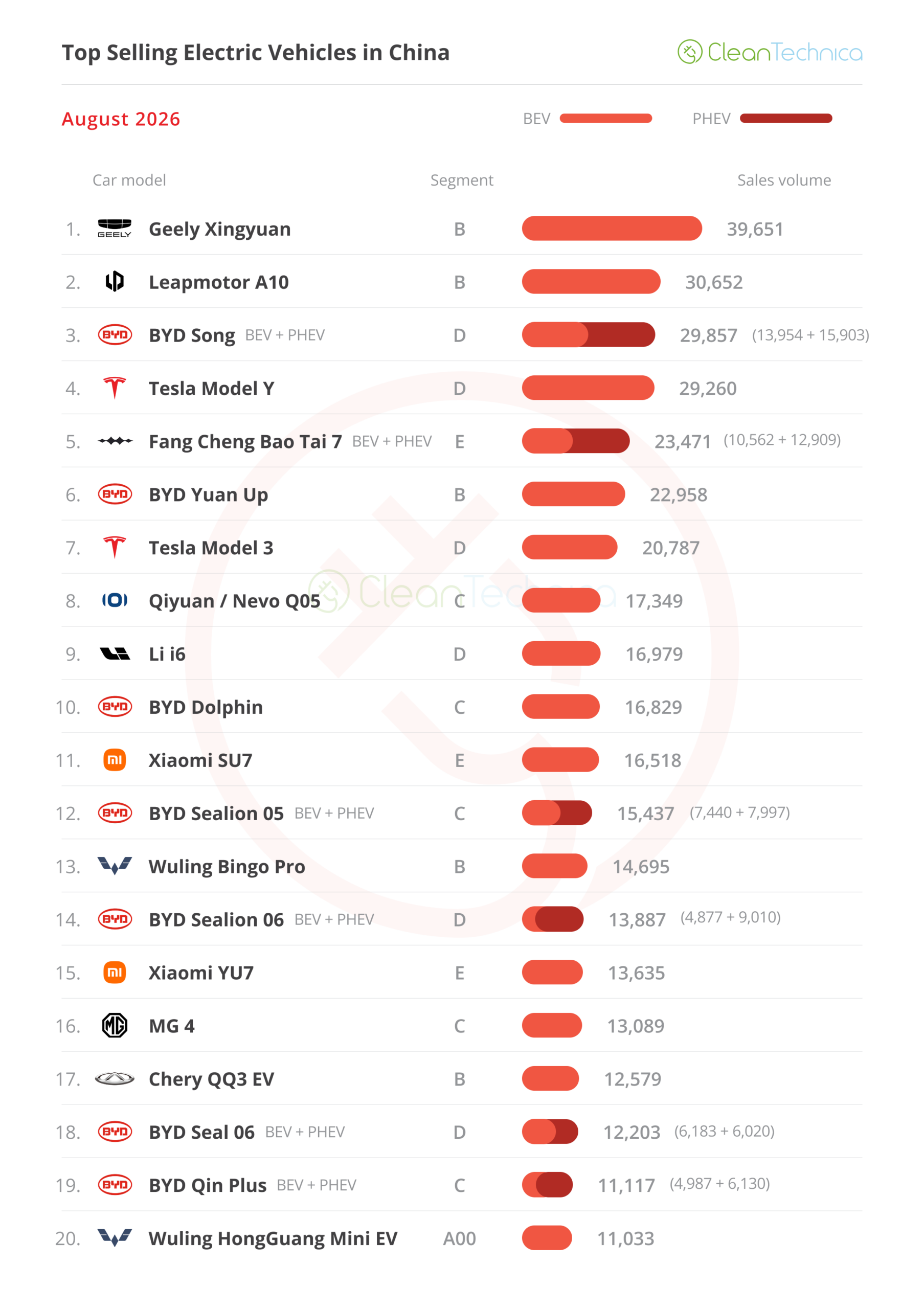
Tesla’s Model Y secured fourth place with 29,260 units delivered, reflecting a 26% decline compared to August 2025. While the introduction of an extended-wheelbase “L” variant has helped sustain demand for the crossover in China, the aging platform faces increasing competitive pressure as rivals transition rapidly toward advanced 800V architectures and next-generation features.
Rounding out the top five, BYD’s premium brand offering, the Fang Cheng Bao Tai 7, achieved a personal best of 23,471 registrations. Benefiting from the recent introduction of pure electric variants equipped with flash-charging technology and batteries ranging from 92 kWh to 106 kWh, the boxy SUV saw its BEV variants (12,909 units) outsell its PHEV counterparts (10,562 units) in August as consumer preferences increasingly favor pure electric powertrains.

Further down the sales table, the BYD Yuan Up achieved 22,958 registrations, securing sixth place and placing three B-segment vehicles within the overall top six positions. The Tesla Model 3 also experienced a notable recovery, jumping to seventh place with 20,787 registrations. Additional notable performances included the updated Wuling Bingo reaching 14,695 registrations and the Chery QQ3 EV climbing to 17th place with 12,579 units sold.
Manufacturer and Brand Performance
The broader manufacturer landscape in August reflected a stark divergence between traditional ICE producers and emerging electrified brands. Major legacy groups experienced significant volume contractions, with Toyota recording a 21% decline, Geely falling 24%, BYD dropping 36%, and Volkswagen suffering a 40% crash that pushed the once-dominant brand down to fourth place in the overall manufacturer standings.
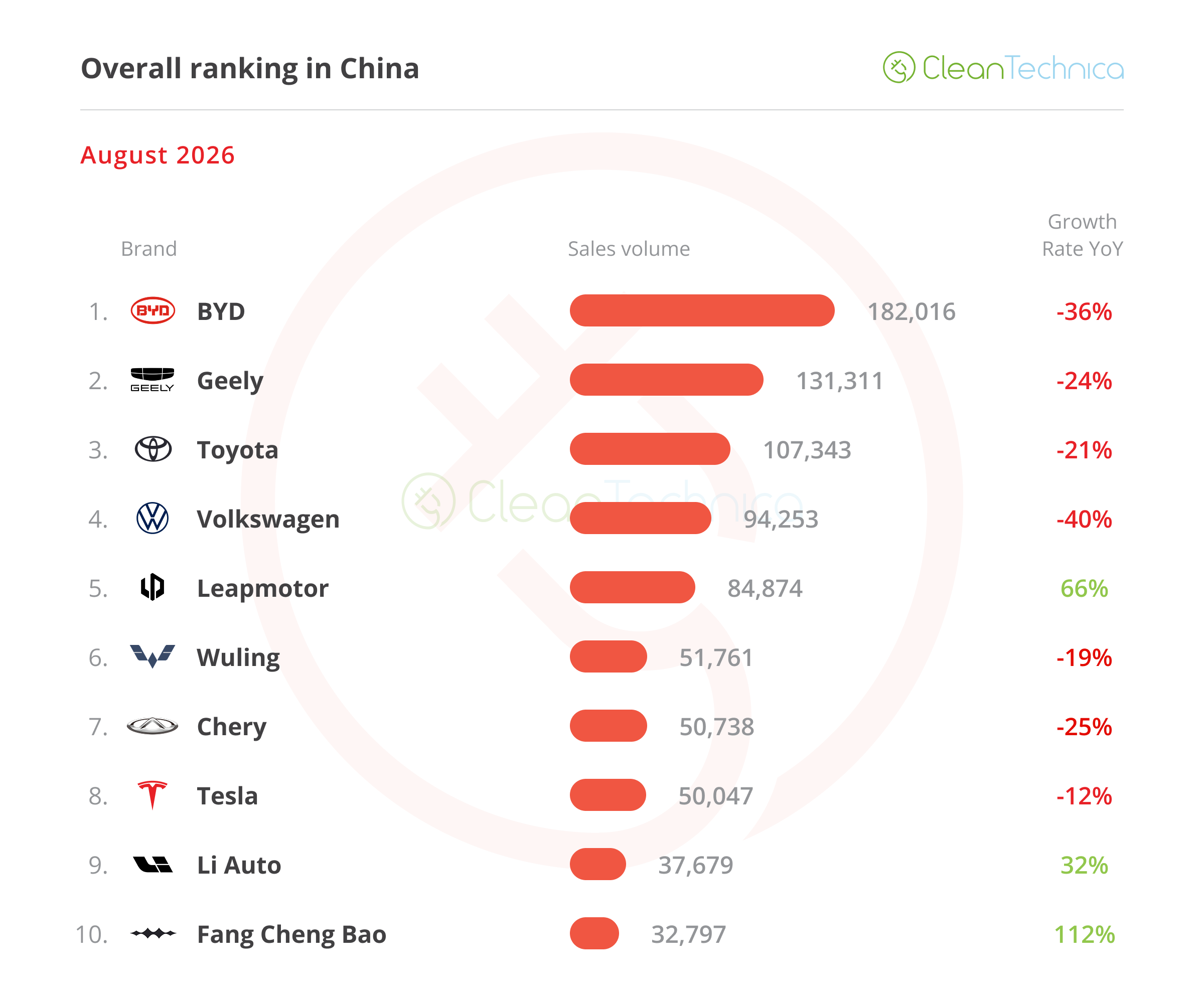
Conversely, startups like Leapmotor achieved remarkable growth, surging 66% year-over-year to 84,874 registrations. Now sitting fewer than 10,000 units behind Volkswagen, Leapmotor is well-positioned to challenge established volume leaders as its production pipeline expands. Similarly, luxury electric maker NIO recorded a 104% year-over-year jump to 21,000 units, driven by strong demand for its high-end ES8 and ES9 models, which command average selling prices of approximately $65,000 USD.
In contrast, foreign brands heavily reliant on traditional internal combustion engines faced steep declines. Honda registrations plummeted 50% year-over-year to 27,000 units, while Nissan saw its sales drop by 55% to 24,000 units.
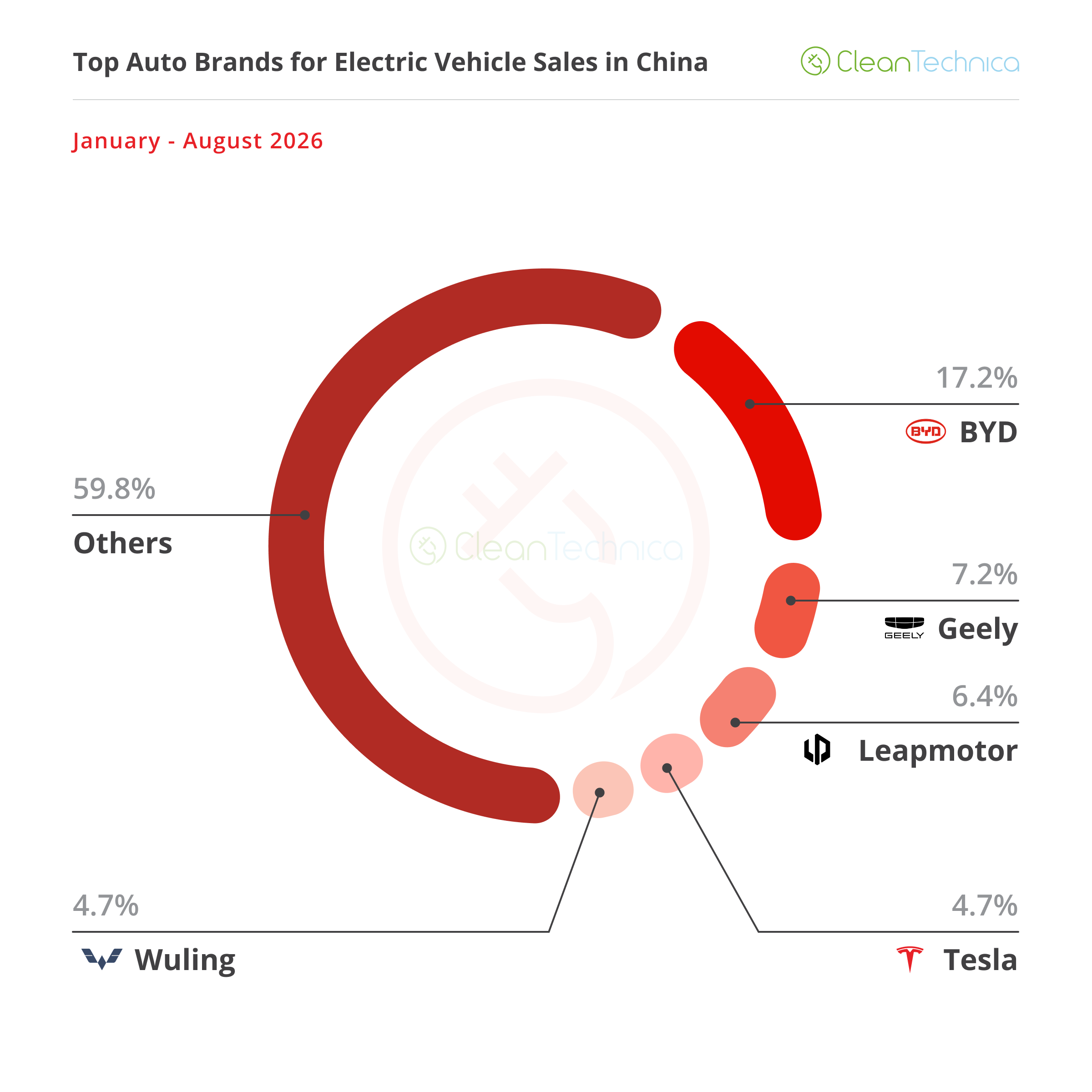
These divergent trajectories underscore a fundamental transformation across the Chinese automotive sector: a shrinking legacy ICE market dominated by foreign legacy automakers, operating in parallel with a rapidly expanding new energy vehicle market anchored firmly by domestic innovators.