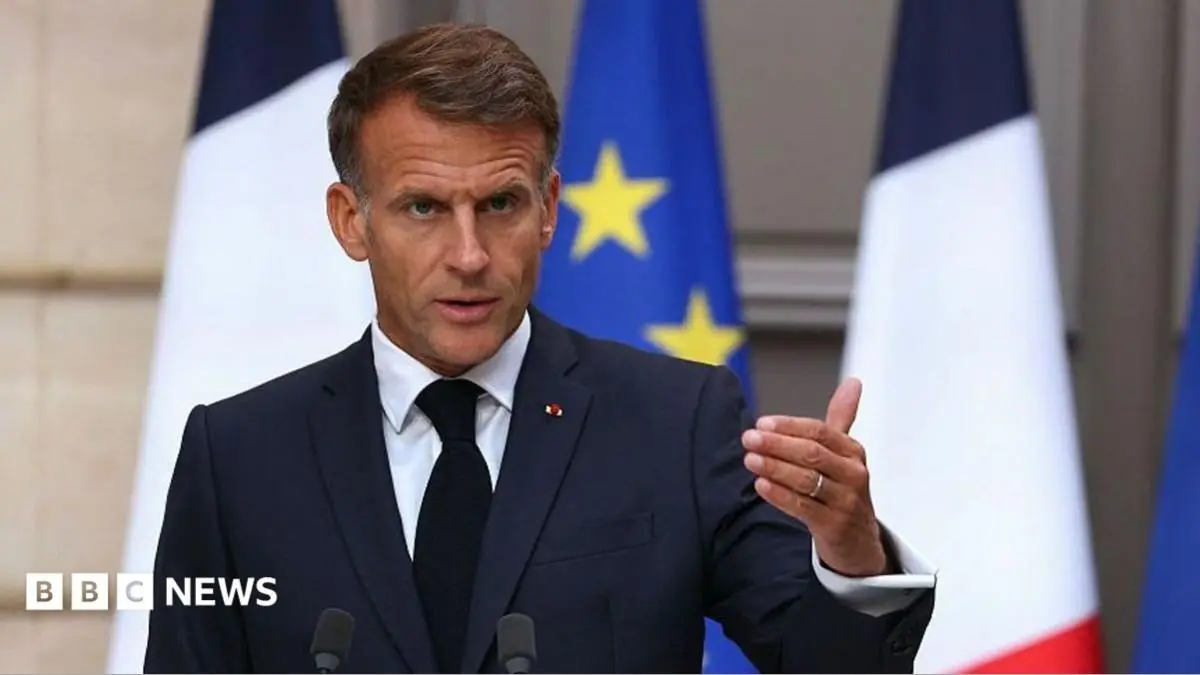
French President Emmanuel Macron has issued a stark warning regarding the intensification of Russian "hybrid warfare" tactics against France and its European allies. Speaking to journalists following a critical meeting with party leaders to assess the security implications of the ongoing conflicts in the Middle East and Ukraine, Macron characterized the current climate as one of heightened volatility, fueled by a sophisticated campaign of non-military aggression designed to destabilize Western resolve.
Hybrid warfare—a term increasingly utilized by security analysts and heads of state alike—encompasses a broad spectrum of covert and non-military methods. These tactics, which range from state-sponsored cyberattacks and sabotage to the dissemination of orchestrated misinformation, are intended to exert pressure on adversaries without crossing the threshold into direct, open military conflict. While these operations are frequently executed through proxies, allowing the perpetrators to maintain a veneer of deniability, the consensus among Western intelligence agencies is that Russia remains the primary architect behind the surge in these incidents, despite Moscow’s persistent denials.
A Pattern of Provocation and Destabilization
President Macron’s remarks arrive at a time when the security landscape on NATO’s eastern flank is becoming increasingly fraught. The French leader pointed specifically to recent, concrete evidence of this aggression, including a drone attack on Leipzig airport in Germany last month—an incident for which Russian actors have been blamed. Furthermore, Macron highlighted urgent warnings from Polish Prime Minister Donald Tusk, who has cautioned that Moscow may be planning a campaign of drone and missile strikes targeting countries that have been steadfast in their support for Ukraine.
The intent, according to Macron, is twofold: to intimidate European populations and to fracture the unity of the coalition supporting Kyiv. "In recent weeks, the Russian hybrid threat against Europeans and against France has intensified," Macron stated during his briefing. "The intent is to intimidate us and break our effort to support Ukraine. The result will be the exact opposite. We are not intimidated because we know that our security today and tomorrow is at stake in Ukraine."
The Polish government has been particularly vocal about the perceived shift in Russian tactics. On Thursday, Prime Minister Tusk informed Polish members of parliament that there is a "real risk" of drone and missile strikes being directed at the territory of NATO-aligned nations. Tusk outlined a grim hypothetical scenario in which Moscow conducts such strikes and subsequently labels them as "accidental," a maneuver calculated to sow discord and exploit potential hesitation among alliance members.
Recent events suggest that these fears are not merely theoretical. Just last Sunday, a Russian drone struck a passenger train near the Ukraine-Poland border. The strike occurred at Yahodyn, hitting the engine of the train shortly after a delegation including former UK Prime Minister Boris Johnson and several high-level European security officials had traversed the same rail line. Ukrainian authorities reported that all passengers were successfully evacuated just minutes before the impact, narrowly averting a major humanitarian catastrophe.
The scope of this campaign appears to be continental. Across Europe, from Italy to Estonia, there has been a string of suspicious fires at critical defense facilities. While investigations are ongoing, several of the affected nations have publicly pointed to Russian involvement, characterizing the fires as acts of sabotage intended to disrupt the logistical and industrial supply chains that keep Ukraine’s defense effort afloat.
Moscow’s Rhetoric and the Threat of Escalation
Despite the mounting evidence of hybrid operations, the Kremlin maintains a defensive posture. President Vladimir Putin has repeatedly asserted that Russia harbors no intentions of attacking Europe, characterizing such claims as Western alarmism. However, this diplomatic reassurance is sharply contrasted by the bellicose rhetoric emanating from the Russian Foreign Ministry.
Foreign Minister Sergey Lavrov has issued stern warnings to European nations regarding the escalation of their military assistance to Kyiv. Lavrov explicitly cautioned that the deployment of European troops to Ukraine would be interpreted by Moscow as a formal declaration of war. "If Europe attacks Russia, it will be a completely different war, and it will be very short," Lavrov stated, signaling that Russia views the Western involvement not as defensive aid, but as a direct confrontation.
On Friday, the Russian government reiterated its stance toward the United Kingdom, specifically warning that any British military facilities used to facilitate strikes against Russian territory—whether located inside or outside of Ukraine—would be considered "legitimate targets." Moscow reserved the right to initiate "necessary counter-measures" against the UK, citing what it described as a "fiercely confrontational stance" regarding the supply of long-range drones and advanced weapon systems to the Ukrainian armed forces.
Domestic Security and Energy Vulnerability
In light of these mounting external threats, President Macron has shifted his domestic policy focus toward hardening French critical infrastructure. During his meeting with party leaders, Macron announced that the government has been tasked with bolstering the protection of the nation’s most sensitive sites, specifically targeting the defense industry and technological hubs against the dual threats of drone incursions and sophisticated cyberattacks.
Beyond physical and digital security, the conflict has forced a reevaluation of energy stability. Recognizing that the energy sector remains a primary target for destabilization, Macron announced that France will initiate a meeting of the G7 to address the security of energy supplies and coordinate strategies for managing gas reserves.
"In the coming weeks, we will have a G7 meeting devoted to these energy issues, both to strengthen cooperation and to avoid unnecessary tensions between the G7 countries and our main partners," Macron explained. "It will also be an opportunity to consider options for a possible release or unlocking of strategic reserves."
This focus on energy security also serves a domestic political purpose for the French leader. As the nation approaches elections scheduled for April-May of next year, the political climate remains tense. Fuel price inflation, a byproduct of the broader global economic instability triggered by the invasion of Ukraine in 2022, has become a potent political issue.
Macron urged candidates—most notably the hard-right opposition leader Marine Le Pen, who is currently leading in the polls—to refrain from exploiting public anxiety for electoral gain. He insisted that political actors must acknowledge that the current economic strain is a result of uncontrollable international circumstances rather than domestic policy failure. As the election season looms, the intersection of national security, economic hardship, and the shadow of the war in Ukraine continues to dominate the French political discourse, leaving the government to balance the urgent need for defense against a backdrop of domestic political opposition.