Celebrity in the 1930s operated under an entirely different set of rules compared to the modern era, thriving on pure showmanship, high-stakes danger, and unorthodox marketing stunts that would be unthinkable by today’s safety and regulatory standards. In early 1930, legendary celebrity pilot Roscoe Turner teamed up with Gilmore Oil to shatter transcontinental flight records aboard a Lockheed Express, completing the rigorous run from New York to Los Angeles in a blistering 18 hours and 42 minutes. At the time, Gilmore Gasoline was marketed aggressively under the brand name "red lion," a clever play intended to convince motorists that the fuel gave their automobile engines considerably more "roar."
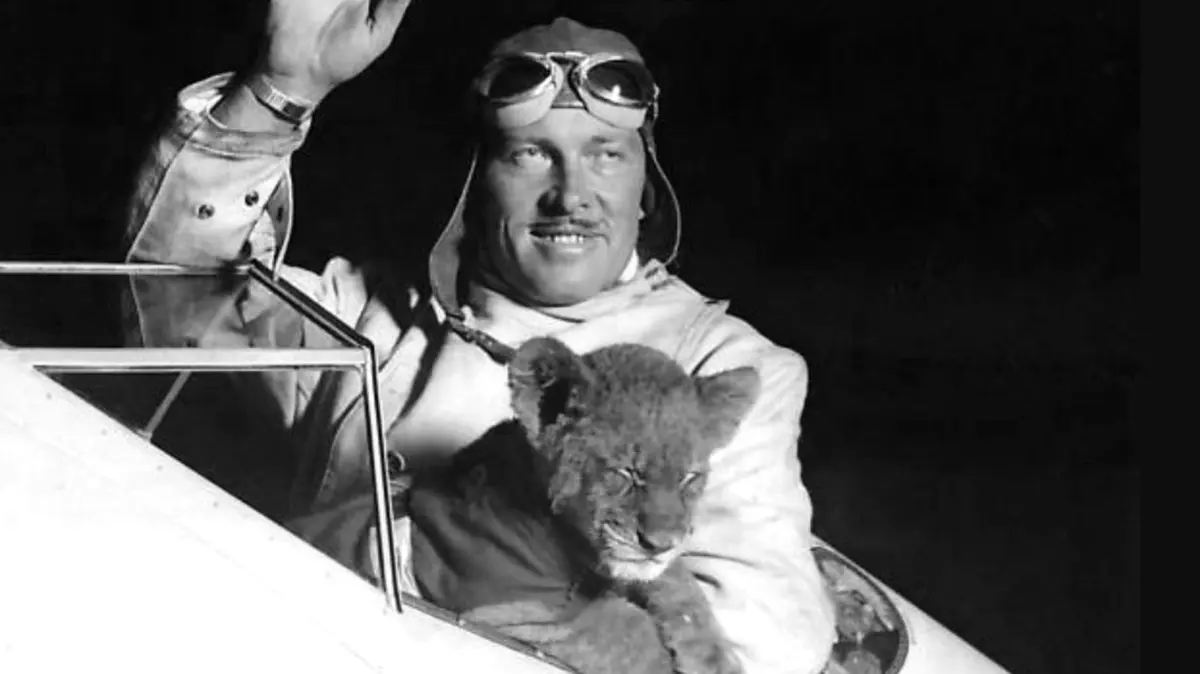
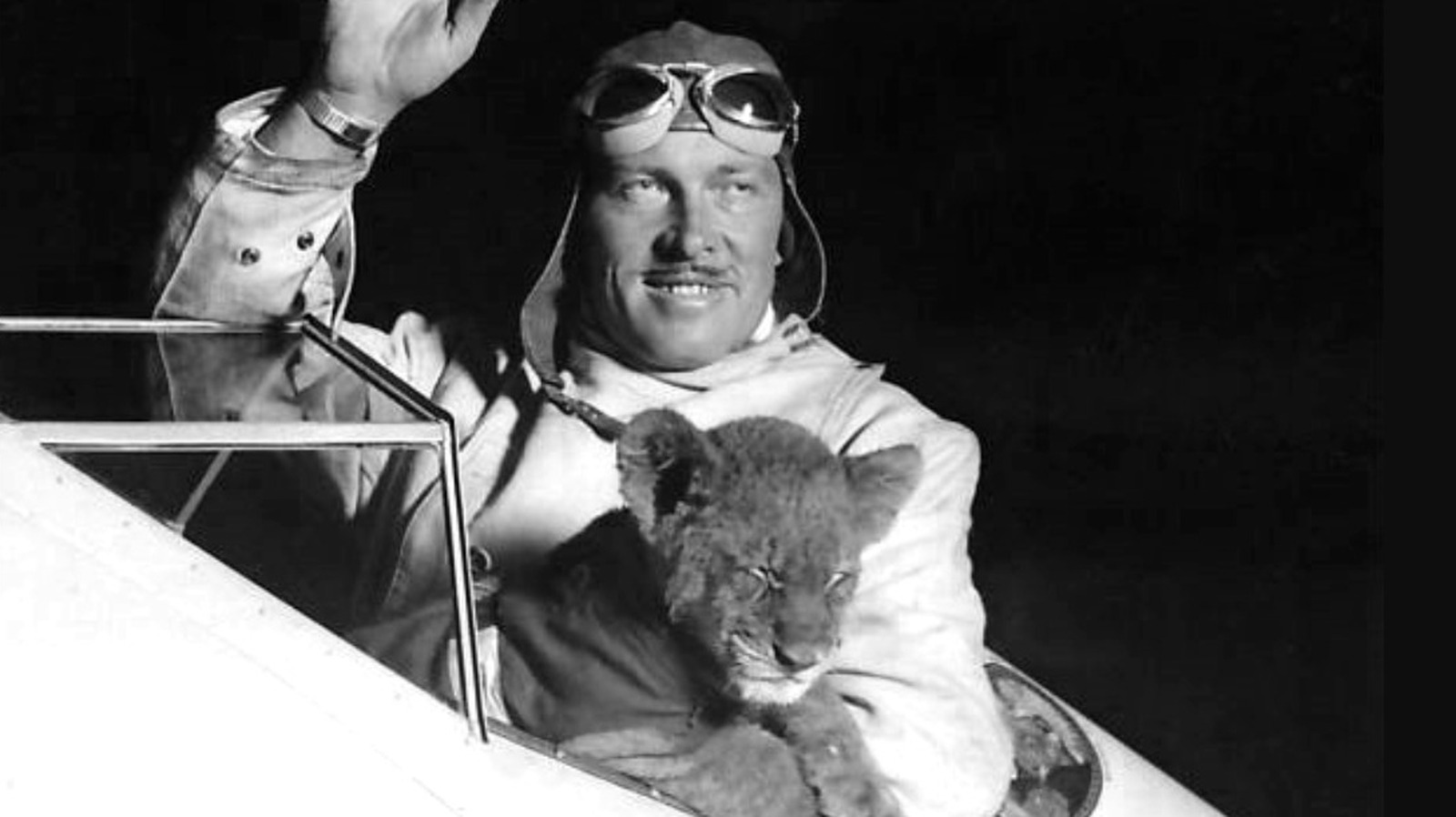
Always the flamboyant showman with an eye for the dramatic, Turner decided that metaphorical branding was not enough. He approached the owner of a local lion farm and successfully convinced him to donate a live cub for the record-breaking attempt. The three-week-old lion cub, which Turner promptly dubbed Gilmore the Flying Lion, quickly became an integral part of his high-profile aviation stunts. The young cat accompanied the pilot through grueling speed trials and even the world-famous Cleveland National Air Races, capturing the public imagination and cementing a marketing campaign that would echo through aviation and advertising history for nearly a century.
Turner’s path to aviation stardom was as colorful as his public persona. Having initially learned to fly for the U.S. Army during the turbulent years of World War I, Turner quickly transitioned into a nationally renowned barnstormer, thrilling crowds across the country with daring wing-walking stunts and artfully choreographed parachute jumps. His journey through the aviation world was not without turbulence; in 1922, he served a brief prison sentence after purchasing a Curtiss JN-4 biplane that ultimately turned out to be stolen government property. Undeterred by the setback, Turner later established the Roscoe Turner Flying Circus before shifting gears to coordinate flying stunts for Hollywood films and launching his own commercial airline. However, when the devastating onset of the Great Depression effectively killed his entrepreneurial momentum, Turner climbed back into the cockpit of high-speed racing planes and secured a lucrative, career-defining sponsorship from Gilmore Oil.
For much of 1930, specifically between April and December, Turner and his unconventional flying companion achieved international acclaim through a series of daring aerial stunts and promotional tours. Yet, as nature would have it, the cub rapidly outgrew the confines of the cockpit. Once the animal became too large to safely continue flying, Turner’s own fame continued to bloom independently of his feline co-pilot. He went on to secure his first Bendix Trophy race victory in 1933, followed by a triumph in the prestigious Thompson Trophy air race in 1934. These monumental racing achievements were made possible after Turner collaborated with fellow aviation minds Jimmy Wedell and Harry Williams to engineer and develop an advanced, low-wing speed plane. The custom-built monoplane was remarkably minimalist, consisting of little more than a pilot’s seat, a steering tiller, and a thunderous Pratt & Whitney nine-cylinder radial engine.
What of the lion?
The sheer theatricality of Turner’s lifestyle drew widespread attention, earning him the admiration and fascination of his peers. Jimmy Doolittle, a formidable competitor of Turner’s before ascending to his own legendary flying status during World War II, held a deep appreciation for the showman’s unique flair.
"You always knew when Roscoe was around. His broad smile topped with a broad waxed mustache was the first thing you noticed," Doolittle recalled, as recounted by HistoryNet. "Then you saw his uniform — highly polished boots, riding breeches, powder blue military jacket with diamond studded wings, sometimes a Sam Browne belt or a silver buckle, gold-and-crimson helmet and goggles. Then you heard him joshing with everyone, anxious to meet anybody he hadn’t known before. You couldn’t help but like him."
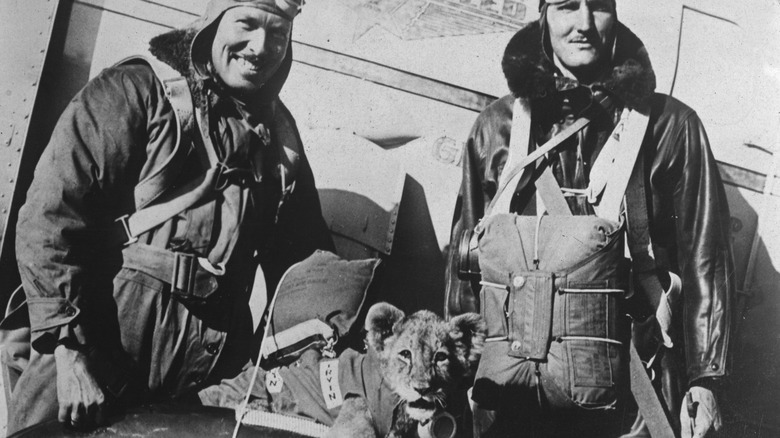
Despite the public adoration, Turner’s unconventional co-pilot eventually attracted the critical eye of animal welfare advocates, drawing a formal complaint from the Humane Society regarding the safety and ethics of flying a wild animal. To satisfy the mounting pressure and appease the organization’s concerns, Turner cleverly outfitted the 17-pound cub with a custom-built, static-line parachute. Armed with feline safety gear, Turner continued his quest for point-to-point aviation speed records for several months. Among these exploits was a high-profile run from Vancouver, Canada, down to Aguascalientes, Mexico, with the young lion securely in tow—all entirely funded by Gilmore Oil, a company entirely unrelated to the modern Gilmore Car Museum.
Gilmore the lion functioned as far more than a mere passenger in a high-speed aircraft; he served as a living ambassador for the petroleum company, a mascot for Turner’s burgeoning racing career, and a charismatic symbol of the adventurous spirit of early aviation. The cub made appearances wherever Turner traveled, stepping out at high-profile air shows, glittering Hollywood movie premieres, and exclusive evening outings on the town. However, the biological reality of raising a wild predator quickly caught up with the tour. By the time the lion reached ten months of age, he tipped the scales at an impressive 150 pounds, signaling to Turner that the aerial partnership had reached its natural end. Over the course of his unique tenure as an oil company spokeslion, Gilmore had logged more than 25,000 miles in the air.
The legacy of Gilmore the Lion remains a fascinating chapter in American marketing history, illustrating the powerful impact of unconventional, outside-the-box thinking. Although the Gilmore Oil Company itself has long since vanished—having been absorbed decades ago into the corporate lineage that eventually became Mobil—its enduring legacy is defined by a bold and creative marketing strategy that thoroughly captivated the American public during a time of great economic hardship.
What happened to Gilmore?
Despite his relatively brief career as an airborne companion, Gilmore achieved the status of a cultural institution nearly a hundred years ago, with his name and image recognized across the nation. Following his retirement from aviation, Gilmore spent nearly a decade living in captivity. He was initially housed in a permanent cage located at the Burbank airport in Southern California, before being relocated to another display enclosure situated at a Gilmore gas station in Beverly Hills. Once celebrated as a dynamic symbol of power, speed, and aerial adventure alongside his flamboyant pilot friend, Gilmore had been reduced to a static roadside attraction with his paws planted firmly on terra firma. Throughout the 1930s, the lion continued to make periodic public appearances by Turner’s side for promotional events, though he never took to the skies again.
In 1940, Gilmore was finally returned to the very farm where his extraordinary life had begun: the Louis Goebel Lion Farm located in Agoura, California. He spent the remainder of his days on the peaceful grounds of the farm for another decade, supported by occasional visits from Turner, who continued to send financial contributions to ensure the animal was well cared for. Gilmore ultimately passed away on December 17, 1950, at the advanced age of 20.
Following his death, Gilmore’s remains were sent to a professional taxidermist to be mounted, after which the preserved lion was moved to Turner’s personal residence in Indianapolis, Indiana. When Turner passed away in 1970, the stuffed remains of the famous feline were incorporated into the newly established Roscoe Turner Museum, which opened its doors that same year. When that museum ultimately shuttered its operations in 1972, Gilmore was transferred to the Smithsonian National Air and Space Museum. The legendary aviation mascot officially became part of the permanent collection, where he remains safely housed to this day. According to museum records, the fully mounted taxidermy specimen of Gilmore now weighs a substantial 328 pounds.