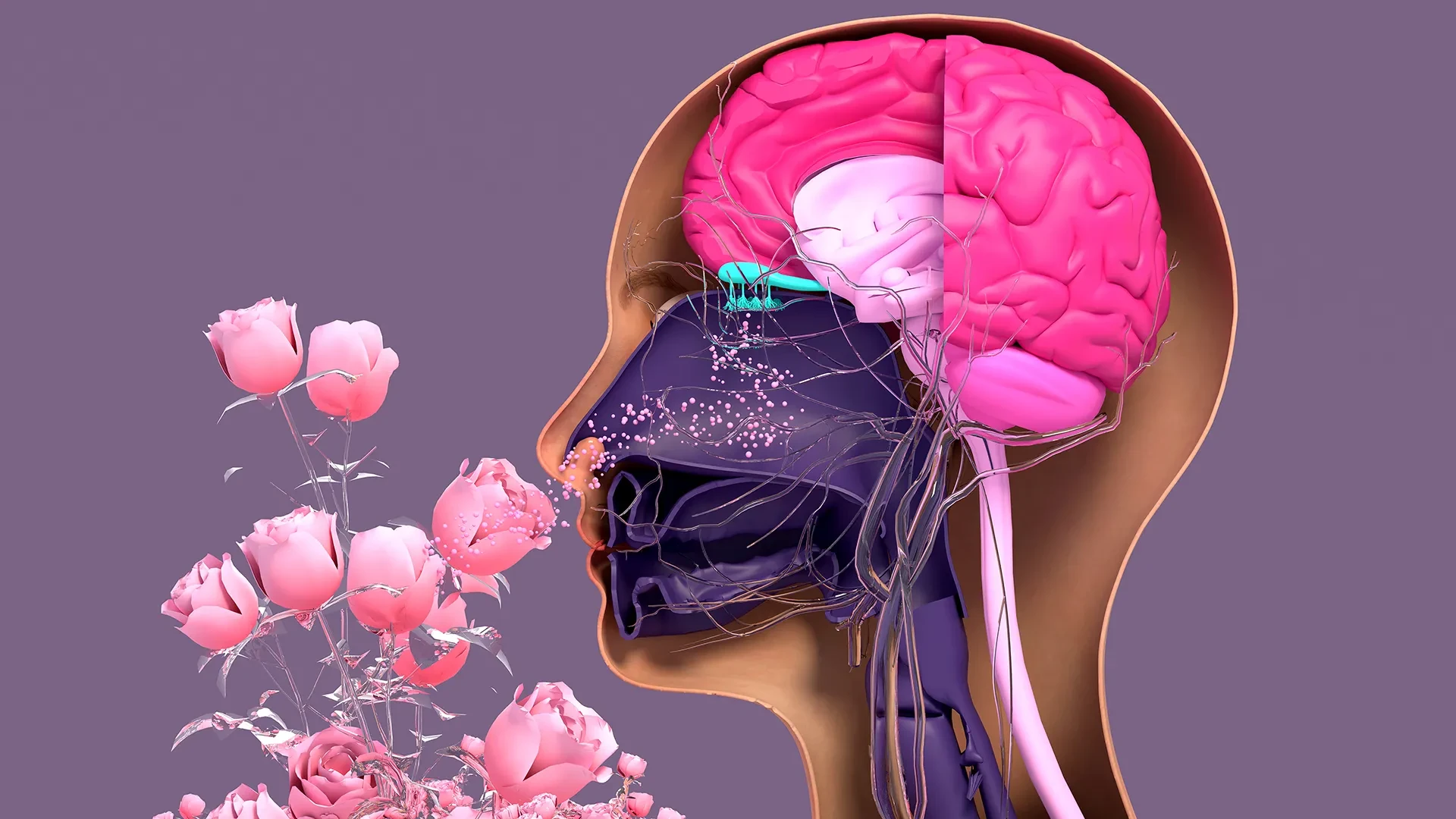
Researchers at the Tufts University School of Medicine and the Graduate School of Biomedical Sciences (GSBS) have unlocked a significant mystery regarding the human sense of smell. By deploying a newly devised, three-dimensional model to study the regeneration of nerve tissue in the nasal cavity, the team has discovered that a specific type of stem cell—previously dismissed as dormant—actually plays a foundational role in maintaining our olfactory capabilities. This finding challenges long-held assumptions about how the nose repairs itself and offers a promising new pathway for treating those suffering from smell loss.
Unlike the neurons in the central nervous system, which are notoriously difficult to repair once damaged, the sensory neurons located in the nasal cavity possess an extraordinary capacity for regeneration. Throughout a person’s life, these cells are tasked with the difficult job of identifying scents while being exposed to the harsh, often toxic, external environment. Despite this constant barrage, the nasal lining typically maintains a robust regenerative cycle. However, this process is not infallible. Viral infections, such as those caused by SARS-CoV-2, chronic exposure to environmental toxins, and the natural progression of aging can significantly impair these neurons or hinder the ability of stem cells to replicate. When this regenerative cycle falters, individuals may experience a partial or even total loss of smell, a condition that can profoundly impact quality of life, nutrition, and mental well-being.
To better understand why this biological machinery fails, the research team, led by scientists at Tufts, developed a novel, three-dimensional olfactory tissue mouse model, often referred to as an organoid. These organoids serve as a miniature, simplified version of the complex environment within the nose, allowing researchers to observe how neurons are continually formed and identify the specific biological triggers that lead to decline. The study, which was recently published in the journal Cell Reports Methods, provides a granular look at the symbiotic relationship between two primary types of stem cells in the nose: horizontal basal cells (HBCs) and globose basal cells (GBCs).
For years, the scientific community focused primarily on GBCs as the main drivers of neurogenesis—the process by which new neurons are born. HBCs, by contrast, were largely relegated to the background, viewed by many as a "reserve" population that only activated in cases of extreme tissue injury. However, the findings from the Tufts team suggest a much more active and nuanced reality.
"Our research suggests that these two stem cells may be interdependent," explains Brian Lin, a research assistant professor in the Department of Developmental, Molecular and Chemical Biology at Tufts and the senior author of the study. "One type that we thought was largely dormant—HBCs—may actually play a crucial role in supporting the production of new neurons and the repair of damaged tissue."
Through the use of their 3D organoid model, the researchers identified a specific subpopulation of HBCs that are characterized by their expression of the protein KRT5. By monitoring these cells, the team observed that they are not merely waiting for a catastrophe to occur; rather, they actively participate in the development of new smell-sensing nerve tissue. The evidence for this was stark: when the researchers selectively depleted these KRT5-positive HBCs from the organoid cultures, the generation of new neurons was significantly impaired. This confirmed that these stem cells are essential, active players in the ongoing regenerative process of the olfactory system, rather than passive bystanders.
The team also extended their research to investigate the impact of aging on this regenerative capacity. By comparing cells harvested from mice of different ages, the researchers observed a clear decline in the ability of older cells to generate new neurons. "We found a decline in the ability of the older mice cells to generate new neurons," Lin notes. "We think this is due to a decrease in the GBC population as we age, but we need to do more work to test this hypothesis and, if so, develop ways to rejuvenate them."
An Accessible Model for Global Research
A significant portion of the success of this project lies in its accessibility. The lead author of the study, Juliana Gutschow Gameiro—a former visiting Ph.D. student at GSBS who joined the team from the State University of Londrina in Brazil—was driven by a commitment to democratizing scientific research. Recognizing that not all laboratories have access to high-end equipment or massive budgets, she focused on developing a model that was relatively simple and inexpensive to create.
This accessibility is timely. As the global medical community has grappled with the long-term impacts of the COVID-19 pandemic, the interest in olfactory biology has surged. The connection between COVID-19 and sudden smell loss, alongside the known links between smell dysfunction and neurodegenerative conditions like Parkinson’s disease, has drawn researchers from a wide array of disciplines into the study of olfactory epithelial cells.
"We wanted to develop an easy-to-use model so that non-stem cell biologists and those working in labs with limited resources could use it to better understand how olfactory neurons regenerate and what happens that causes that process to diminish or fail completely," says Lin. By creating a tool that lowers the barrier to entry, the Tufts team hopes to accelerate the pace of discovery across the global scientific community, enabling researchers in diverse settings to contribute to the understanding of olfactory health.
The Path Toward Human Organoids
The ultimate ambition of this research is to move beyond mouse models and establish a human olfactory organoid. Such a tool would be a game-changer for the pharmaceutical industry, providing a reliable, ethical, and efficient platform for screening drugs intended to treat patients suffering from chronic anosmia or other olfactory impairments.
Currently, pre-clinical research often relies on whole-animal testing or complex human cell cultures, both of which can be expensive, slow, and sometimes less representative of the human condition. Organoids—miniature, lab-grown tissues that mimic the architecture and function of actual organs—have already revolutionized research for the lungs, kidneys, and intestines. However, human olfactory tissue has proven notoriously difficult to replicate in a dish.
The challenge, as Lin explains, is the logistical difficulty of obtaining pure olfactory tissue from human subjects. The procedure involves inserting a specialized brush, similar to those used in COVID-19 testing, deep into the nasal cavity under anesthesia to collect cells. Once the tissue is collected, researchers face the technical hurdle of separating the olfactory stem cells from the more abundant respiratory stem cells present in the nasal lining. In the current mouse model, these cells are easier to isolate, but human samples present a much more complex mixture.
The next major hurdle for the research team is to develop a robust, cost-effective technique for sorting and isolating these specific human olfactory stem cells. Once they can successfully coax these human cells to grow and thrive in a laboratory environment, the potential for drug screening and personalized medicine could expand significantly. By understanding how to "rejuvenate" or support the stem cell populations that naturally decline with age or disease, scientists may one day be able to offer therapeutic interventions to those who have lost their sense of smell, potentially restoring a vital connection to the world around them. As the team continues their work, they remain focused on the goal of turning these insights into tangible medical solutions.