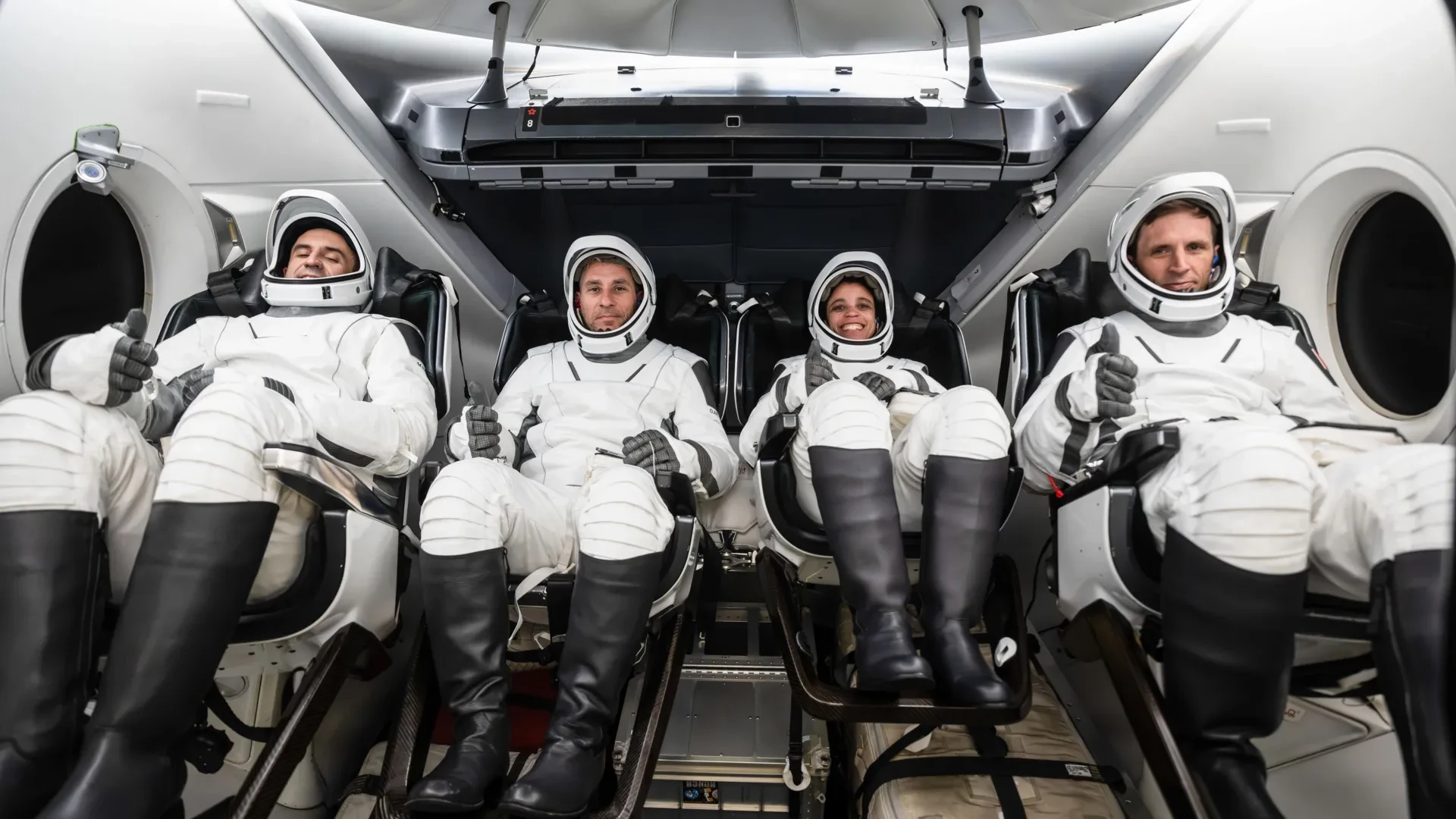
NASA and SpaceX have officially set their sights on Thursday, Oct. 1, for the launch of the Crew-13 mission to the International Space Station (ISS). Targeting a liftoff time of 11:10 a.m. EDT, the mission represents the latest chapter in the ongoing partnership between the agency and the private sector to maintain a continuous human presence in low-Earth orbit. As the launch window approaches, mission controllers and engineers are moving into the final phase of a rigorous pre-flight certification process designed to ensure the safety of the crew and the success of the mission.
In the days leading up to the scheduled liftoff, teams at NASA and SpaceX are conducting a series of final preparations and intensive readiness reviews. These milestones are critical to verifying that every component—from the high-performance Falcon 9 rocket and the sophisticated Dragon spacecraft to the complex life-support systems aboard the International Space Station—is performing within nominal parameters. This collaborative oversight involves thousands of personnel across multiple control centers, all working in concert to confirm that the four astronauts are cleared for their journey into the orbital laboratory.
The mission is slated to launch from Space Launch Complex 40 at the Cape Canaveral Space Force Station in Florida. This historic site has become a cornerstone for the commercial crew program, providing the necessary infrastructure to launch heavy-lift rockets with the precision required for rendezvous with the orbiting station. As the countdown proceeds, the focus remains on weather assessments, hardware telemetry, and the final synchronization of ground support systems that will guide the vehicle from the launch pad into the vacuum of space.
Rapid Transit to the Orbiting Laboratory
Should the launch proceed as scheduled on Oct. 1, the Crew-13 mission will be characterized by a highly efficient flight profile. The Dragon spacecraft is expected to reach the International Space Station in less than nine hours, a testament to the advancements in orbital mechanics and automated docking technology that have become standard for modern spaceflight. If all mission parameters remain within acceptable limits, the spacecraft is projected to perform its final approach and docking at approximately 8 p.m. EDT.
The target for this arrival is the forward-facing port of the Harmony module. Harmony, often referred to as "Node 2," serves as a vital connecting point for the station, acting as a crossroads for the pressurized environment that sustains the crew. Beyond its role as a docking location for visiting vehicles like the Dragon, Harmony houses critical systems that distribute power, data, and thermal control to other segments of the station. The precision required for this docking process is immense; the Dragon spacecraft must maneuver through orbital space to match the velocity and trajectory of the ISS, which orbits the Earth at approximately 17,500 miles per hour.
Once the Dragon reaches the proximity of the station, it will initiate a carefully controlled sequence of maneuvers. Utilizing its automated navigation systems, the spacecraft will align itself with the designated port on the Harmony module. This docking procedure is a sophisticated blend of orbital physics and autonomous software, ensuring that the spacecraft attaches securely to the station’s interface. Once the structural seal is verified and pressure equalization between the two vessels is completed, the hatches will be opened, allowing the Crew-13 astronauts to transition from their flight vehicle into their new home for the next several months.
The Crew-13 Expedition Team
The crew embarking on this mission brings together a diverse blend of experience and international cooperation. NASA astronaut Jessica Watkins has been named the spacecraft commander for the mission, a role that entails the highest level of responsibility for the safety of the crew and the vehicle during all phases of flight. Joining her is NASA astronaut Luke Delaney, who will serve as the pilot. Together, the two NASA aviators will manage the flight systems and communication protocols that define the journey from Cape Canaveral to the ISS.
The mission is further bolstered by the expertise of international partners, reflecting the cooperative nature of the International Space Station program. CSA (Canadian Space Agency) astronaut Joshua Kutryk and Roscosmos cosmonaut Sergey Teteryatnikov are joining the crew as mission specialists. Their presence highlights the continued collaboration between space agencies, which remains essential for the operational longevity of the station. These four individuals have spent months training for the specific demands of a long-duration mission, mastering the complexities of the Dragon spacecraft and the intricacies of life aboard the station.
Upon their arrival and successful integration into the station’s operations, the Crew-13 team will officially become members of Expedition 75. Space station expeditions are long-duration stays that form the backbone of human space exploration today. Throughout their residency, the crew will be tasked with a wide-ranging portfolio of objectives. They will conduct cutting-edge scientific research in fields such as biology, physics, and material science, leveraging the unique microgravity environment that cannot be replicated on Earth. Furthermore, they will perform essential maintenance on the station’s aging infrastructure, support various technology demonstrations intended to pave the way for future lunar and planetary exploration, and oversee the daily operations that keep the orbiting laboratory functioning as a hub of global innovation.
Final Preparations and Pre-Flight Protocols
The final days before a mission of this magnitude are governed by strict medical and operational protocols. Currently, the Crew-13 astronauts are in quarantine at NASA’s Johnson Space Center in Houston. This period of isolation is a standard preflight precaution, a mandatory measure implemented to protect the crew and the existing occupants of the space station from illness. By limiting exposure to the general population, NASA ensures that the astronauts remain in peak physical condition, thereby reducing the risk of a medical emergency occurring during the critical first weeks of their mission.
The rigor of this preparation is matched by the logistical intensity of the mission’s final phase. On Saturday, Sept. 26, the crew is scheduled to travel from the Houston area to NASA’s Kennedy Space Center. This relocation marks the transition from the training environment to the launch environment. During these final days in Florida, the astronauts will undergo last-minute training refreshers, participate in final suit-fit checks, and engage in integrated simulations with the ground control teams who will monitor their every move during the ascent.
For the families of the crew, the support staff, and the engineers behind the Falcon 9 and Dragon, the move to the Kennedy Space Center signals that the culmination of years of work is imminent. Every flight to the International Space Station carries with it the weight of history and the promise of future discovery. As the Oct. 1 launch date nears, the collective focus of the international space community remains fixed on Florida, where the next team of explorers prepares to carry the torch of human spaceflight into the next phase of the Expedition 75 mission. The dedication shown by the crew and the ground teams serves as a reminder of the complex, high-stakes nature of modern space exploration, as they prepare to venture once again to the orbiting laboratory that continues to push the boundaries of what humanity can achieve in the stars.