After a decade defined by the political chaos, polarization, and cultural shifts of the Donald Trump era, literary fiction has struggled to find a steady footing when addressing the contemporary American landscape. During the first Trump administration, readers flocked in droves to journalistic and historical explainers. As the COVID-19 pandemic swept the globe, comfort was found in timeless classics, which soon gave way to escapist genre fare and comfort reads as the political climate settled into a bitter, permanent second term.
Novelists attempting to capture the texture of the "new now" have often met the Diet Coke-fueled American berserk in kind. Authors have leaned into Rabelaisian excess, as seen in Tony Tulathimutte’s Rejection and Mark Doten’s Trump Sky Alpha. Others have turned their gaze toward acidic, class-conscious portraits of the underemployed, exemplified by the works of Andrew Martin and Halle Butler. A third distinct group of writers has embraced allegory, retreating either into history, as Zadie Smith did in The Fraud, or exploring the supernatural, as George Saunders did in Vigil.
This work has undoubtedly been exceptional, and at times, downright masterful. Yet, it largely operates within a specific political sphere of reception: written by the left, of the left, and for the left. This dynamic leaves open a crucial question about the contemporary literary landscape: What of the writers living in red-state America? Are any of them capturing its denizens with a genuine compassion that their subjects cannot themselves reciprocate? And while doing so, can they manage a voice that counters MAGA hyperbole with plainspoken wryness?
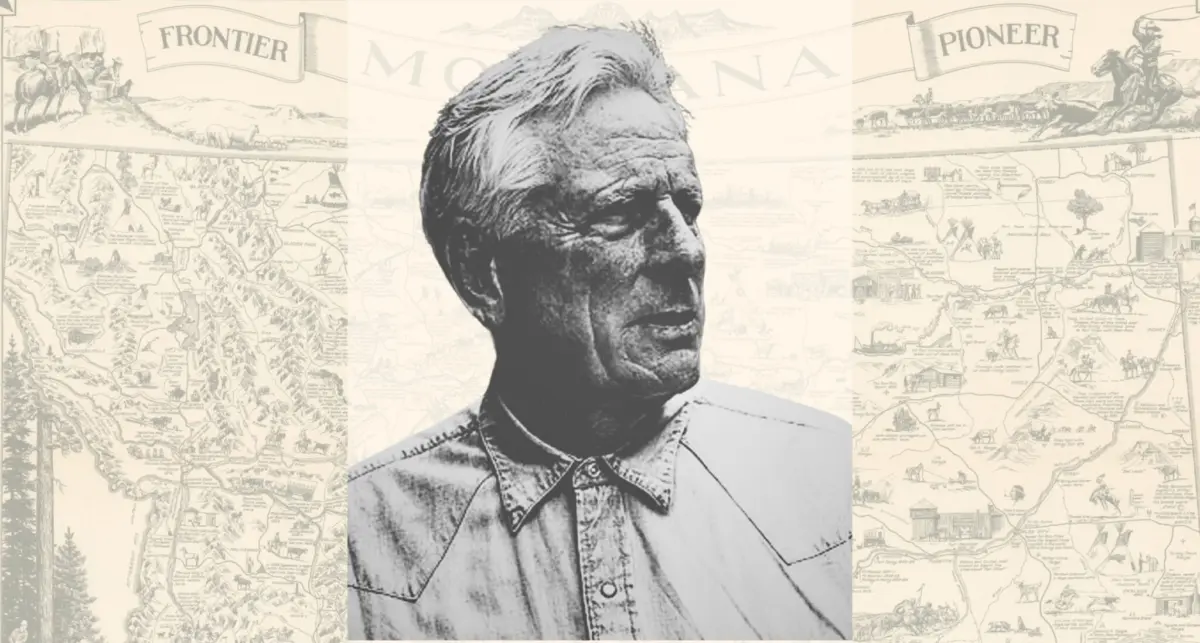
The short fiction of octogenarian writer Thomas McGuane, showcased in his most recent collection A Wooded Shore, provides a compelling answer. Quietly and brilliantly, McGuane’s work stands as arguably the most vital literature of the Trump era. Despite his extensive accolades, he remains vastly underrated and unquestionably underread outside of dedicated literary circles.
His devoted readership would vehemently disagree with that assessment, holding the view that to know McGuane is to love him. For the past half-century, he has steadily produced novels, stories, and nonfiction—primarily concerning his enduring passions of horses and fishing—accumulating prestigious literary garlands along the way. His third novel, Ninety-Two in the Shade, earned a finalist spot for the National Book Award, with fans noting that its baroque intelligence and post-hippie hangover were perhaps a bit too real for the judges of the era.
During the 1970s, McGuane also enjoyed remunerative dalliances with Hollywood, selling screenplays and hobnobbing with the inebriate tranche of the A-list. His personal life mirrored the era’s bohemian glamour, featuring relationships of the Arthur Miller-Marilyn Monroe variety. His first wife later married Peter Fonda; his second was Superman actress Margot Kidder; and his third is the sister of the late singer Jimmy Buffett.
McGuaneturned to short fiction relatively late in his career, proving himself preternaturally suited to the format, much like Donald Antrim. Perhaps it was simply a matter of relishing a creative challenge. McGuane has famously described writing a short story as “like trying to start a fire in the rain.” Upon the publication of his career-spanning collection Cloudbursts, The New York Times hailed him as “a master of the short story.”
One can chalk it up to pure stubbornness. McGuane is as fiercely committed to his artistic vision as his stubborn characters are to theirs.
Eight years after a critic once nicknamed him "Captain Berserko," the writer is far more admired than he is actively read. Perhaps his red-state geography is partly to blame for this oversight. McGuane lives on a ranch in Big Sky Country—describing his home as being “out in the boonies, two miles from a town of six”—an existence entirely anomalous within the bicoastal affinities of the mainstream publishing industry. His fiction is predominantly set in rural Montana, Florida, and small towns where time appears to move at a glacial pace, and where local grudges vastly outnumber the human population.
This is the “sunburnt otherwhere” described by W.H. Auden, a region easily exoticized by readers of The New Yorker and The Paris Review, where much of his new collection first appeared. Rest assured, however, that McGuane’s work contains none of Taylor Sheridan’s hyper-masculine mise en scène, nor any of its myopic faux-revanchism.
Even so, there remains a tendency to package how we view McGuane, often drawing easy echoes to Cormac McCarthy circa All The Pretty Horses. A profile published last year in The Atlantic dubbed McGuane “the last of his kind,” accompanied by a picturesque photograph of the author fly fishing knee-deep in a riverine idyll. Look closely enough at the cultural mythmaking, and you can practically see Ernest Hemingway up in the clouds, saluting the author with a bottle of Ballantine.
Of course, Hemingway and McCarthy were not writing amid an era of democratic backsliding and historic political polarization. And realistically, who truly wants to read about GOP-voting Boomers attempting to reckon with their own blind spots? Life is difficult enough as it is; many prefer the balm of historical fiction, improbable serial killers, time-traveling tradwives, or people riding atop dragons.
McGuane’s literary aim, however successful, may ultimately be self-defeating. Part of the brilliance of A Wooded Shore lies in its implicit acknowledgment that the America it depicts inherently occludes much of a contemporary readership. Again, chalk it up to stubbornness. There is a line in “Motherlode,” a story from his collection Cloudbursts, about a man jumping headlong into danger: “He declined to be swayed by second thoughts.” That sentiment could easily be tattooed onto every single one of his characters.
Consider the end of “Slant Six” from his newest book, where a married couple drives home from a party hosted by wealthy acquaintances. The husband has made multiple passes at the hostess for reasons that remain unclear even to himself, yet he fatuously presumes his wife hasn’t noticed. Mentioning the hosts’ internal brusqueness toward one another, he asks his wife, “Do you suppose that’s who we are?” She offers no reply. It is about as close to an epiphany as McGuane is ever willing to grant his creations.
Or consider the story “Wide Spot,” which follows a middling politician conducting a get-out-the-vote tour of his constituency in Montana. Readers quickly intuit his competency and level of commitment from his aerial view of local issues: “Lately, the combination of agriculture and local mining had made Prairiedale a politically divided town. I decided to visit my half of the divide as part of my sweep—and just to feel the sweet ache of old days (mine) gone by.” Nostalgic for his old rock band, he hopes to reconnect with the singer Micah Clardy. The one-tavern town is beyond moribund; at one point, someone has thrown a taxidermied vulture into the bushes of the local bank.
The narrator assumes his practiced gift for retail politics will charm his old friend, but Micah instead laughs directly in his face. Following an awkward exchange, our protagonist prepares to leave, thinking back on Micah’s past luck with women when they were young, and decides to pay a social call on Micah’s fetching adult daughter. Predictably, it goes about as well as one might expect. Micah curses him out as “the perfect politician.” Yet, our unflappable narrator is far too habituated to let his inward-facing mask slip, and the story concludes with the deluded affirmations typical of modern political operatives: “You never know what’s next, and that is why I can say with all honesty that I am not a depressed person. Unlike Mr. Fixit, I have a future and I don’t intend to fade.”
As for the sitting president, Donald Trump is named just once, appearing in the opening line of the book’s titular novella.
To understand how a widower named Fred Latham ended up living late in life aboard a Trumpy yacht at the Capital Yacht Club on the Potomac—a yacht where John F. Kennedy once slept with friends, employees, and boarding-school companions—one must picture a small white cabin cruiser of uncertain vintage pushing its way up a small tributary of a great lake whose slow current glistens between low banks.
The sentence is pure, late-career McGuane. Wit subtly inflects the narrative voice without ever subsuming it, lending the anecdote the authentic feel of an overheard conversation. The prose leaps nimbly across decades and political administrations, moving from romantic trysts to matrimony, before finally alighting on Jackie O.—a name dripping with glamour and portent. (Fred Latham’s own personal story is similarly rife with marital rupture.) Meanwhile, Donald Trump does not earn his own noun, unlike the stars of Camelot. Trump functions as an adjective, adjectival in nature: more an ambient atmosphere than a tangible object. The toxic airborne event has effectively become permanent bad weather.
Notice, too, the syntactic wonder of the line. The alliterative Ls and consonant Is of “late in life living” crash directly into the repetition of the word “yacht”—a term that sounds bilious and oxymoronic given its high-class connotations. Much like Trump himself, Latham’s vessel is more boast than reality, standing as less of an oceangoing luxury and more of a river-bound “cabin cruiser of uncertain vintage.” He is a small fish in a big pond, both literally and figuratively.
Latham is a familiar McGuane archetype: a white man who desperately clings to his self-conception entirely at the expense of genuine self-awareness. Throughout these stories, comeuppance frequently arrives in the wake of half-forgotten past transgressions. McGuane harbors a distinct fondness for karmic symmetry; he once titled a story “Take Half, Leave Half.”
While the collection features a handful of absolute masterpieces, the titular novella itself is somewhat too uneven to qualify. It serves as a generational exploration of the arbitrariness of family—examining how two people who have no business dating eventually marry, and how their children grow up suspecting they were given the wrong parents. McGuane extends a profound measure of care to the ignored and the abhorrent; in the story, the matriarch Peggy fails to protect her daughter not once, but twice, resulting in lifelong consequences that the family largely ignores. The resulting emotional effects are so poisonous as to be nearly anti-natalist.
By contrast, the story “Thataway” is destined to be anthologized for decades to come. It is another tale of adult siblings fundamentally at odds with their upbringing, exploring the local stasis that serves as a common morbidity in McGuane’s fiction. (As he once told The Believer, “Life consists of escape.”)
The story opens in a windblown prairie town as sisters Mildred and Constance Parrott wile away their codependent retirement in their childhood home, fantasizing about a potential reunion with their brother Cooper, who decamped for Los Angeles decades earlier to find minor fame in Westerns and entrepreneurial success in furniture stores. His helicopter famously sports an illustration of Cooper mid-lasso.
Mildred dies on page two, setting the plot in motion. “The minute Constance realized what had happened she was surprised by the feeling of envy that came over her.” Suddenly, she finds herself burdened with funeral arrangements and an unexpected new roommate: Mildred’s adopted son Wayne, who prefers to eat fast food alone in his truck.
Meanwhile, Cooper is down in Palm Springs, ducking the Better Business Bureau and reluctantly participating in a documentary being filmed by his daughter about his upbringing. While Cooper wants to focus on his days as an old-time cinema cowpoke, his daughter Bonny aims for the low-hanging fruit of paternal hypocrisy, eventually convincing Cooper to visit Constance.
Nearly all of the characters fiercely safeguard their former glory, whether genuinely earned or entirely illusory. Constance negotiates her sister’s cremation with an undertaker who happens to be a runner-up Miss Big Sky, sitting directly beneath her framed pageant photograph. Cooper once played in a band with one of Constance’s former husbands, though he was permanently relegated to playing the tambourine, and his current fortune is built entirely on fake going-out-of-business sales.
Yet the past stubbornly insists upon itself. Mildred’s ashes become a metaphorical hot potato passed awkwardly between characters. Bonny orchestrates a one-car parade for Cooper that functions half as the return of the prodigal son and half as a public humiliation ritual. An old acquaintance becomes visibly upset when Cooper fails to remember him: “Our family took you in when the whole lot of yiz didn’t have a pot to piss in or a window to throw it out.” An altercation ensues, prompting Bonny to ask her father if he was ever truly homeless. He replies, “Not always,” leading her to think, “Something about the way he said it told her it would be very strong during editing.”
Before long, Cooper has had enough and retreats to Palm Springs. Constance similarly grows tired of Wayne’s antics and sells the house, while Bonny abandons her documentary project after recognizing how it is actively obscuring her filial understanding. The story draws to a close with Constance arriving unexpectedly on Cooper’s doorstep, bags in tow, announcing, “I have arrived! Is it a problem?”
While a reader might cast Bonny as a cosseted millennial, or view her as analogous to East Coast journalists hectoring voters in rural diners, or see Cooper and Constance as more comic than nuanced—perhaps reminiscent of characters from a Coen Brothers film—“Thataway,” like the rest of the book, remains both subterranean and unshakeable.
McGuane’s subtle literary wonders succeed precisely because of their brief length. Novelists in the Trump era often combat daily political turmoil with extended narratives defined by sprawling reach and, at times, a distinct inability to grasp the full picture. A novel must develop; very few readers want 250 pages of pure stasis.
The MAGA faithful, on the other hand, frequently take pride in their intractability. In McGuane’s hands, this other half of the political divide transforms into ideal subject matter for the short story format. His characters repeatedly confront moments of reckoning—some comic, others karmic, and frequently a combination of both—where unyielding self-belief violently collides with a buckling status quo.
All of this might make A Wooded Shore feel terribly outré at a time of incipient fascism. But if readers are willing to engage with Thomas McGuane strictly on his own terms, their engagement with fiction will successfully extend both their reach and their grasp. After all, what else is literature truly for?