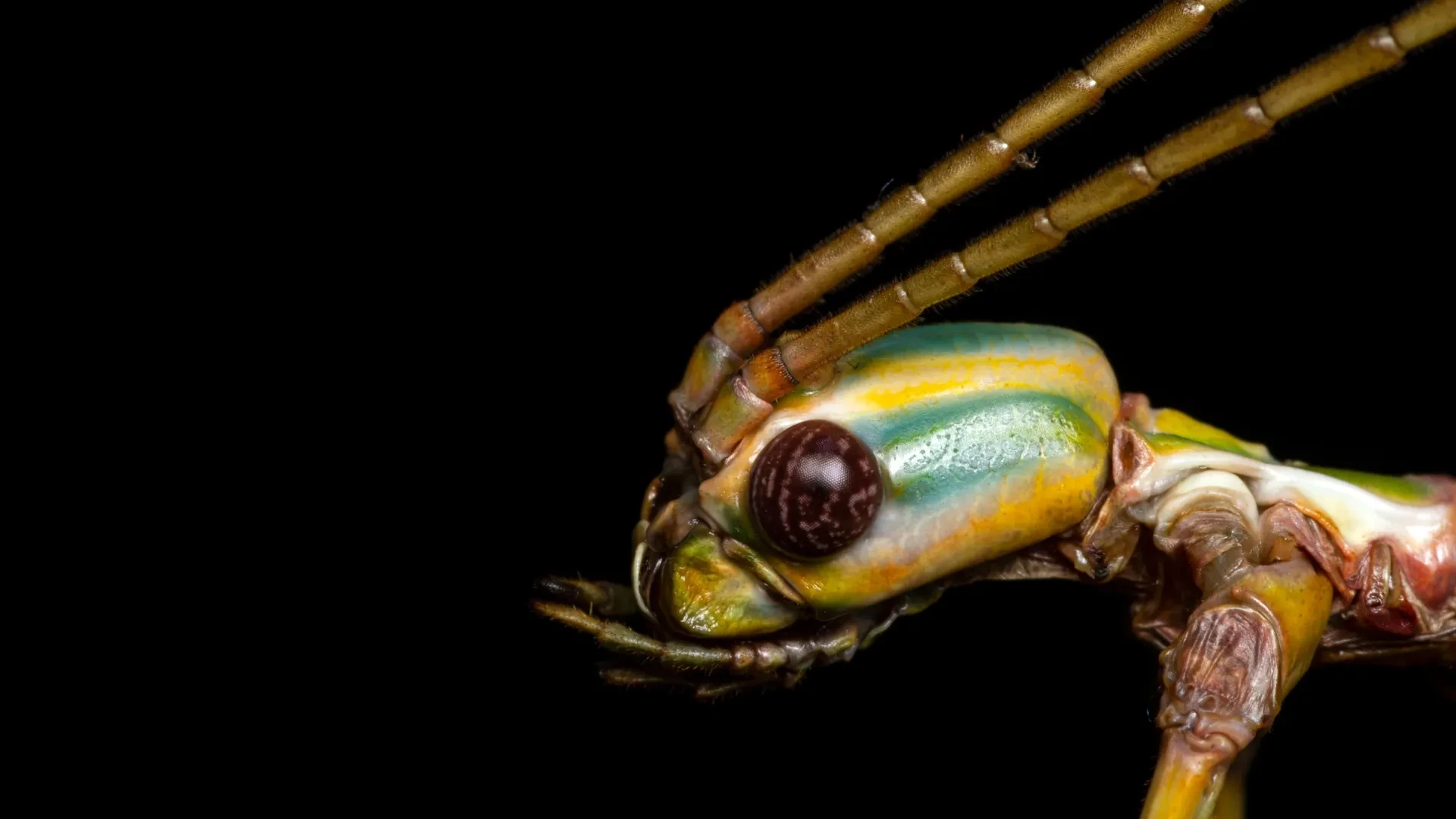
In a striking reminder that the natural world still holds vast, undocumented mysteries even in our own backyards, scientists from the University of Sydney have identified two previously unrecognized species of large stick insects in Australia. The discovery, which reclassifies a group of insects long thought to be understood, serves as a poignant illustration that some of the country’s most closely studied environments remain frontier territories for taxonomic science.
The research team, based at the University of Sydney, undertook a comprehensive reexamination of the Australian members of the Anchiale genus. By applying modern analytical rigor to these familiar creatures, they successfully identified two entirely new species and restored a third that had languished in scientific obscurity for decades. This work effectively doubles the recognized diversity within this group, revealing that what was previously classified as just two species is, in reality, a complex of five distinct, separate entities.
These insects, which are known for their impressive size and remarkable camouflage, are found across a significant swathe of the Australian continent. Their range stretches from the northern reaches of New South Wales, tracking up the coastline of Queensland, and extending deep into the tropical landscapes of northern Australia.
Hidden Diversity Among Familiar Insects
The fact that these species remained "hidden" for so long is perhaps the most remarkable aspect of the discovery. Stick insects are not exactly rare or elusive in the traditional sense; they are frequently encountered by the public and have been the subject of intense interest from both professional entomologists and amateur enthusiasts for generations.
In the digital age, this interest has been quantified. Thousands of citizen science observations have been uploaded to platforms such as iNaturalist and the Atlas of Living Australia, providing a massive, crowdsourced dataset that scientists use to track species distribution and behavior. Despite the availability of over 1,000 recorded observations and decades of rigorous scientific inquiry, these five distinct species managed to evade formal identification.
Dr. Braxton Jones, lead author of the study and a Postdoctoral Research Associate in the Molecular Ecology, Evolution and Phylogenomics Laboratory at the University of Sydney’s Aola Richards Sydney Insect Hub, suggests that this is a humbling realization for the scientific community. It highlights the sheer scale of the work still required to document Australia’s insect biodiversity.
"Taxonomy is often a bit like detective work," Dr. Jones explained. "Even among some of Australia’s most photographed and frequently reported insects, we’re still finding species that have escaped scientific recognition. It’s a testament to the complexity of the natural world and the limitations of our current cataloging efforts."
A Stick Insect Misidentified for Decades
The path to these findings was anything but straightforward. One of the study’s most surprising outcomes involved a large, iconic stick insect that has been a staple in both scientific literature and the collections of insect enthusiasts for years. By integrating multiple lines of evidence—including advanced DNA analysis, historical museum specimens, extensive field surveys, and observations of insects raised in controlled laboratory settings—the team determined that this insect had been systematically misidentified for decades.
Following this rigorous multi-modal analysis, the researchers have now formally recognized this creature as Anchiale robusta. The correction of this taxonomic error is not merely an academic exercise; it represents a fundamental shift in how we understand the evolution and distribution of these insects.
The study, published in the journal Austral Entomology, also formally described Anchiale mabiensis, a newly identified species discovered within the Mabi rainforest on the Atherton Tablelands in Queensland. The Mabi rainforest is a critically endangered ecosystem, and the discovery of a new species within its borders underscores the biological significance of these fragmented habitats.
What makes Anchiale mabiensis particularly fascinating to researchers is its reproductive biology. The species produces eggs with an unusual structural lid—a feature that has never been documented in any other stick insect or its closest evolutionary relatives. This unique morphology provides a clear diagnostic marker for the species, but it also raises intriguing questions about the evolutionary pressures that drove the development of such a distinct adaptation.
Discovery Could Help Forestry and Agriculture
While the primary value of this research lies in its contribution to our fundamental understanding of biological diversity, the revised classification also offers tangible, practical benefits for land management. Among the insects in the Anchiale genus, there are those known for occasionally reaching plague-like population levels. In these instances, the insects can strip vast amounts of foliage from trees, leading to significant concerns for forestry operations and agricultural sectors.
Previously, because these populations were lumped into a single, broadly defined species, management strategies were often generic and imprecise. By disentangling this group into five separate species, researchers and land managers now possess a more granular understanding of which specific species are responsible for population outbreaks. This level of detail allows for more targeted, effective, and environmentally conscious management of these insects, potentially mitigating their impact on essential forestry and agricultural resources.
The study has also hinted that the work of discovery is far from finished. The researchers have flagged the existence of another potential new species located in the Cape York Peninsula. While the team believes this insect represents an undescribed species, they are maintaining a cautious approach, noting that they require additional specimens to definitively confirm its identity and place it within the phylogenetic tree.
The Urgency of Documentation
For Dr. Jones and his colleagues, these findings serve as a clarion call for the continued support of taxonomy and ecological research. The act of documenting these species is not just about filling out a list; it is about establishing a baseline for conservation in an era of environmental uncertainty.
"These findings demonstrate the importance of protecting threatened ecosystems and documenting Australia’s extraordinary biodiversity before we lose species without us having even discovered them," Dr. Jones remarked. The loss of a species before it is even known to science represents a permanent erasure of evolutionary history, a risk that is becoming increasingly tangible as habitats like the Mabi rainforest face persistent threats.
The research was supported by a coalition of organizations committed to the advancement of biological knowledge. Funding was provided by the Australian Biological Resources Study, through the National Taxonomy Research Grant of the Commonwealth Department of Climate Change, Energy, the Environment and Water. Additionally, the project was bolstered by a CSIRO postgraduate scholarship, highlighting the essential role that sustained institutional support plays in enabling long-term, intensive taxonomic research.
As the scientific community continues to peel back the layers of Australia’s complex ecosystems, the story of the Anchiale stick insects will likely be remembered as a key turning point. It reminds us that the most significant discoveries are not always found in the deepest jungles or the most remote corners of the globe; sometimes, they are hiding in plain sight, waiting for the right tools and the right questions to be brought to bear. Through the marriage of modern molecular techniques and the enduring tradition of meticulous specimen observation, the University of Sydney team has ensured that these remarkable insects are finally being recognized for their true identity, securing their place in the record of life on Earth.