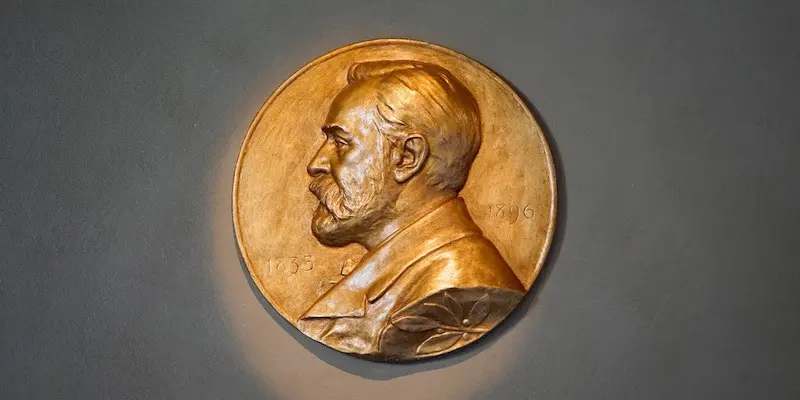
While no one completely outside the closely guarded inner chambers of the Swedish Academy can say for sure who has captured the ultimate prize in world letters, the global betting markets have once again swung into full operation. Bookmakers are actively taking wagers on the outcome, and the shifting odds they are currently offering provide an intriguing, if occasionally deceptive, lens through which to view the race. History shows that the bookies’ favorites can sometimes foreshadow the Academy’s secretive choice, though just as often, they miss the mark entirely, leaving prognosticators baffled by completely unexpected selections.
To put this year’s landscape in perspective, last year’s eventual winner, the acclaimed Hungarian novelist and screenwriter László Krasznahorkai, commanded strong odds of 6 to 1 at this exact time last year. By contrast, the field for the 2026 prize feels considerably more wide open, with no single author favored quite as heavily as Krasznahorkai was during the previous cycle. Instead, the current betting boards reflect a fiercely competitive and diverse pool of international literary heavyweights.
Prominent among the frontrunners is Can Xue, who has climbed back to the top of the Ladbrokes odds board after experiencing a curious and unexpected tumble out of the top five during the 2025 season. As her name reappears at the pinnacle of the market, literary observers are once again asking whether this will finally be the year the visionary Chinese avant-garde writer takes home the Swedish Academy’s highest honor. Meanwhile, Australian master of minimalist stream-of-consciousness prose Gerald Murnane continues to lurk near the top of the board, maintaining a steady presence that suggests his supporters believe his long-awaited moment may finally have arrived.
At the same time, perennial fan favorites and literary giants such as Haruki Murakami, Thomas Pynchon, and Margaret Atwood occupy positions that some critics view as persistently overly optimistic, with skeptics noting that despite their massive global footprints, they may never actually secure the Nobel. More controversial placement on the betting lists places figures like J.K. Rowling at the exact same odds as deeply respected literary luminaries such as Louise Erdrich and Yoko Tawada—a juxtaposition that many critics and commentators consider a striking artistic misalignment. Meanwhile, writers like Alexis Wright continue to attract attention from knowledgeable observers who argue they would make an inspired and fitting choice for the prize.
Ultimately, the consensus among literary journalists remains that nobody outside the Academy knows anything for certain. Yet, the betting odds compiled by British betting mainstay Ladbrokes as of this writing offer a comprehensive snapshot of who the public and the bookies believe are the most viable contenders for the 2026 prize. As readers and industry insiders review the figures, the reality remains that one of these individuals will soon join the pantheon of literature as the world’s newest Nobel Laureate—unless, of course, the Swedish Academy surprises everyone by selecting someone entirely outside the conversation. After all, in the unpredictable world of the Nobel Prize, anything is possible. Perhaps Bob Dylan will even win it again, though industry watchers can rest assured that he will not.
At the very top of the Ladbrokes betting board sits Can Xue, commanding odds of 10/1. Closely following her is Japanese fiction master Haruki Murakami at 14/1. A tier below them, veteran Australian author Gerald Murnane and elusive American novelist Thomas Pynchon are tied at 16/1, representing two very distinct pillars of contemporary experimental and postmodern fiction.
Moving further down the board into the 20/1 bracket, a truly international array of literary talent comes into view. This group includes Mexican author Cristina Rivera Garza, Spanish writer Enrique Vila-Matas, Portuguese novelist Lidia Jorge, prominent Russian opposition writer Ludmila Ulitskaja, Canadian speculative fiction pioneer Margaret Atwood, and French provocateur Michel Houellebecq. Just behind them at 22/1 is Norwegian autobiographical fiction pioneer Karl Ove Knausgaard.
The 25/1 tier broadens the geographic and stylistic scope of the betting market significantly, encompassing a wide range of respected global authors. This group features Congolese-French novelist Alain Mabanckou, Indigenous Australian writer Alexis Wright, Syrian poet Ali Ahmad Said Esber, Norwegian writer Carl Frode Tiller, German novelist Christian Kracht, Irish fiction writer Colm Tóibín, Argentine experimentalist César Aira, British novelist Deborah Levy, Chilean author Diamela Eltit, American master Don DeLillo, French writer Emmanuel Carrère, Greek author Ersi Sotiropoulos, Sudanese novelist Ibrahim al-Koni, Sudanese-British writer Leila Aboulela, Mozambican author Mia Couto, Canadian-Sri Lankan poet and novelist Michael Ondaatje, Romanian writer Mircea Cărtărescu, Austrian author Norbert Gstrein, French critic and biographer Pierre Michon, Syrian poet Salim Barakat, Indian-British novelist Salman Rushdie, Rwandan-French author Scholastique Mukasonga, Irish novelist Sebastian Barry, and Moroccan writer Tahar Ben Jelloun.
The odds lengthen to 33/1 for a substantial group of poets, essayists, and novelists whose works have shaped contemporary letters across multiple continents. Listed at this figure are Brazilian poet Adelia Prado, Ukrainian novelist Andrey Kurkov, Canadian poet and classicist Anne Carson, Spanish writer Antonio Muñoz Molina, German author Botho Strauss, Yemeni writer Bushra al-Maqtari, British-Caribbean novelist Caryl Phillips, American novelist Colson Whitehead, Uruguayan-Swedish poet Cristina Peri Rossi, Israeli author David Grossman, Haitian-American writer Edwidge Danticat, American stylist Garielle Lutz, Uzbek-British writer Hamid Ismailov, Australian author Helen Garner, Mexican poet Homero Aridjis, French philosopher and theorist Hélène Cixous, Uruguayan poet Ida Vitale, American novelist Jamaica Kincaid, Native American writer Leslie Marmon Silko, French novelist Marie NDiaye, Japanese author Mieko Kanai, Martinican writer Patrick Chamoiseau, British novelist Rachel Cusk, Chilean poet Raúl Zurita, British nature writer Robert Macfarlane, Polish poet Ryszard Krynicki, Syrian writer Samar Yazbek, and American maximalist novelist William T. Vollmann.
At 40/1, the field highlights additional heavyweights of international fiction and poetry, including Mauritian writer Ananda Devi, Vietnamese novelist Duong Thu Huong, South Korean author Hwang Sok-yong, South African novelist Ivan Vladislavić, Native American poet Joy Harjo, American fiction writer Joyce Carol Oates, Jamaican-British dub poet Linton Kwesi Johnson, Iranian author Mahmoud Dowlatabadi, American novelist Marilynne Robinson, American philosopher and scholar Martha Nussbaum, Somali-Canadian author Nuruddin Farah, Mozambican writer Paulina Chiziane, Russian satirist Vladimir Sorokin, and Chinese novelist Yan Lianke.
Finally, rounding out the board at 50/1 are several prominent names spanning mainstream fiction, poetry, and global literature. This group includes Scottish author Ali Smith, Indian novelist Amitav Ghosh, Senegalese writer Boubacar Boris Diop, Nigerian-American author Chimamanda Ngozi Adichie, Italian scholar and writer Claudio Magris, British crime and historical novelist David Peace, South Korean poet Ko Un, American novelist Louise Erdrich, Australian author Murray Bail, New Zealand writer Patricia Grace, American pop culture icon Stephen King, Chinese-British author Xiaolu Guo, Japanese-German writer Yoko Tawada, Chinese novelist Yu Hua, and British author J.K. Rowling.