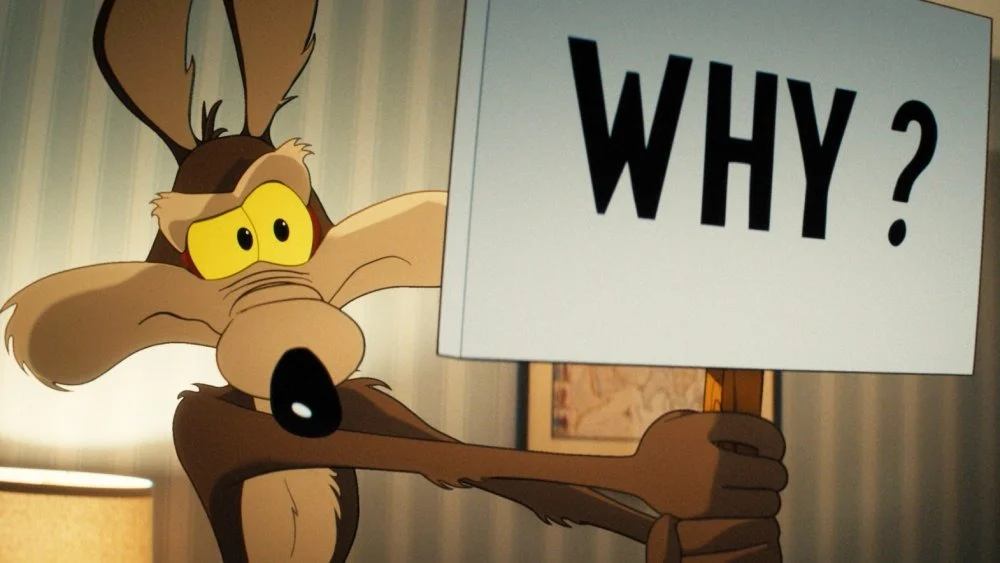
Three years after the high-profile hybrid comedy Coyote vs. Acme was unceremoniously shelved by Warner Bros. Discovery as a tax write-off, the film has emerged as an unlikely box-office juggernaut. After being rescued from the cutting-room floor by indie distributor Ketchup Entertainment, the project has now surpassed the $100 million mark globally, forcing a reckoning regarding the studio’s controversial strategy of burying finished films for short-term financial gain. As the dust settles on this unlikely theatrical success, industry observers and analysts are left asking a pointed question: Was Warner Bros. Discovery chief David Zaslav, who famously deemed the film financially unworthy of a wide theatrical release, fundamentally wrong to axe the production?
The answer, as is often the case in the complex world of Hollywood accounting, depends entirely on who is doing the math. For Ketchup Entertainment, the film has been a monumental victory. Having acquired the distribution rights for a reported $50 million—while simultaneously pre-selling foreign territories to mitigate risk—the distributor has found itself with a rare, profitable hit in a challenging market. Conversely, the view from the Burbank headquarters of Warner Bros. is more nuanced. With a production budget of $70 million, the studio faced a scenario where, after accounting for marketing costs and the fact that theater owners retain roughly 50% of ticket sales, the margins for a traditional release appeared thin. Ultimately, Warner Bros. chose to dump the live-action animation hybrid, which stars Will Forte and John Cena and was produced by DC Studios co-chief James Gunn, in favor of a $30 million tax write-down.
The Debate Over Marketing and Fan Sentiment
A central argument against the studio’s decision is the sheer disparity in resources. Had Warner Bros. remained committed to the project, the studio could have funneled significant marketing dollars into the release, potentially elevating global ticket sales far beyond what an independent distributor could achieve on a leaner budget. There is also the undeniable "rallying effect" that characterized the film’s release. When news first broke that the studio intended to bury the film, a wave of public sentiment—fueled by industry insiders and loyal fans of the Looney Tunes brand—began to build. Many moviegoers flocked to theaters specifically to prove the studio’s decision-making wrong, turning the film into a symbolic battleground for creative preservation.
This enthusiasm is further highlighted by a comparison with another recent Ketchup-distributed Looney Tunes adventure. Warner Bros. Discovery similarly offloaded The Day the Earth Blew Up: A Looney Tunes Movie in 2024. While that film, which skewed toward a significantly younger demographic, performed respectably with $15.4 million at the global box office, it lacked the cultural momentum and broader, multi-generational appeal of Coyote vs. Acme. The latter’s performance suggests that the studio may have severely underestimated the enduring power of the Looney Tunes brand when positioned correctly in the theatrical marketplace.
Shawn Robbins, founder of Box Office Theory and director of movie analytics at Fandango, suggests that hindsight plays a significant role in how we perceive the film’s success. "It’s easy to opine on a decision after we’ve seen the effects," Robbins notes. "The movie did well partly because of rallying from fans, certainly. But it turned out to be a good movie, which is the most important factor."
A Changing Landscape for Family Entertainment
Buoyed by critical acclaim and robust word-of-mouth, Coyote vs. Acme launched in late August, posting a strong $15.9 million domestic opening. Since that debut, ticket sales have steadily climbed, reaching $59.8 million domestically and $45 million overseas. This performance underscores a vital reality in the current exhibition landscape: the consistent demand for PG-rated films backed by recognizable brand familiarity.
For years, theater owners have lobbied studios to provide more content aimed specifically at families, citing a dearth of options in the post-COVID era. While original animation projects have struggled to find their footing since the pandemic, established franchises—such as the Sonic the Hedgehog and PAW Patrol series—have proven to be reliable, modest draws at the box office. Coyote vs. Acme fits squarely into this category, proving that even a "shelved" project can resonate if it leverages known IP to bridge the gap between different generations of viewers.
This success feels particularly glaring when contrasted with the overall box-office struggles Warner Bros. has faced throughout 2026. The studio has weathered a difficult period, characterized by a series of high-profile financial disappointments, including the Tom Cruise-led dark comedy Digger, Maggie Gyllenhaal’s punk rock-themed The Bride!, and the latest entry in the DC Universe, Supergirl. In this context, the decision to discard a project that clearly possessed "legacy value" appears increasingly questionable to market analysts.
"There was legacy value in that IP, and the box office grosses of Coyote vs. Acme reflect it," says analyst David A. Gross of FranchiseRe. "All-audience films are extremely valuable and among the biggest earners at the box office. And there would have been upside with stronger marketing. It is a missed opportunity."
The Cost of Public Perception
Beyond the balance sheet, the "headache" caused by the negative publicity surrounding the shelving of a finished, well-tested film was likely not worth the initial tax savings. Studio sources have indicated that the decision to bury Coyote vs. Acme—a project that reportedly performed well in early test screenings—generated significant friction between the studio and the broader creative community.
The decision did little to improve the standing of David Zaslav, who had already been navigating a delicate relationship with Hollywood creatives. The studio was still recovering from the legacy of predecessor Jason Kilar’s 2021 decision to release the entire annual slate simultaneously in theaters and on HBO Max, a move that alienated many filmmakers and talent agencies. While several internal voices at Warner Bros. reportedly pushed back against the plan to bury Coyote vs. Acme, sources indicate that Zaslav ultimately deferred the final call to the studio’s accountants, prioritizing fiscal austerity over creative goodwill.
At the time of the cancellation, Coyote vs. Acme was the third major casualty of Zaslav’s post-pandemic cost-cutting mandates. In 2022, the industry was shocked when the studio shelved the $90 million DC-centric Batgirl and the kid-friendly Scoob! Holiday Haunt for tax write-down purposes. All three films had been greenlit under the tenure of Kilar, who departed the company earlier that year. Zaslav had argued that he was refocusing the studio’s priorities back toward theatrical releases and that these specific projects simply did not align with the new, streamlined creative direction of the company.
However, the consistent nature of these cancellations has led box office analysts to wonder whether the studio leadership truly grasped the long-term value of the Warner Bros. catalog. All three shelved films—Coyote vs. Acme, Batgirl, and the Scoob! sequel—were rooted in globally recognized intellectual property. Studios typically invest heavily in such franchises precisely because they are designed to provide the kind of reliable, "easy" profits that help subsidize more experimental or original swings.
As Robbins observes, the irony of the situation is rooted in the industry’s own obsession with proven brands. "We see so many remakes and sequels because they make money," he explains. "The fact that Coyote vs. Acme was based on IP plays into the curiosity behind why Warner Bros. would want to get rid of it in the first place."
Ultimately, the success of the film stands as a testament to the fact that in the film industry, the value of a movie often extends far beyond the immediate tax incentives of a write-down. For Warner Bros. Discovery, the $100 million global total is a stark reminder that even in an age of data-driven decision-making, the potential of a well-loved brand remains a volatile but potent asset that, once discarded, can become a haunting reminder of what might have been.