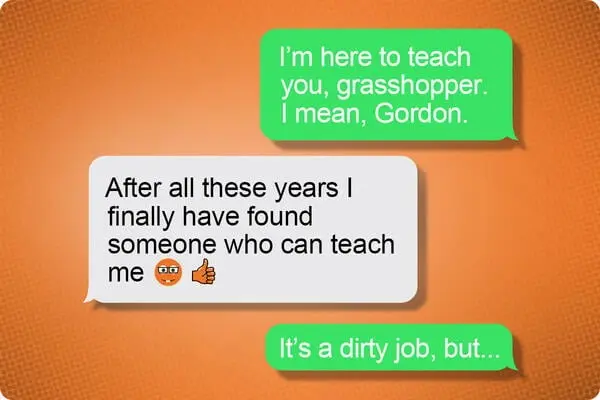
For nine months, higher education commentators Rachel Toor and E. Gordon Gee have maintained a popular collaborative column, analyzing the intricate and often baffling landscape of American academia from the safety of their respective digital desks. Toor, a contributing editor at Inside Higher Ed and professor of creative writing who co-founded the higher education newsletter The Sandbox, has long preferred the controlled environment of writing over public speaking. Gee, a legendary figure in higher education administration who has served as a university president for 45 years across five different institutions—two of them twice—is a seasoned public showman.
Despite their contrasting styles and backgrounds, the duo finally took their act on the road for their public debut at Hendrix College in Conway, Arkansas. The journey offered both educators a profound, unvarnished look at the realities facing small, private liberal arts colleges—complete with terrifying traffic circles, sharp operational learning curves, and a renewed sense of institutional purpose.
The adventure began immediately upon arrival, marked by navigational hazards that left a lasting impression on the speakers. Gee noted that he was still recovering from a "Valium stupor" brought on by Toor’s aggressive driving through the local roundabouts. Conceding that car rentals should be banned from future trips in favor of ridesharing services like Uber, Toor admitted that her driving terrified both of them, exposing their shared incapacity for basic travel logistics without outside intervention.
Beyond the transit tribulations, Hendrix College proved to be an immediate revelation. Gee observed that the campus met every expectation Toor had set: a compact campus resembling a movie set; transparent leadership admired widely by the community; a faculty genuinely invested in shared governance; students and staff exhibiting an extraordinary level of commitment; and a Board of Trustees deeply devoted to the success of President Karen Petersen.
The visit provided Gee, who has spent decades managing massive, complex research universities, with a starkly different perspective on institutional scale. While large universities grapple with immense challenges, their massive scale and longer financial runways often allow administrators to kick problems down the road and initiate endless rounds of planning. At Hendrix, however, where the enrollment hovers around 1,000 students supported by roughly 100 faculty members, the margin for error is razor-thin. Every single student directly impacts the bottom line, leaving no room for delay or miscalculation. Gee remarked that managing under such intense, immediate financial scrutiny would give him chronic hives and sleepless nights.
This operational reality led to a memorable dynamic during meetings with the college’s board and leadership. When discussions turned to overarching trends in higher education, Gee’s broad, sector-wide generalizations frequently clashed with the specific, high-stakes financial pressures facing small colleges. Toor, drawing on her investigative deep dives through The Sandbox, regularly found herself correcting her co-columnist with humorous, sharp interjections. During one board session, after Gee offered an answer that Toor deemed smart, funny, and entirely unsuited for a small liberal arts college, she quipped, "Jane, you ignorant slut!" Fortunately, most of the trustees were old enough to recognize the classic Saturday Night Live reference and appreciate the levity.
For Gee, the visit served as a humbling and essential educational experience. Having spent his career at large institutions, he admitted that while he always understood the poetic power of small colleges, he had never fully comprehended their unique, existential vulnerabilities. Assumptions that worked at massive flagships were entirely inapplicable at Hendrix, forcing him to adapt his perspective and embrace the give-and-take of their rolling intellectual seminar. Toor, meanwhile, acknowledged that while she held her ground during formal discussions, she was continually charmed and slowed down by Gee’s genuine, effusive interactions with everyone on campus—from the student operating their golf cart and the women’s softball coach to dining hall workers. Despite Toor’s aversion to being late, Gee’s inability to pass anyone by without learning their life story won over the campus community.
During a dinner address to the trustees, Gee delivered a message channeling the wisdom and humor of the television character Ted Lasso, complete with a "BELIEVE" lapel pin. He stressed that Hendrix stands at a critical inflection point, requiring absolute unity, financial commitment, and unwavering message discipline from its board to meet its fundraising goals and secure its future. Having successfully right-sized the institution and stopped financial bleeding, the leadership must now fully engage in the difficult work of transformation.
While Gee departed after a whirlwind day, Toor remained on campus to meet further with students, faculty, and career services professionals. She noted fascinating pop-culture parallels to the college’s current moment, pointing to the second season of the television series A Man on the Inside. Set at a fictional institution inspired by the real-life Hendrix experiences of actress Mary Steenburgen, the show centers on a massive donation tied to a hostile, corporate takeover aimed at gutting the college.
Reflecting on the core question posed to all new students in the fictional storyline—regarding what the college’s historical founder found in search of gold—Toor concluded that she found a similar, intangible sense of deep purpose and institutional belief during her time in Conway. Despite the heavy financial pressures and systemic challenges confronting higher education today, the dedication observed at Hendrix demonstrated that small campuses can maintain an authentic, unshakeable belief in the transformative power of learning.