
The Mercedes-Benz GLS occupies a unique and demanding position within the brand’s expansive global lineup. Charged with the dubious honor of being the S-Class of SUVs, the German automaker’s largest flagship utility vehicle must continually evolve to retain its competitive edge. Following the recent comprehensive refresh of the W223 S-Class—which introduced updated styling, revised powertrains, and advanced onboard technology—it is now the turn of the GLS family to undergo its second major facelift.
Over the past few weeks, a series of comprehensive Mercedes SUV evaluations has rolled out, starting with the heavily reworked 2027 Mercedes-Benz GLE, followed closely by the 2027 Mercedes-AMG GLE53. Now, the automotive spotlight turns toward the undisputed heavyweight champion of the fleet: the flagship Mercedes-AMG GLS63.
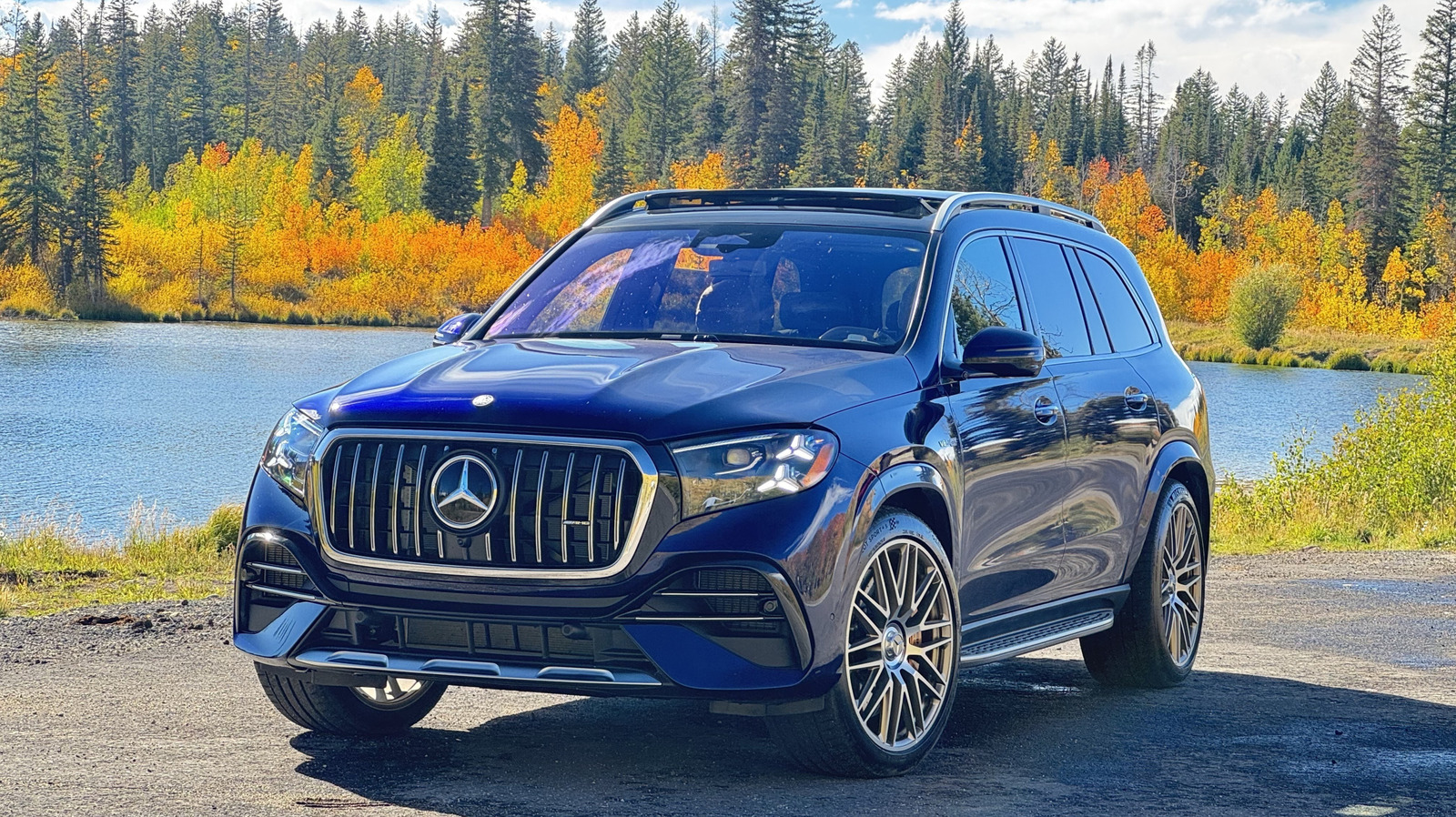
While non-AMG variants of the refreshed GLS mirror the foundational updates applied to the smaller GLE family, it is the performance-focused GLS63 that captures the imagination of enthusiasts and luxury buyers alike. Utterly ridiculous, totally pointless on paper, and yet undeniably awesome in execution, the pinnacle of the GLS lineup returns for 2027 with heightened aggression, fresh aesthetic revisions, and the same thunderous performance capabilities that have long defined the brand’s most excessive haulers.
Second Facelift’s the Charm
This latest iteration marks the second time Mercedes-Benz has granted its certified flagship SUV a mid-cycle refresh, bringing the hefty vehicle into alignment with the company’s current design language and technological architecture. The most immediate and visible evidence of this second facelift is found in the exterior styling, which adopts a decidedly starry-eyed aesthetic.
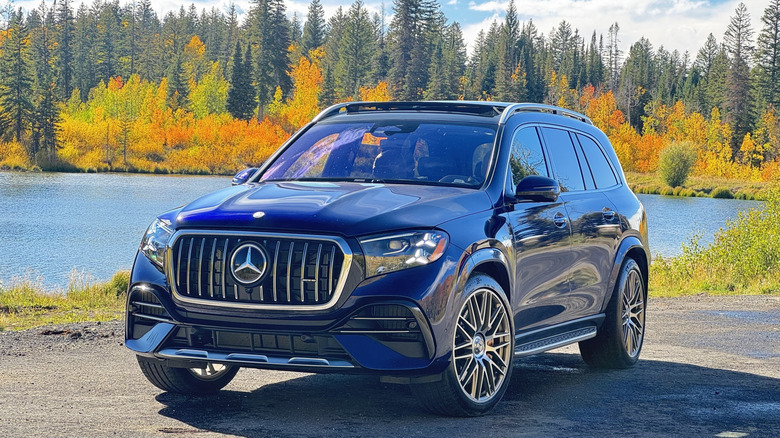
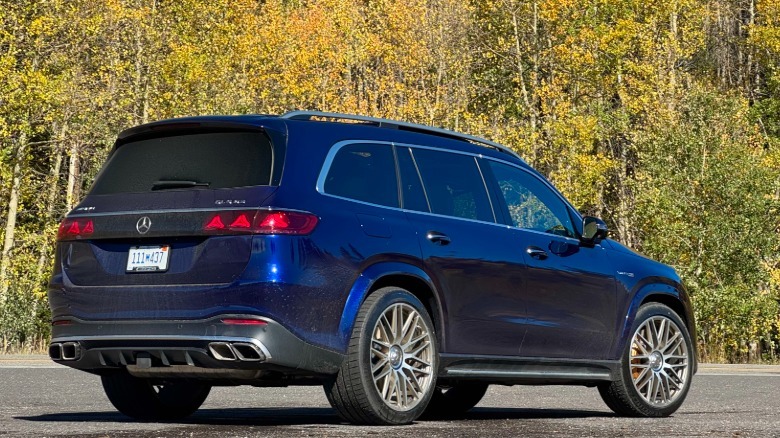
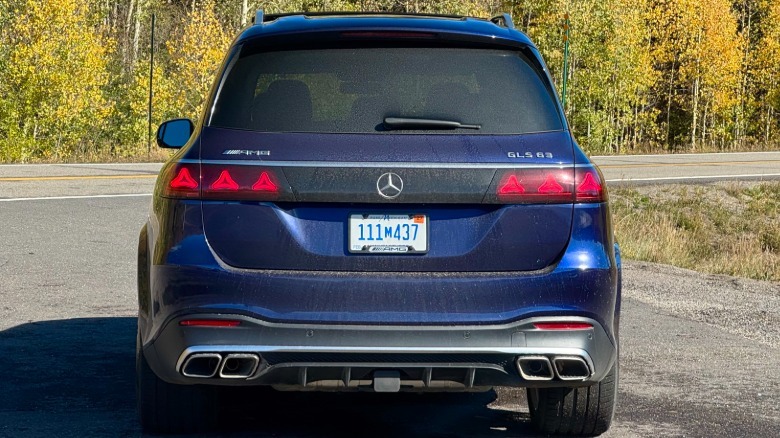
Up front, the GLS receives slightly more subtle star-shaped Daytime Running Lights (DRLs) compared to the rather overt illumination found on the GLE. Each headlight cluster incorporates two stacked three-pointed stars, complemented by a somewhat polarizing black plastic grille surround that has become a recurring theme across Mercedes’ newest design iterations. Around back, the rear light clusters similarly hide three three-pointed stars within each taillight, connected across the tailgate by another strip of dark black plastic. While automotive aesthetics remain entirely subjective, the visual consensus among purists often leans toward the cleaner, more understated styling of the outgoing GLS generation.
Beneath the refreshed sheet metal, the broader GLS lineup benefits from significant engineering updates shared with the GLE. The entry-level GLS450 relies on a turbocharged 3.0-liter inline-six engine paired with a more powerful mild-hybrid system incorporating an electric auxiliary compressor. While horsepower remains steady at 375, maximum torque output jumps by 44 pound-feet to reach a total of 413 lb-ft. The 2027 Mercedes-Benz GLS450 starts at $95,500 including destination charges and is already arriving at dealership showrooms nationwide.

Stepping up to the V8-powered GLS580 introduces the new M177 Evo twin-turbocharged 4.0-liter V8 engine equipped with a flat-plane crank. This powerhouse generates 530 horsepower and 553 lb-ft of torque, enabling the heavy SUV to accelerate from zero to 60 miles per hour in an estimated 4.5 seconds. With a starting price of $122,500, the GLS580 mirrors the engaging driving dynamics and powertrain refinement that make its smaller GLE580 sibling a standout in the stable.
Beyond powertrain modifications, the GLS inherits the structural and technological upgrades of the GLE ecosystem. These additions include cloud-based air suspension damper controls, the optional E-Active Body Control air suspension system, and standard micro-LED Digital Light headlights. Furthermore, the vehicle incorporates Mercedes’ next-generation driver assistance suite, designed to eventually enable point-to-point hands-free Level 2++ autonomous capabilities via an over-the-air (OTA) software update, alongside an expanded suite of cabin technology.
Would Sir Like More Screen?
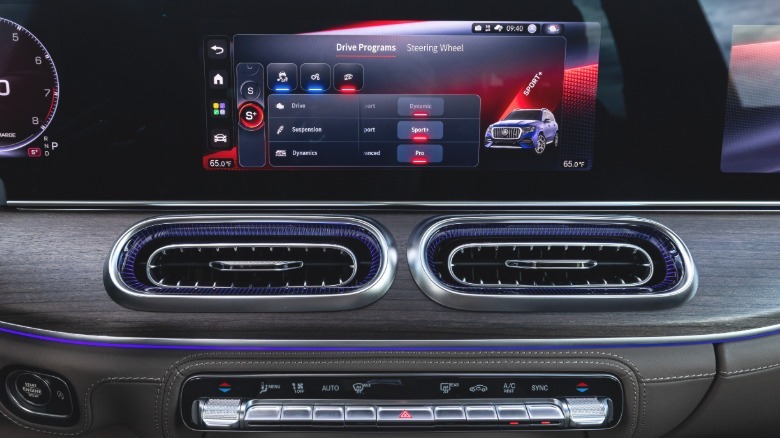
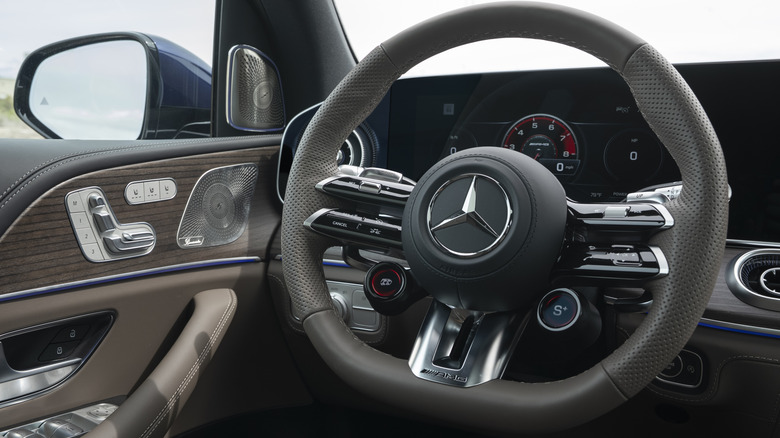
Inside the cabin, the updated GLS architecture closely mirrors the interior layout of the smaller GLE, which means it now incorporates the contemporary Mercedes Superscreen. This sprawling setup integrates three individual 12.3-inch displays behind a single seamless piece of glass spanning the entire width of the dashboard. Positioned behind the newly designed AMG steering wheel, the driver’s instrument display appears crisp and legible. The steering wheel itself features tangible conveniences, including a real physical volume roller and a dedicated cruise-control toggle, though the remaining auxiliary controls frustratingly rely on touch-sensitive capacitive surfaces that lack tactile feedback.
The central 12.3-inch infotainment display shares the ergonomic shortcomings noted in the GLE, primarily due to its unusually squat aspect ratio. Given the massive expanse of glass dominating the dashboard, the central screen feels disproportionately small and wide, complicating usability while the vehicle is in motion. Large, glossy black bezels surround the display, occasionally undermining the premium aesthetic expected from a vehicle at this price point. Navigating this environment is further complicated by the learning curve associated with the new MB.OS operating system.
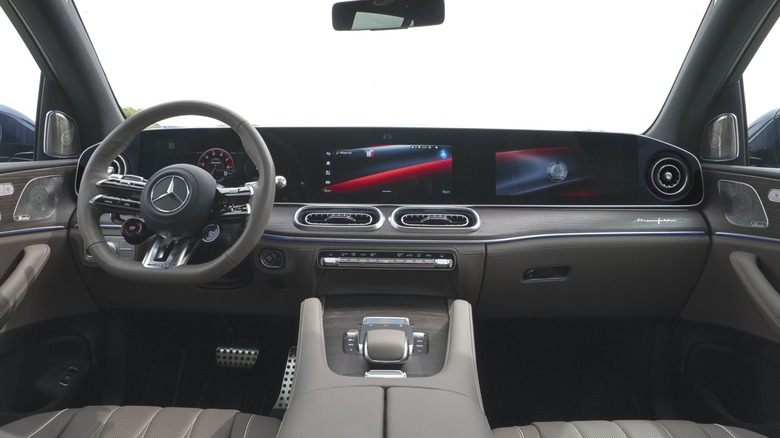
Serving as the third component of the Superscreen layout, the dedicated passenger touchscreen in AMG models provides active powertrain telematics, displaying real-time metrics such as instantaneous horsepower utilization. While monitoring power output adds a layer of entertainment for the front passenger, most secondary functions duplicated on the screen could be handled more intuitively through a personal smartphone or tablet. More critically, the passenger display still lacks the capability to control seat massage functions or expanded seat adjustments. Front-seat occupants must reach across the central console to manipulate the primary infotainment screen whenever they wish to alter their seating posture, representing a notable ergonomic oversight.
Fortunately, because the fundamental interior architecture dates back to 2020, the cabin retains a dedicated row of physical climate control buttons and a traditional console-mounted touchpad. These physical controls offer a welcome reprieve when navigating through the seemingly endless tiers of infotainment menus. However, like its smaller counterpart, the expansive GLS suffers from a surprising lack of convenient small-item storage spots in the front cabin beyond the split-center armrest—a minor inconvenience for what remains Mercedes-Benz’s largest and most family-focused vehicle.
It Features the Same Huge 603 Horsepower and 627 Lb-Ft of Torque as Before
At the pinnacle of the lineup sits the unapologetic Mercedes-AMG GLS63. Powered by a hand-built twin-turbocharged V8 engine, it produces the exact same prodigious output figures as its predecessor: 603 horsepower and 627 lb-ft of torque, though Mercedes insists the internal components have been thoroughly revised. From its authoritative startup bark to its deep, resonant bellow under wide-open throttle, the powerplant remains a sensational piece of engineering. For the 2027 model year, the GLS63 gains a launch control function for the first time—a feature that is functionally excessive in a three-row family utility vehicle, yet undeniably entertaining.
While official confirmation from Affalterbach is absent, industry context suggests that the emergence of high-performance American alternatives, such as the Cadillac Escalade-V, undoubtedly influenced the development discussions. Armed with a supercharged 6.4-liter LT4 V8 producing an even more staggering 682 horsepower and 653 lb-ft of torque, the Escalade-V established a new benchmark for ultra-powerful luxury haulers when it debuted. Although the Cadillac utilizes its own dramatic launch capabilities and aggressive acoustic profile, the Mercedes-AMG contender counters with blistering real-world acceleration.
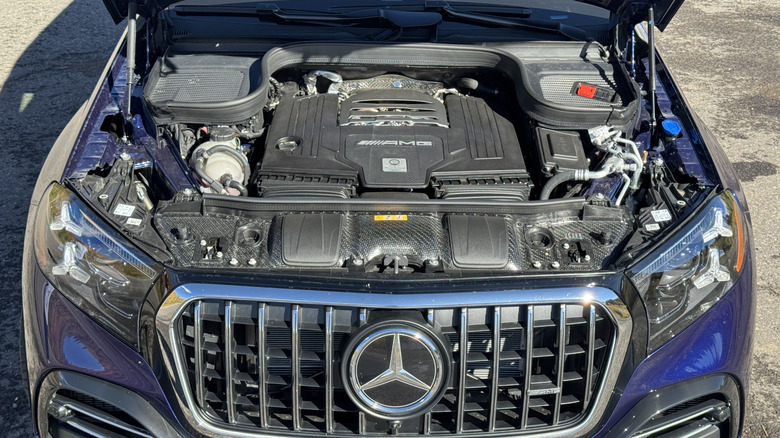
Activating launch control in the GLS63 follows the established AMG protocol: selecting Sport+ mode, depressing both the brake and accelerator pedals simultaneously until the seatbelts cinch tight, and then releasing the brake to unleash maximum thrust. Mercedes estimates that this 6,118-pound three-row luxury leviathan can sprint from zero to 60 mph in a scant 3.9 seconds, a claim that feels entirely accurate from behind the wheel. In a straight line, the GLS63 accelerates with the unstoppable momentum of a rocket sled.
It Still Wasn’t Perfect
A test vehicle finished in Manufaktur Mystic Blue Metallic over Truffle Brown Nappa leather, outfitted with optional 23-inch AMG forged multi-spoke wheels and massive 15.8-inch front and 14.2-inch rear carbon-ceramic brakes, reveals the nuanced compromises of high-performance physics. During testing on winding, damp mountain roads, mastering the aggressively sensitive calibration of the upgraded carbon-ceramic brakes proved challenging. Minor pedal inputs consistently produced abrupt, seatbelt-locking deceleration, suggesting that everyday buyers might prefer sticking with the standard steel-brake setup despite the undeniable stopping power of the carbon-ceramic option.
Weighing in excess of 6,100 pounds, the GLS63 cannot entirely disguise its massive physical footprint. While standard AMG Ride Control+ air suspension with active roll stabilization effectively mitigates body roll through corners, no amount of engineering can completely rewrite the laws of physics. On slick, sporadically wet asphalt covered in autumn leaves, the heavy SUV occasionally pushed through tight corners and exhibited momentary skittering under heavy braking, prompting caution rather than reckless bravado.
While dynamic comparisons between the mainstream GLS450, GLS580, and the flagship AMG variant require more extensive testing under dry conditions, the GLS63 delivers a level of athletic capability that far exceeds conventional expectations for a large family hauler.
The GLS63 Is Excessive, Ridiculous, Silly, and Cool Because of It
In alignment with the traditional ethos of high-performance luxury vehicles, the 2027 Mercedes-AMG GLS63 is an exercise in pure excess. No driver objectively requires a 603-horsepower, three-row utility vehicle capable of accelerating to 60 miles per hour in under four seconds, particularly when command of the vehicle requires a base investment starting at $156,800 before factoring in options. Yet, it is precisely these superlative, nonsensical figures that cement its unique appeal.
Purchasing a GLS63 is not a decision rooted in pragmatic logic; it is an acquisition driven by financial capability and a desire for unapologetic opulence. For buyers fortunate enough to afford the acquisition and fueling costs of such a machine, the vehicle offers unmatched road presence and exclusivity. The flashy aesthetic updates applied inside and out elevate the 2027 Mercedes-AMG GLS63’s street presence to new heights, ensuring that for those who measure success by making a definitive entrance, the flagship AMG SUV remains in a league of its own.