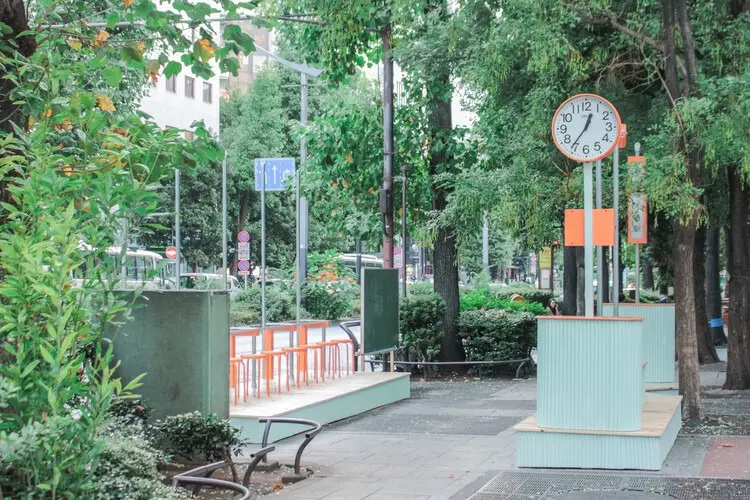
The bustling urban landscape of Tokyo is defined by its constant state of reinvention, where modern high-rises and high-speed transit networks continually eclipse the layers of history buried just beneath the pavement. Yet, every so often, an architectural intervention emerges that deliberately pauses this relentless forward momentum, inviting urban dwellers to reconnect with the forgotten chapters of their city’s past. This is precisely the ambition behind the "Ikebukuro Living Furniture – Tram Stop" project, a thoughtful and evocative new design created by the practice of architect Yosuke Sagoshi. Captured through the lens of photographer Sara Miyata, the project breathes new narrative life into one of Tokyo’s most prominent commercial and transit hubs by bridging the gap between historical memory and contemporary urban public space.
To understand the conceptual weight of the Ikebukuro Living Furniture project, one must look back at the historical topography of the district. The broad avenue that currently extends outward from Ikebukuro Station toward Marunouchi was not always dominated solely by vehicular traffic, pedestrian commuters, and sprawling commercial developments. Decades ago, this thoroughfare was traversed by the Toden trams, a vital network of streetcars that formed the backbone of everyday life in mid-century Tokyo. During that era, a prominent tram terminal sat directly in front of Ikebukuro Station, serving as a bustling crossroads where thousands of commuters, merchants, and residents converged daily. From this very terminal, tram lines extended outward toward major destinations such as Ueno and Sukiyabashi, weaving a tangible thread through the urban fabric of the capital.
The architects at Yosuke Sagoshi Atelier were deeply inspired by the intangible heritage of this site. In their descriptive notes for the project, they reflect on the ghosts of these past journeys, noting that one can only imagine the myriad human stories, brief encounters, emotional farewells, and mundane daily routines that must have unfolded at those historic stops. Streets and transit nodes are rarely just utilitarian infrastructure; they are stages for collective memory. By focusing their intervention on the theme of a modern tram stop reimagined through the lens of domestic comfort—or "living furniture"—the design team seeks to evoke the warmth, familiarity, and intimacy of a domestic interior within the cold, transient environment of a major metropolitan transit node.
The resulting architectural and interior design intervention treats the public realm with the same care and attention usually reserved for private living spaces. By integrating elements of furniture into the architecture of the transit stop, Yosuke Sagoshi Atelier blurs the boundary between public waiting areas and a comfortable home living room. This design strategy encourages commuters to slow down, linger, and engage with their surroundings rather than treating the transit stop as a mere space of forced transition. The use of materials, spatial layout, and careful detailing all work in tandem to foster a sense of psychological safety and community belonging in a district otherwise characterized by dizzying commercial activity and fast-paced pedestrian flows.
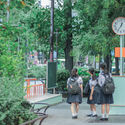
Photographic documentation of the completed project by Sara Miyata highlights the delicate interplay between the interior experience of the tram stop and the surrounding exterior urban environment. The design manages to carve out a distinct micro-climate of calm amidst the sensory overload of Ikebukuro. Through subtle spatial cues and thoughtfully scaled elements, the project honors the site’s rich transit history while proposing a forward-thinking model for how contemporary cities can humanize their public transportation infrastructure. As urban centers around the world grapple with the challenge of creating more livable, people-centric spaces, interventions like the Ikebukuro Living Furniture tram stop offer a compelling reminder that the best urban futures are often built by listening closely to the echoes of the past.