As an automotive journalist, my professional life grants me a level of seat time and track experience that places me far ahead of the average U.S. motorist. It is a reality born purely of professional necessity—getting out onto closed circuits at least a couple of times a year to test the limits of modern machinery. The typical American driver, however, experiences nothing of the sort.
That disparity was brought into sharp focus during a recent manufacturer event hosted by Michelin at the freshly minted Michelin Raceway Road Atlanta for the AMG Experience. While a handful of attendees clearly understood how to handle high-performance rear-wheel-drive vehicles, watching others struggle immensely to follow instructor directives or turn in anything resembling a clean lap time was revealing. These were not random interlopers; these were affluent individuals who had just purchased brand-new Mercedes-AMG performance vehicles.
The phenomenon of wealthy buyers purchasing cars whose performance capabilities vastly outstrip their fundamental driving competencies is hardly new. Such experiences could theoretically hook a few novices on authentic driving dynamics. Yet, the broader reality remains that younger enthusiasts are equally prone to purchasing high-horsepower machinery they cannot safely control. The automotive community sees the fallout of this trend at local enthusiast meetups and weekend gatherings nationwide, where powerful cars are routinely pushed past the threshold of common sense.
In contemporary American society, the barrier to entry for vehicular ownership is remarkably low. As long as an individual possesses a valid driver’s license or permit and sufficient financial resources, they can theoretically purchase almost any vehicle on the market. But that system carries profound and visible downsides. College students routinely finance high-powered V8 muscle cars. Young drivers operating on tight budgets frequently bypass modest commuter cars to purchase heavily depreciated sport bikes or oversized trucks. Similarly, nothing prevents an inexperienced or easily distracted driver from purchasing a heavy-duty commercial-grade pickup truck. These systemic vulnerabilities suggest that the U.S. approach to licensing requires a fundamental rethink, moving beyond calls for better driver’s education toward a tiered framework of vehicle-specific qualifications.
They Aren’t Driving Civics to Popeyes
The prevailing assumption among the general public is that a standard, baseline driver’s license grants the holder legal permission to operate any passenger vehicle on public roads. In strict legal terms, that assumption is incorrect. Operating a tractor-trailer requires a commercial driver’s license, while riding a motorcycle necessitates a distinct motorcycle endorsement. On private property, these restrictions vanish, but on public roadways—where the safety of families, pedestrians, and fellow motorists is at stake—regulatory guardrails are supposed to apply.
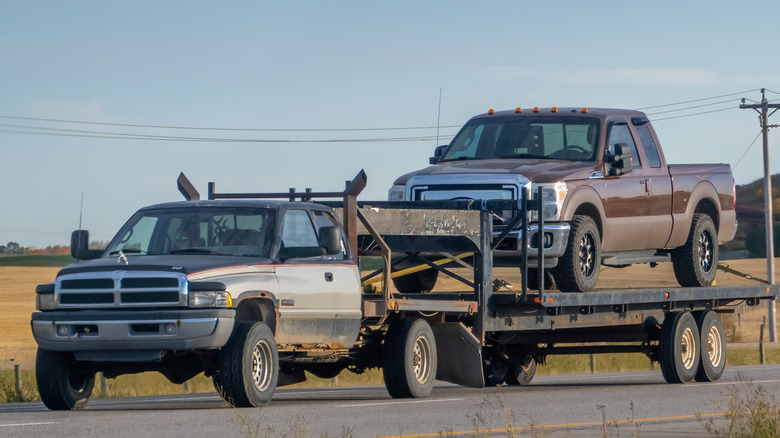
Given the vast scope of the United States, critics routinely argue against government intervention and licensing, suggesting that individuals should be free to operate semi-trucks or high-performance motorcycles without regulatory oversight. Yet, most drivers would readily agree that operating a motorcycle demands an entirely different physical skillset than commuting in a compact sedan, just as towing a massive payload with a heavy-duty truck is fundamentally different from daily driving an ordinary car. Distinct vehicle classes require specialized competencies, and validating those competencies logically demands distinct licensing tiers.
No matter how many years someone has spent behind the wheel of a standard sedan, that experience does not translate into the physical balance and counter-steering reflexes required to ride a motorcycle. Similarly, while an experienced driver can easily start and move a large commercial pickup, few possess the specialized knowledge required to safely navigate a turn while towing a massive, heavy trailer. They may not know how to handle trailer sway or manage weight distribution during an emergency maneuver. Trusting an untrained teenager or a novice driver with such immense kinetic energy, even after watching family members do it for years, introduces unacceptable risks to the public. Testing distinct skill sets and issuing specialized credentials exists to protect the public, establishing vital safety guardrails on modern roadways.
Better Drivers, Safer Roads
To address these disparities, the licensing framework could be thoughtfully expanded. Consider, for instance, a secondary motorcycle endorsement tailored for high-displacement machines exceeding 500cc, or a specialized sub-tier beneath the commercial driver’s license for motorists who wish to tow substantial loads well beyond standard consumer weights. Vehicles capable of extreme track performance—such as sports cars that post blistering lap times on legendary circuits like the Nürburgring—could similarly warrant a specialized high-performance endorsement. Another logical addition would be a medium-speed vehicle license, establishing a formalized category for efficient urban commuter cars that bridge the gap between low-speed neighborhood carts and traditional highway automobiles.

Implementing such a system would require rigorous testing designed to demonstrate genuine operational proficiency, moving far beyond the low-bar requirements of standard state driving tests. Beyond raw vehicle handling, additional educational tiers could be introduced for specialized automotive categories. For instance, operating vintage automobiles presents unique mechanical challenges due to the absence of modern safety nets like power steering, anti-lock brakes, traction control, and electronic stability systems. Transitioning directly from a modern, computer-managed car into a mid-20th-century classic without understanding its dynamic limitations—such as manual braking limits or unpredictable handling in sudden weather events—frequently ends in disaster.
The consequences of the current, uniform licensing approach are visible daily on American news broadcasts and highways. While traffic fatalities and safety metrics have steadily improved across nearly every other developed nation, the United States continues to lag behind, struggling with rising roadway dangers. Introducing a nuanced, tiered licensing structure would not solve every issue on the road, but it would establish necessary operational standards, ultimately fostering a safer driving environment at the minor expense of expanded administrative resources at state motor vehicle departments.