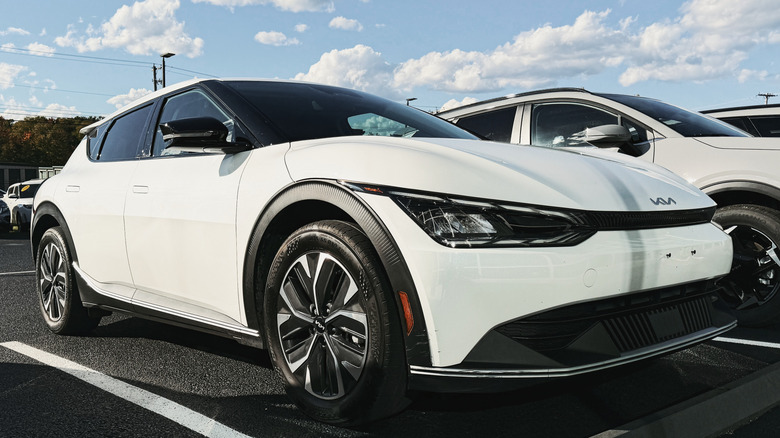
Back in 2024, long before the $7,500 federal EV tax credit underwent major shifts in the political landscape, my wife and I managed to lock in what can only be described as an unbelievable lease deal. By putting down roughly $4,000, we secured a brand-new Kia EV6 for an astounding $137 a month. To put that into perspective, our household cell phone bill at the time was running at that exact same rate. That initial two-year lease agreement proved to be such a bargain that we eventually extended it for another six months, bringing our monthly payment to a still completely manageable $148.
Several unique market factors worked entirely in our favor when we secured that deal. Beyond the federal incentives and an additional $2,000 discount provided by New York State, automakers at the time had deeply miscalculated consumer demand, triggering a significant inventory glut that began building through 2023. By September 2024, dealerships were struggling to move electric vehicles off their lots fast enough. While gas-powered cars were sitting on dealer lots for a relatively healthy 79 days on average, electric vehicles were lingering for more than three months.
Because dealerships finance their own inventories, cars that sit unsold for extended periods begin cutting heavily into profit margins. Consequently, even though our Kia EV6 Light Long Range Wind carried a sticker price of $51,845, we were able to drive it for a fraction of that cost.
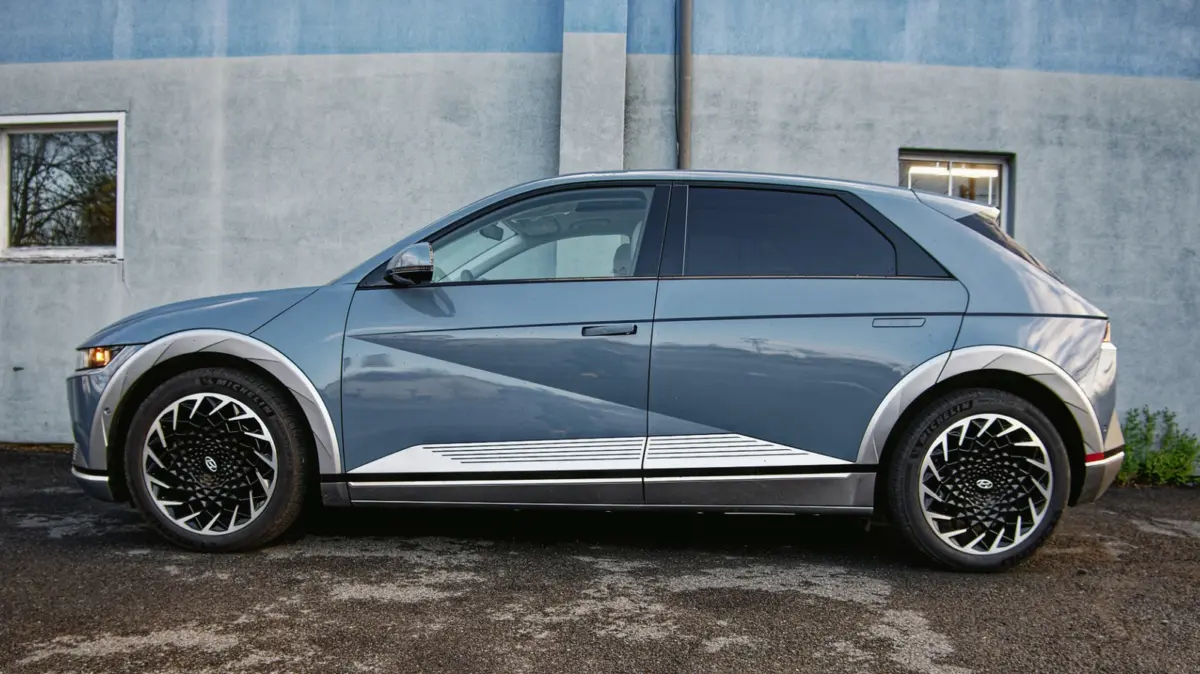
That was then. As our lease approached its expiration this past fall, I began looking at the market for a replacement EV, and the pricing reality was jarring. According to Cox Automotive, the average sticker price for a new electric vehicle had climbed to an eye-watering $55,879. Still, with fluctuating gas prices making fossil fuels an increasingly expensive proposition, we were determined to stay electric. Fortunately, the used EV market offered a much more palatable alternative. Research from CarGurus around that time showed that a used 2023 Chevrolet Bolt was commanding an average price of $20,518, a 2024 EV6 was averaging $27,846, and a 2023 Hyundai Ioniq 5 sat at $27,436.
Why You Can’t Spend Too Much More to Drive Electric
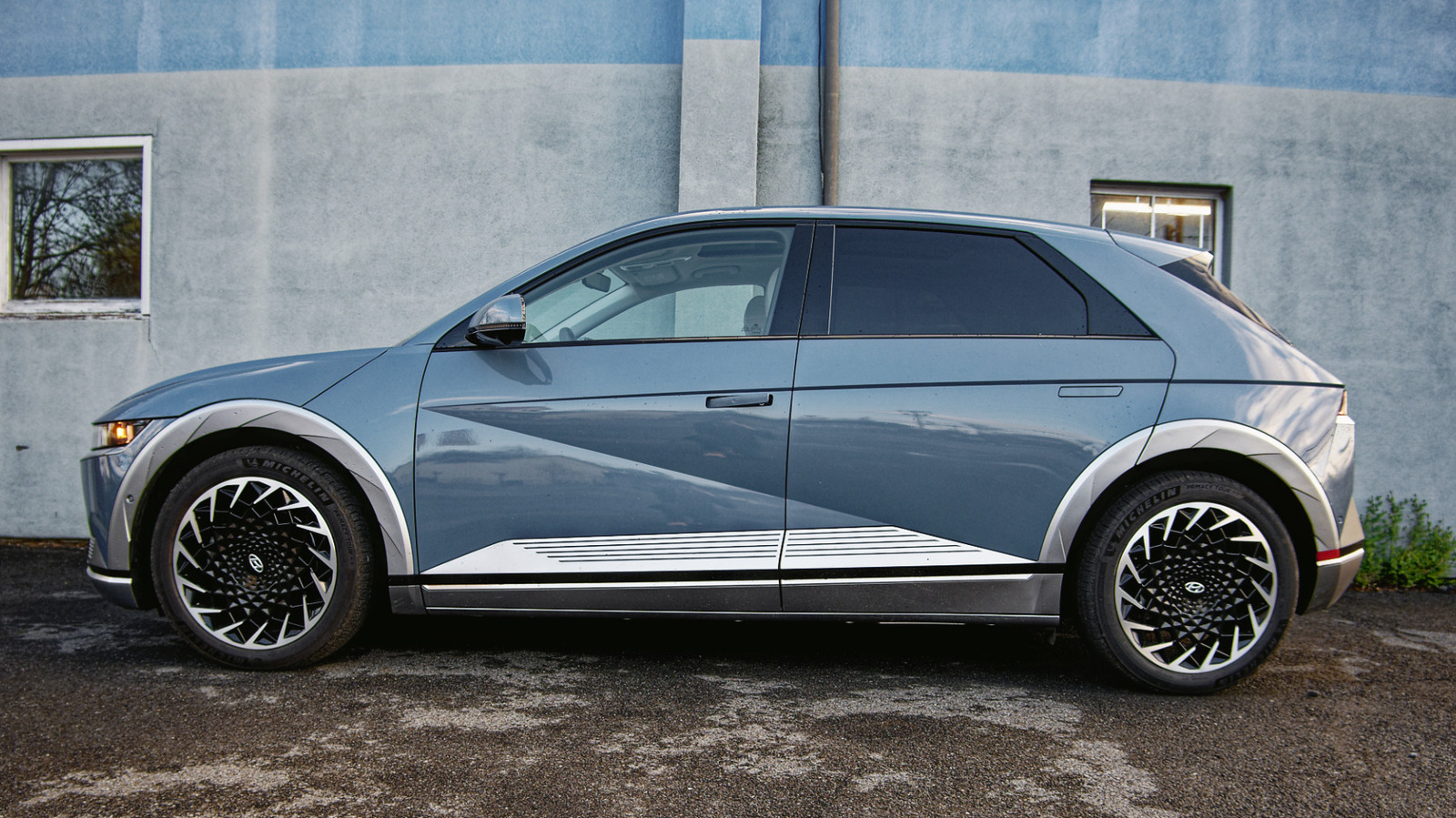
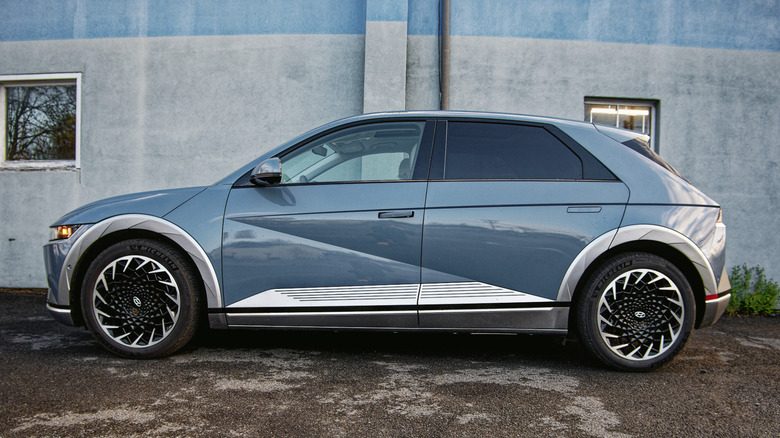
My primary objective was to find a suitable used Hyundai Ioniq 5. That was actually the vehicle we originally wanted back in 2024, but the financial terms on the Kia EV6 had simply been too good to pass up. We never harbored any complaints about the Kia—we genuinely loved driving it—but we preferred the Ioniq 5’s retro-futuristic exterior styling. Furthermore, it boasts a slightly shorter overall length, which made it a much better fit for our remarkably cramped home garage.
The catch was simple: we refused to spend more on a used EV than we would have on a comparable gas-powered vehicle, such as a used Honda Civic. At the time of my market analysis, CarGurus pegged a 2023 Honda Civic at an average price of $23,967. With a 2023 Ioniq 5 averaging $27,436, buyers were looking at a $3,469 average price premium over the Civic. While the 2023 Chevy Bolt was already cheaper than the Civic, we specifically wanted the larger footprint and the all-wheel-drive capabilities offered by the Ioniq 5.
Other buyers might be less price-sensitive, but for the average household budget, transitioning to an electric vehicle requires getting close to price parity with traditional gas cars for the overall economics to make sense. As I have previously explored, ongoing energy costs often matter more than simply watching falling EV prices from afar. Even though retail gas prices have historically experienced sharp spikes while home electricity rates have risen at a much more modest pace, paying thousands of dollars extra upfront for an electric vehicle means it will take years of driving to recoup that initial financial outlay.
I had no desire to take on heavy financing for a more expensive vehicle just to save pennies per mile on relatively cheaper electricity. Understanding the real math behind the purchase is crucial, regardless of how much cheaper an EV is to fuel day-to-day.
EVs Are Cheaper to Fuel — But You Need to Do Some Real Math
The most straightforward way to evaluate an apples-to-apples comparison of fueling costs—and to calculate the actual payback period for spending more upfront on an electric car—is to measure expenses across a baseline of 100 miles of driving.
For a gas-powered vehicle, that calculation involves taking 100, dividing it by the car’s fuel economy rating in miles per gallon, and multiplying the result by the current price of a gallon of gas. This reveals how many gallons the car will burn and the total cost to purchase them. For electric vehicles, the process requires the kilowatt-hour-per-100-mile rating, a metric readily available through government resources like fueleconomy.gov. Multiplying that rating by your local electricity rate yields the equivalent fueling cost for comparison.
An all-wheel-drive 2023 Hyundai Ioniq 5 consumes approximately 34 kilowatt-hours to travel 100 miles. Using the national average electricity rate of 18.3 cents per kilowatt-hour, that distance costs $6.22. By comparison, a 2023 Honda Civic burns about 2.9 gallons of gas per 100 miles. At a national average price of $4.33 per gallon, that translates to $12.55. In short, fueling the Civic is roughly twice as expensive as charging the Ioniq 5. Over 10,000 miles of driving, the Ioniq 5’s electricity costs would total $622, compared to $1,255 for the Civic.
However, even with annual savings of $633, it would take more than 54,000 miles of driving just to pay back the $3,469 price premium of purchasing the Ioniq 5 over the Civic. This fundamental arithmetic helps explain why many American consumers have been hesitant to embrace EVs despite rising fuel costs at the pump. Another critical component of the equation is public charging, which comes at a significantly higher financial penalty. When we initially leased our EV6, we spent around $600 to install a Level 2 home charger. While that represented an additional upfront expense—and I acknowledge the inherent privilege of homeownership required to install one—it remains an essential step for any prospective EV owner.
This Math Only Works If You Charge at Home
A closer examination of the economics reveals that the financial benefits of driving electric rely heavily on home charging access. According to data from Kelley Blue Book, public DC fast charging averages closer to 55 cents per kilowatt-hour, compared to an average of just over 18 cents for residential power. This means public fast charging can cost nearly three times as much as plugging in at home. For drivers who must rely entirely on public charging infrastructure, justifying the higher purchase price of an electric vehicle becomes exceptionally difficult.
Financing dynamics further complicate the picture. Borrowers financing a more expensive vehicle are committing to higher monthly obligations over the life of the loan. Even when spending less on daily energy, those marginal fuel savings are quickly eroded by a fatter monthly loan payment.
To put the broader lending climate into perspective, credit reporting agency Experian notes that the average buyer of a new car faces an interest rate of 6.35%, while used car buyers encounter a steep 11.19% rate. New car buyers finance an average of $43,610 over a term spanning nearly 70 months, while used car purchasers fork over an average monthly payment of $542. We wanted to avoid taking on that level of debt and aggressive financing terms. My goal was to finance as little as humanly possible to prevent being saddled with a heavy monthly burden. Furthermore, because we were exiting a lease rather than trading in a vehicle we owned outright, our down payment had to come directly from personal savings.

Used EV Sales Are Ticking Up
As our lease expiration date drew closer, anxiety began to set in. Broader geopolitical tensions and the resulting rise in gas prices have prompted many Americans to reconsider electric vehicles. According to market reports from CarGurus, while new EV sales experienced a sharp drop compared to previous periods, used EV sales have been trending upward with a notable 19% increase.
Basic supply and demand economics dictate the inevitable result: higher demand for used electric vehicles leads to slower depreciation rates and climbing price tags. The Manheim Used Vehicle Value Index, which monitors wholesale auction prices, recorded a 4.3% jump for used EVs in a single month.
This upward pricing pressure was clearly visible in CarGurus market research. While a used 2024 Ioniq 5 saw a modest price increase over a 30-day window, the average price of a 2023 Tesla Model 3 inflated far more dramatically over the course of the year.
Feeling the dual pressure of an expiring lease and rising used EV values, I began scanning automotive listings daily. I primarily used platforms that incorporate battery-health tracking data from industry evaluators like Recurrent. While I was well aware that modern EV batteries tend to last far longer than skeptics often claim, avoiding a degraded battery pack or a lemon was a top priority.
I cast a wide net, searching within a 500-mile radius and demonstrating a willingness to travel considerable distances for the right price. My search focused on Ioniq 5 models spanning the 2022 through 2024 model years. One feature that particularly attracted us to these model years was the interior layout, which retains physical buttons and knobs for essential functions like volume control and climate settings rather than burying everything deep within a touchscreen interface.
You Can Find Used EVs at Good Prices If You’re Diligent
The Hyundai Ioniq 5 SE I ultimately tracked down carried a price tag of $21,900—not a bad proposition for a vehicle that originally retailed for $49,255 when new. We still had to finance $360 a month at an interest rate of 7.69%, which is more than 2.6 times the meager $137 monthly payment we enjoyed on our Kia lease. Even so, it represents a manageable financial commitment for a vehicle we will actually own. Crucially, Hyundai’s factory warranty covering the battery for 10 agonizingly long years or 100,000 miles transferred directly to us as the second owner, and there was still time remaining on the basic new vehicle warranty as well.
We managed to secure this Ioniq 5 right around CarGurus’ average used price of $21,831, aided in part by an incoming wave of off-lease electric vehicles that helped cushion the blow of rising used market values. Earlier reporting highlighted how depreciated leased EVs could trigger a complex financial environment for automakers. Thanks to generous federal tax credits and aggressive early production runs, a massive wave of motorists leased electric vehicles a few years ago.
Projections indicate that a significant percentage of all off-lease vehicles returning to dealerships will be electric, with that wave expected to peak as hundreds of thousands of cars head back to the market. Even with prevailing upward cost pressures, diligent shoppers can still uncover strong deals.
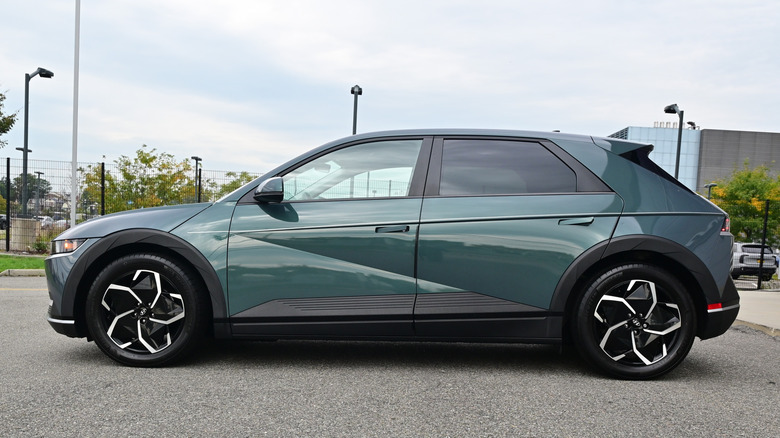
While our newly acquired Ioniq 5 SE is not entirely without flaws—it sits with 36,000 miles on the odometer and is two years older than the Kia we returned with a mere 15,000 miles—it fits our household needs well. It even required a quick wheel alignment, likely a casualty of navigating rough suspension-testing roads in the New York area. Despite those minor hurdles, we successfully transitioned into the electric vehicle we always wanted, arriving at our destination just a few years later than expected.