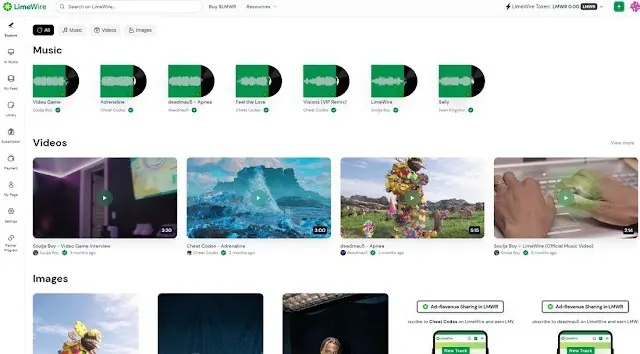
In the rapidly evolving landscape of generative artificial intelligence, few brand transformations have been as striking as that of LimeWire. Once a household name synonymous with the early 2000s era of peer-to-peer file sharing, the brand has pivoted away from its controversial roots to emerge as a sophisticated, forward-thinking platform for the modern digital creator. Today, LimeWire functions as a comprehensive AI content publishing hub, bridging the gap between cutting-edge generative technology and the burgeoning creator economy. By empowering users to generate high-quality AI imagery and providing them with tangible monetization pathways, the platform is carving out a unique niche in a crowded technological ecosystem.
This shift represents more than just a change in business model; it marks a strategic entry into the future of digital asset ownership. While the original iteration of LimeWire dealt in the distribution of existing media, the new LimeWire is built entirely around the creation of original content. It provides an intuitive, accessible environment where technology—specifically generative AI—acts as an engine for artistic expression. For creators ranging from casual hobbyists to established professional artists, the platform serves as both a studio and a marketplace, turning the ephemeral nature of digital art into ownable, tradeable, and monetizable assets.
A New Chapter for a Familiar Name
The resurgence of LimeWire as a premier AI content publishing platform has not gone unnoticed by the creative community. The platform has successfully attracted high-profile talent, including acclaimed musicians and artists like Deadmau5, Soulja Boy, and Sean Kingston. These figures are utilizing the "LimeWire Studio" to publish their work, leveraging the platform’s infrastructure to release content in the form of NFT music, videos, and images. This adoption by established industry names signals a growing acceptance of AI-generated and blockchain-verified media as legitimate forms of professional creative output.
The core philosophy behind this modern LimeWire is the democratization of professional-grade tools. By providing a space where creators can generate personalized content, share it with a dedicated fan base, and maintain ownership over their digital output, the platform is responding to the demands of the modern creator economy. Fans are not merely consumers in this model; they are participants. Through subscription models, followers can immerse themselves in a creator’s journey, gaining access to exclusive content and digital collectibles that hold tradeable value within the platform’s community. This creates a symbiotic relationship where the success of the creator directly benefits the collector, supported by a royalty structure that ensures creators earn a 2.5% commission every time their content is traded on the secondary market.
Advancing Through AI Image Generation
At the heart of the current LimeWire experience is its robust AI image generation suite. The platform currently integrates several of the industry’s most respected AI models, including Stable Diffusion 2.1, Stable Diffusion XL, and DALL-E 2. This versatility allows users to experiment with a wide array of artistic styles, from cinematic compositions and hyper-realistic photography to stylized anime and pixel art. The ability to toggle between these models allows creators to iterate on their vision, fine-tuning their prompts to achieve the exact aesthetic required for their projects.
The platform is designed to be accessible to those without formal training in computer science or complex prompting, yet it remains powerful enough for advanced users to manipulate technical parameters. By incorporating features such as custom samplers and prompt guidance, LimeWire ensures that the barrier to entry remains low while the ceiling for creative output remains high. Furthermore, the platform’s commitment to internal development—as evidenced by ongoing work on a proprietary AI model—suggests that LimeWire intends to remain a permanent fixture in the AI tools market. By constantly iterating on its technology, the platform aims to provide its users with a competitive edge, ensuring their content stands out in an increasingly saturated digital landscape.
Blockchain Integration and the NFT Ecosystem
One of the most defining characteristics of the new LimeWire is its seamless integration with blockchain technology. Once a user completes a piece of content, the platform offers an automated minting process that transforms the digital file into a Non-Fungible Token (NFT) on either the Polygon or Algorand blockchains. This process provides an immutable digital signature, which serves as a guarantee of authenticity and ownership.
This infrastructure fundamentally changes how creators distribute their work. Upon publication, the creator has full autonomy to choose how their content is disseminated. A public release makes the asset discoverable by the entire community, facilitating broader engagement and enabling the NFT to be traded among enthusiasts. Conversely, the platform’s commitment to exclusivity allows creators to restrict specific high-value content to premium subscribers. This tiered access model gives creators the power to cultivate a sense of scarcity and intimacy, ensuring that dedicated fans receive special treatment while still allowing for wider exposure if desired.
Monetization Models for the Modern Creator
The economic incentive structure of LimeWire is perhaps its most compelling feature for long-term user retention. Beyond the potential for NFT sales, the platform has implemented a direct ad-revenue sharing model. When creators publish their work—whether it be images, music, or videos—they are eligible to receive up to 70% of the ad revenue generated by views on their content. This allows designers and artists to treat the platform as a genuine source of income, where their creative efforts are rewarded proportionally to the engagement they generate.
All financial earnings on the platform are processed through LMWR tokens, the native cryptocurrency of the LimeWire ecosystem. This choice of payment ensures that creators are integrated into the broader digital asset economy. Once earned, these tokens can be traded on major global exchanges, such as Kraken, ByBit, and Uniswap, or reinvested back into the platform to purchase more generation credits. This circular economy encourages users to remain active, as the tokens they earn for their creations can be used to fuel the next wave of their artistic production.
Tiered Subscription Plans and Future Expansion
While the platform offers a free entry point—providing 10 initial credits and the ability to generate up to 20 images per day—it also provides a range of premium tiers for power users. These plans, which scale in price and capability, offer significant advantages, including thousands of monthly credits, early access to cutting-edge AI models, higher ad revenue splits, and professional profile badges. These subscriptions are specifically tailored to creators who are looking to scale their output, remove advertising distractions, and access faster generation speeds to maintain a consistent publishing schedule.
Looking ahead, the roadmap for LimeWire is ambitious. While the platform currently dominates in the domain of AI image generation, there are clear plans to expand into music and video production. The inclusion of these mediums will likely disrupt the status quo further, providing creators with a one-stop-shop for multimedia content generation. As these features roll out, the platform expects to attract an even broader demographic of artists and developers. By continuously lowering the barriers to high-quality content production and creating sustainable financial pathways, LimeWire is positioning itself not just as a tool, but as a critical infrastructure provider for the future of digital art and media. For those currently exploring the platform, the transition toward a more integrated, multi-modal generative environment promises an era of endless creative exploration and untapped potential.