By Ione Wells, reporting from São Paulo and Rio de Janeiro
In the sprawling, once-thriving industrial heartland of Osasco, the landscape of labor is undergoing a metamorphosis that is rippling through the very core of Brazilian politics. Where factory whistles once defined the daily rhythm of the city, shuttered industrial plants have increasingly given way to gleaming shopping malls and the digital hubs of delivery app tech companies. This transformation has earned the municipality a reputation as the "Silicon Valley" of São Paulo, but beneath the surface of this economic evolution lies a profound political fracture that is currently defining the nation’s presidential race.
Brazil’s left-wing President, Luiz Inácio Lula da Silva, carried this municipality in 2022, yet the political winds have shifted dramatically. In the first round of the presidential election held earlier this month, the region swung toward the right-wing candidate Flávio Bolsonaro. As the country braces for a high-stakes run-off election this Sunday, the contest between the two men has become a barometer for a nation struggling to reconcile its traditional labor roots with a new, digitized reality. Historically, since the restoration of democracy in 1989, every candidate who has won the first round has gone on to secure the presidency, a statistic that looms large over the current campaign.

For traditional supporters of President Lula, the shift is not merely statistical; it is visceral. Gilberto Almazan, a long-time leader of a metalworkers’ union in Osasco, speaks of the President’s journey—from a hungry child in the north-east to a metalworker, then a union leader, and finally a three-time president—with tears in his eyes. Yet, despite his deep emotional attachment to the legacy of the Workers’ Party, Almazan is unflinchingly honest about the state of the movement today. He acknowledges that the union structures that once served as the backbone of Lula’s support are, in his words, stuck in the "Middle Ages," struggling to find relevance in a rapidly modernizing economy.
"We have witnessed a process of strong deindustrialisation here," Almazan explains. "The profile of the working class has fundamentally changed. They are no longer predominantly industrial workers; they are now service workers. The metal, chemical, and textile factories have largely disappeared, and in their place, five malls have been built."
This sentiment of "change" resonates deeply across the region, appearing repeatedly in conversations with voters. Many supporters of Flávio Bolsonaro find it difficult to articulate a specific list of policies they favor, yet they are united by a palpable desire for something different. They are increasingly frustrated by the prevailing economic conditions, rising crime rates, and the perception of systemic corruption in politics—a frustration that persists even though Flávio Bolsonaro himself has faced his own corruption allegations, which he consistently denies.

A New Working Class
The economic landscape has shifted in a way that creates a disconnect between the traditional promises of the left and the lived realities of the modern Brazilian worker. Near one of Osasco’s prominent shopping malls, an open-air market provides a window into this transformation. Here, the traditional stall owners and service workers are no longer reliant on the formal employment structures of the past; instead, they operate with portable card machines, managing their own micro-enterprises in an increasingly gig-based economy.
Tairine, a local hot dog vendor, serves as a case study for this political realignment. In previous cycles, she often opted to abstain from voting—a risky choice given that voting is compulsory in Brazil, and non-participation incurs a fine. This year, however, she is determined to vote for Flávio Bolsonaro. For her, the primary issue is the sheer weight of taxation on the goods she buys. She argues that the cost of living and the relentless pressure of inflation have made life "so difficult for a poor person," claiming that despite Lula’s return to power, "nothing has changed."
Flávio Bolsonaro’s platform has sought to capitalize on this dissatisfaction by proposing cuts to government spending, the consolidation of government ministries, and broad tax reductions, all while promising to maintain key social welfare programs initiated by the previous administration.

For decades, Lula was viewed as a hero of the working class, credited with lifting millions out of poverty and advancing labor rights through organized strikes. However, the rise of what Almazan calls the "Uber-isation" of the workforce—a phenomenon where individuals drive for ride-sharing apps, deliver food, or run independent beauty services from their homes—has created a new demographic that prioritizes autonomy. "There are a lot of workers who need more freedom, more flexibility in their days and hours," Almazan notes, suggesting that the traditional welfare-based, collective-action model championed by Lula is losing its appeal to this new generation of independent earners.
Richard Lapper, a biographer of both Lula and Jair Bolsonaro—Flávio’s father and the former president—suggests that this shift is part of a global trend. Globalization has eroded manufacturing bases worldwide, but the impact in Brazil has been particularly acute because the nation experienced a late industrialization followed by a rapid, premature deindustrialization. Lapper characterizes Lula as something of a "victim of his own success." During Lula’s current tenure, unemployment hit record lows and Brazil was removed from the United Nations’ Hunger Map, yet there remains a "crisis of expectations." Citizens are technically better off than they were years ago, but they do not feel it due to the combined pressures of rising prices, high interest rates, and mounting household debt.
Robson, a 53-year-old municipal civil servant originally from Lula’s home state of Pernambuco, echoes this frustration. Having grown up as a staunch supporter of the president, he has now moved into the opposition camp. He points to the nation’s budget deficits and what he describes as the "worst phase" of the tax burden, which he attributes to the current government’s "mismanagement" of public funds. "Now you have to make hard choices," he says. "Do you pay an installment for your car, or do you put food on the table?"

Lula’s Comeback Strategy
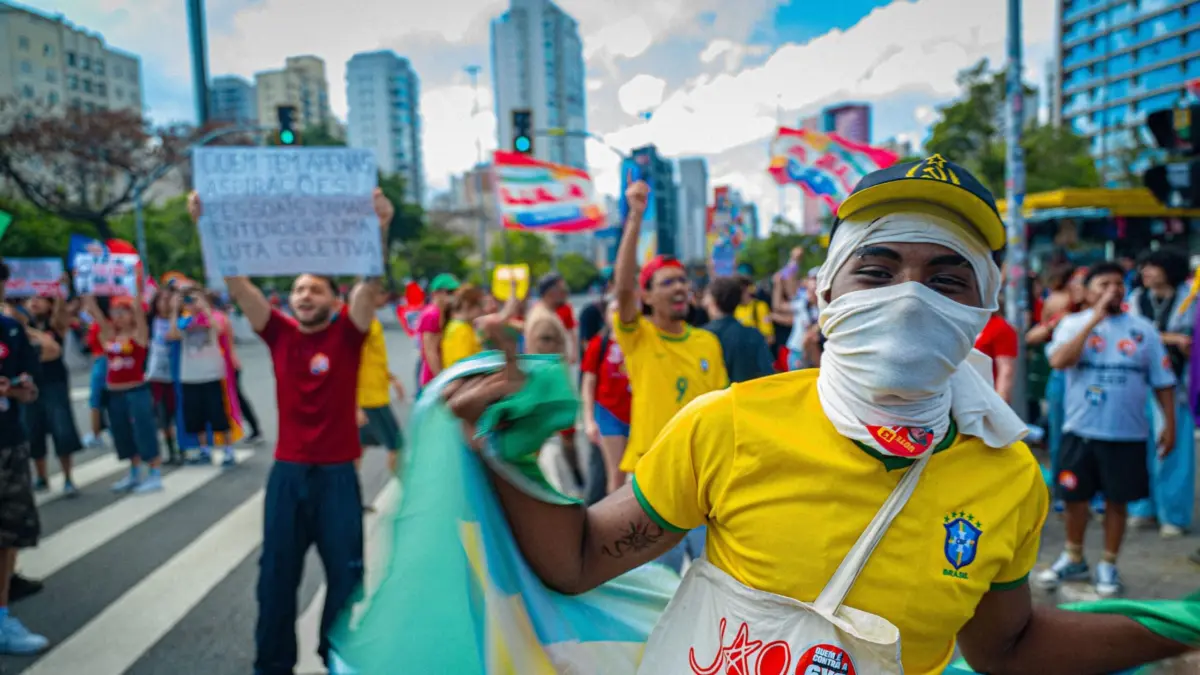
In response to the shifting demographics and a record-high abstention rate—the highest since 1998—the Lula campaign has launched a massive mobilization effort. The strategy is focused on turning out the vote, particularly among students, through large-scale street demonstrations. The campaign claims that a recent rally in São Paulo drew nearly a million participants. The goal is to make those who felt their vote wouldn’t change anything realize the power of their participation.
Aerial footage of these demonstrations, including images of enthusiastic supporters that have gone viral, has become the centerpiece of the campaign’s social media strategy. Simultaneously, the 80-year-old Lula has embraced digital platforms, labeling himself the "king of selfies" and releasing videos designed to counter age-related criticisms, depicting him as energetic and actively engaged on the campaign trail.
Yet, in areas like Maré, one of Rio de Janeiro’s largest favelas, the situation remains complex. While Lula retains support among the very poorest who rely on minimum wage increases and social programs, the rate of abstention remains high. Residents like Vitoria, an 18-year-old mother living on less than £300 a month, credit the current government with providing essential medicines and better worker protections. However, she expresses deep skepticism regarding Flávio Bolsonaro’s proposal to designate local gangs as terrorist organizations. She fears such a policy would trigger violent police raids similar to those that have caused significant loss of life in the past.

The vacuum left by traditional politics is increasingly being occupied by the evangelical church, which now counts about a quarter of Brazil’s population as members. These churches offer more than just spiritual guidance; they provide a vital social safety net, including childcare, employment assistance, and food distribution. Political figures like Pastor Silas Malafaia have become influential operators within this space. From his headquarters in the Penha neighborhood of Rio, Malafaia leads sermons that emphasize self-improvement and conservative values, such as the importance of the family unit and opposition to gender ideology and abortion.
Malafaia, who is currently under investigation for allegedly obstructing the coup trial of the former president—an allegation he denies as politically motivated—argues that the church provides a necessary moral and social framework for the working class. "It gives these people meaning," he says. "It helps them better their lives."
As the election approaches, the influence of the church is clearly driving some voters toward the right. However, for a significant portion of Brazil’s emerging working class, the decision at the ballot box feels less like a full-throated endorsement of a candidate and more like a rejection of the status quo.

"There will never be another Lula," Gilberto Almazan says, a comment meant to honor the past but which serves as a sobering acknowledgment of the present. The political reality in Brazil has changed, and the country’s future may depend on whether the electorate believes that the legacy of its past can be effectively adapted to meet the demands of a new and uncertain world.