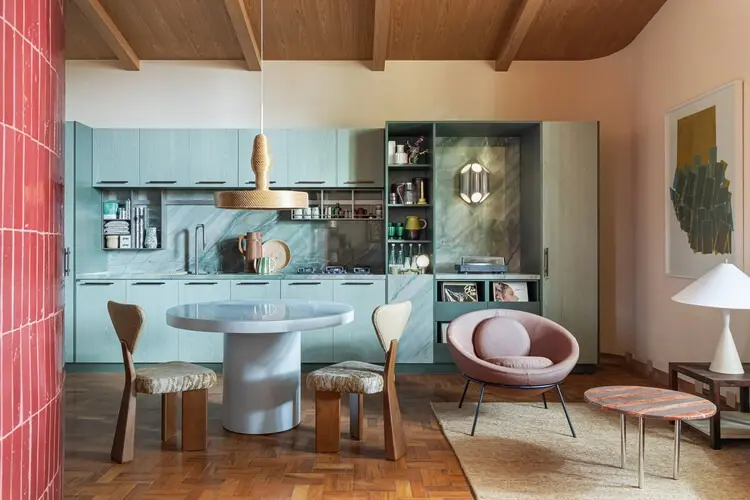
In contemporary interior architecture and spatial design, the layout of a home has long followed a predictable script. For decades, residential planning—particularly in compact urban footprints—has relied on a standardized hierarchy that welcomes visitors first into social zones like living rooms, kitchens, or dining spaces before gradually guiding them toward private quarters. However, a striking new project in Brazil is challenging these deeply ingrained spatial norms. Designed by Estúdio Clara Nahas, a compact 55-square-meter residential installation known as Estúdio Semibreve turns conventional housing logic entirely on its head, offering an intriguing architectural experiment that prioritizes intimacy, emotional transition, and a deliberate inversion of spatial sequence.
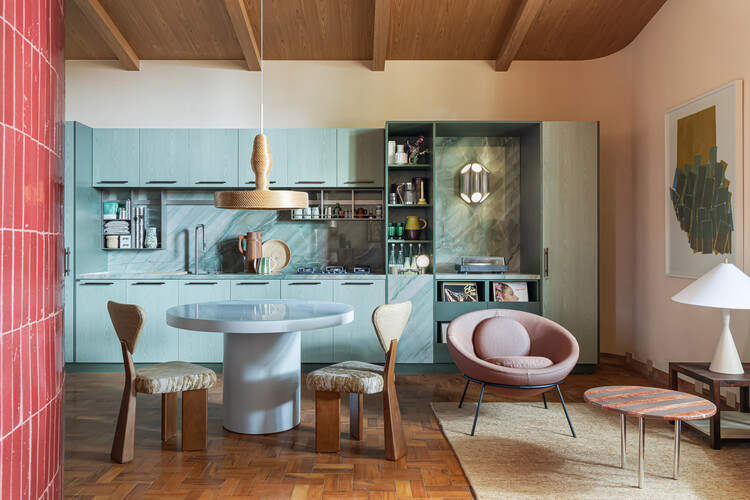
Curated by Susanna Moreira and captured through the photographic lens of Camila Santos, Estúdio Semibreve demonstrates how rigorous spatial zoning can be used to tell a profound narrative within a tightly restricted footprint. Rather than maximizing the immediate sense of openness upon entry, the design consciously subverts the traditional threshold experience. In this innovative layout, visitors are not greeted by the expansive vistas of a communal living area. Instead, the journey begins deep within the most personal and private realms of the home.

Upon crossing the threshold of Estúdio Semibreve, the visitor is immediately immersed in the intimate zone of the residence. The spatial sequence dictates that one must first traverse the private bedroom and the quiet confines of the study or workspace before ever catching a glimpse of the broader, light-filled living areas. This inverted circulation path is far more than a mere eccentric design choice; it functions as an intentional architectural mechanism and a sensory filter.

By forcing a physical and psychological journey through the most private spaces of the dwelling, the designers establish a profound rito de passagem—a rite of passage—for anyone entering the home. This deliberate delay in reaching the social core of the apartment suggests that shedding personal detachment and embracing vulnerability should precede any outward social interaction. In essence, the layout implies that one must first connect with the innermost sanctum of self-reflection and rest before stepping out to engage with others in a shared communal space.

The spatial choreography of Estúdio Semibreve highlights a growing interest among contemporary designers in exploring the psychological dimensions of interior architecture. In compact living environments, where square footage is at an absolute premium, every single square meter must work harder to justify its existence. While many designers attempt to achieve this by simply removing walls to create continuous open-plan spaces, Estúdio Clara Nahas takes a more nuanced, narrative-driven approach. By compartmentalizing and sequencing the spatial experience in reverse, the studio manages to make a modest 55-square-meter footprint feel remarkably expansive, complex, and emotionally resonant.
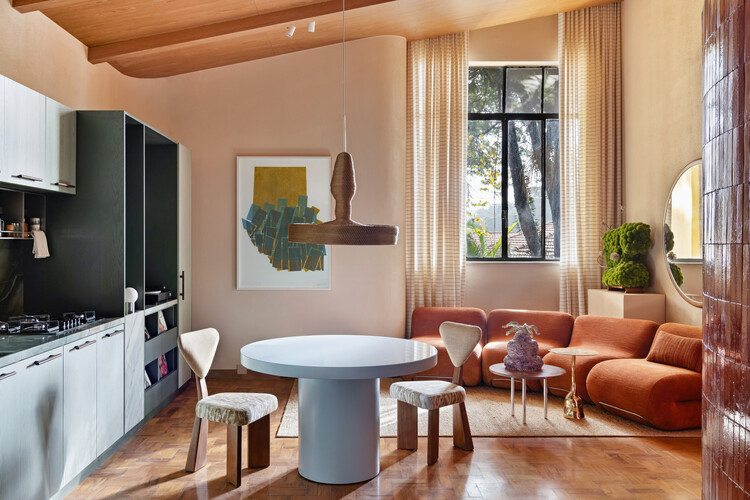
The materiality and visual language of the project further support this atmospheric journey. Dominated by warm tones, rich wood textures, and carefully considered lighting, the interior creates a cocoon-like environment in the private zones that gracefully transitions into more breathable, illuminated gathering spaces toward the back of the sequence. The furniture selection, including refined tables, chairs, and custom cabinetry, speaks to a minimalist yet deeply tactile sensibility, where every element contributes to the overarching rhythm of the interior landscape.
As urban spaces continue to shrink and the boundaries between public exposure and private retreat become increasingly blurred in modern life, projects like Estúdio Semibreve offer a compelling counter-narrative. By questioning the traditional architectural blueprint and placing emotional privacy at the very forefront of the domestic experience, Estúdio Clara Nahas has crafted a thoughtful spatial dialogue that redefines how we inhabit, perceive, and move through our most intimate environments.