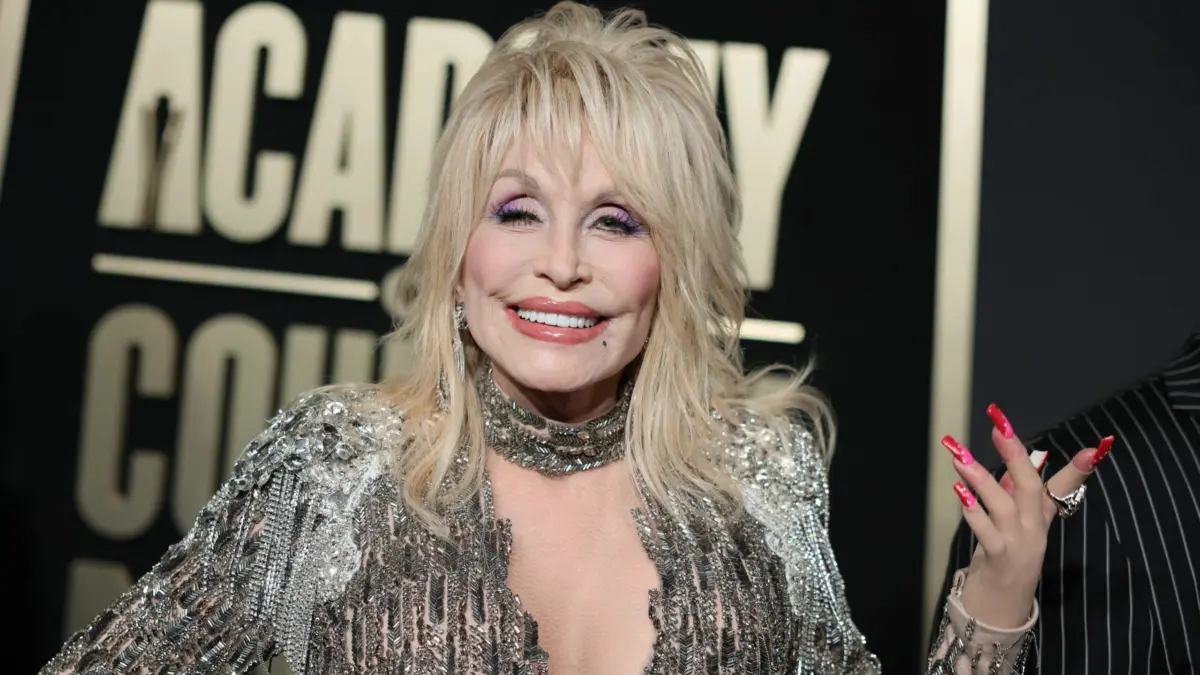
The estate of late country music icon Dolly Parton has officially appointed her niece, Danielle Parton, as a brand ambassador, stepping up efforts to preserve the legendary singer’s legacy as a high-stakes legal battle continues to unfold involving another member of the family.
Danielle Parton, a commercial pilot and military veteran, discussed her new role in an October 22 video shared on Instagram. In the announcement, she explained that she hopes to share personal memories of her famous aunt while supporting the continuation of the philanthropic and creative work that defined the global superstar’s life. At the same time, she emphasized that she would not attempt to speak on behalf of the singer or try to replace her monumental cultural footprint.
"Yes, Dolly Parton was my aunt, but to me, she will always be Aunt Granny," she said in the video message. "Like so many of you, losing her has changed something for me. It made me think of the stories, values, and lessons that she left behind, and the responsibility that our family has to care for them."
She continued, addressing her limitations and the unique scope of her new position: "I’m not crazy enough to try to fill her shoes. God knows I couldn’t walk on them without killing myself. What I can do is share the woman that I knew. I can tell some of the stories of her, the stories behind the global icon, and support the people carrying forward the work that she cared for and created to make sure what she built continues to bring people joy."
This appointment arrives in the wake of a contentious public and legal split between the organization tasked with protecting Parton’s professional legacy and her nephew, Bryan Seaver, who previously oversaw security across her various properties. Seaver, who had publicly announced the "9 to 5" hitmaker’s death on August 25, was fired from his long-held role as head of security at Parton’s properties on September 16.
What followed was a bitter legal confrontation. The entity charged with safeguarding Parton’s brand, She’s Alive, LLC, initiated legal action accusing Seaver of issuing threats of violence and vowing to deliberately destroy the singer’s hard-earned legacy. Seaver has fiercely denied all allegations made against him by the organization.
The legal friction intensified rapidly in early October. On October 2, Seaver filed a motion asking a court to postpone a scheduled October 9 hearing, arguing that he had been unable to secure an attorney to represent him in the matter. A judge ultimately granted Seaver’s request, pushing the hearing back to October 20, but the decision came amid strong opposition from She’s Alive, LLC.
In subsequent court documents, She’s Alive argued forcefully against granting the delay, accusing Seaver of having "attempted to evade service of process" and asserting that the court "should not reward that behavior." According to the organization’s legal filing, process servers made multiple attempts to serve Seaver with a summons on three separate occasions. During the second attempt, the server reportedly spotted four vehicles parked in the driveway of his residence, but no one answered repeated knocks at the door.
"Eventually, Mr. Seaver’s residence had a no-trespassing sign in the front yard and barbed wire draped across the handrails leading to the front door," the court filing alleged.
Furthermore, She’s Alive urged the presiding judge to view Seaver’s claims regarding his inability to find legal representation "with considerable skepticism." The filing stated, "He waited until the last moment to take any action, and the court should not reward that behavior," adding that Seaver "already has lawyers who appear to be anxious to represent him."
The courtroom clashes followed a temporary restraining order that was granted against Seaver on September 22. In its initial lawsuits, She’s Alive alleged that Seaver began a pattern of intimidation in the weeks leading up to Parton’s passing. "Mr. Seaver began his campaign of threats, intimidation, and coercion a few weeks prior to Ms. Parton’s passing," stated the legal filing, which was obtained by people.
The suit further claimed that Seaver had vowed in writing to "destroy the entire brand" and allegedly told Parton’s entertainment attorney, "I’m not an entertainment person. I’m a killer." The filing noted that Parton "loved and cared for her family very deeply," while accusing her nephew of threatening to damage her legacy and "inflict reputational and economic harm."
In addition to threats directed at the brand and its representatives, Seaver was accused of making "threats of real-world violence" against members of Parton’s staff. She’s Alive maintained that it holds a clear legal and moral responsibility to safeguard both the singer’s legacy and the safety of the people involved in maintaining it.
"As the entity entrusted by Ms. Parton to protect and promote her life’s work for future generations, SAL must cultivate a safe work environment for employees, advisors, and partners, free from intimidation or hostility—particularly intimidation by an armed former security contractor," one court filing stated. "Without relief, Defendants’ calculated campaign will continue to inflict fear, to destabilize SAL’s operations, and to cause further irreparable harm."
Following the initial legal filings, Seaver and his private security company were served with a formal termination notice directing them to immediately vacate the Parton properties they had previously been tasked with protecting. Those real estate holdings reportedly include Parton’s primary Nashville home, a museum, a warehouse, and a downtown residence.
Promptly after the termination, replacement security personnel were dispatched to secure the locations. Seaver and his team subsequently spoke out about their sudden dismissal, taking aim at Parton’s longtime manager, Danny Nozell. They expressed that they were "dismayed by the unexpected and, so far, unexplained actions" that followed the legendary entertainer’s death.
Beyond the ongoing courtroom drama, Parton’s monumental legacy continues to be defined by her extensive philanthropic work, which heavily featured substantial support for people struggling to find or retain stable housing. Raised alongside 11 siblings in a modest one-room cabin in the Smoky Mountains, the entertainer consistently directed her wealth and resources toward disaster survivors, young people experiencing homelessness, and families facing severe medical crises.
Following the devastating 2016 wildfires in Tennessee’s Sevier County, the Dollywood Foundation quickly established the My People Fund. The initiative provided eligible local households that had lost their primary homes with $1,000 a month for six months, followed by an additional $5,000 disbursement to help families take their next steps toward rebuilding their lives.
Her real estate holdings also frequently became vehicles for her charitable giving. In 2023, Parton famously donated a cabin she owned in Idyllwild, California, to Ronald McDonald House Charities of Southern California. The charitable organization successfully sold the property the following year for $585,000 to fund its ongoing operations.
Housing support was also woven directly into her business operations. In 2021, Dollywood announced a formal partnership with Holtz Builders to develop a $20 million residence hall specifically designed to provide affordable housing for seasonal employees and interns.
These enduring efforts form a vital part of the legacy that continues to resonate alongside Parton’s extensive music catalog, theme parks, and entertainment ventures, even as her estate navigates complex family disputes and administrative transitions.