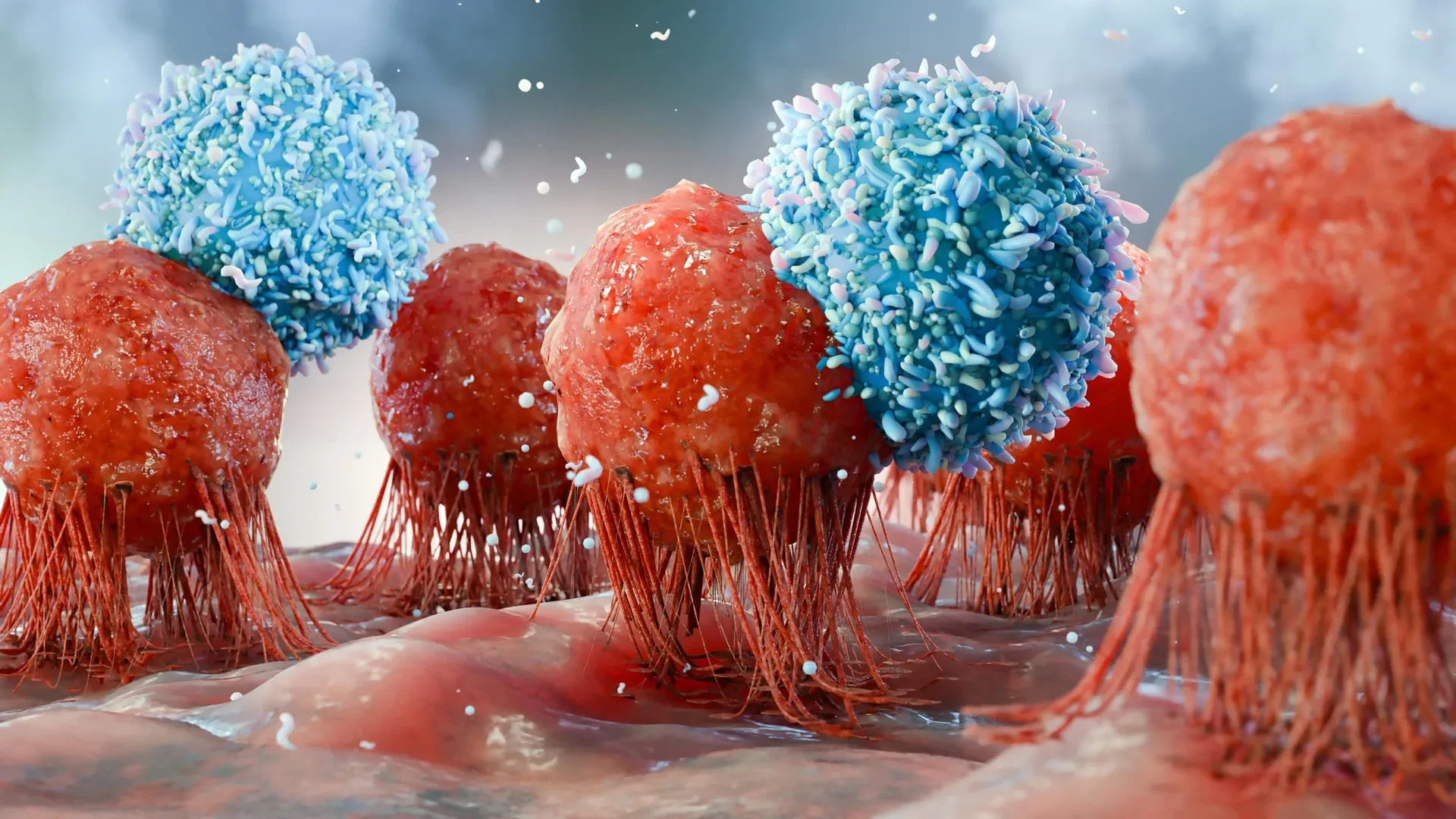
In a significant leap forward for the field of regenerative medicine and oncology, researchers at the University of Southern California (USC) have pioneered a method to produce a theoretically renewable supply of cancer-fighting immune cells. This breakthrough, detailed in the journal Cell, offers a promising new architectural strategy for immunotherapy. By focusing on immature progenitor cells rather than fully developed immune cells, the team has created a scalable system capable of generating large numbers of genetically engineered defenders that can recognize tumors and galvanize the body’s natural immune response.
For years, cancer immunotherapy—particularly treatments utilizing engineered T cells—has been hailed as a revolutionary approach to oncology. However, the field has faced stubborn technical bottlenecks. Manufacturing enough high-quality immune cells, ensuring they survive in the hostile environment of a tumor, and maintaining their activity levels within the patient’s body remain monumental challenges. The USC Stem Cell-led research team, directed by Qi-Long Ying, MD, PhD, a professor of stem cell biology and regenerative medicine at the Keck School of Medicine of USC, suggests that the solution may lie in shifting the focus toward the "developmental stage" of the cells used in these therapies.
Challenging the Dogma of Blood Cell Development
The USC team’s research centers on a specific class of immature immune cells known as granulocyte-monocyte progenitors (GMPs). Traditionally, these cells were understood to be transient waystations in the development of the immune system. Under normal physiological conditions, GMPs mature into macrophages and other vital immune cells that serve as the body’s frontline defense against pathogens.
The prevailing scientific consensus has long held that "long-term self-renewal"—the capacity for a cell to divide indefinitely while maintaining its original, undifferentiated identity—is an exclusive property of hematopoietic stem cells. These stem cells are the "master cells" capable of giving rise to every type of blood and immune cell in the human body. Progenitor cells, such as GMPs, were viewed as being further along the developmental path, already committed to a specific lineage and thus possessing a strictly limited lifespan and reduced capacity for self-renewal.
The USC study fundamentally challenges this view. Through a meticulously controlled laboratory environment, the researchers demonstrated that GMPs can, in fact, retain the ability to self-renew. By applying a specific, defined mixture of chemicals, the researchers were able to prevent the GMPs from maturing prematurely. Instead, the cells continued to multiply, preserving their identity and their latent capacity to differentiate into functional immune cells when required.
"The prevailing view has been that long-term self-renewal in the blood system is primarily a property of the hematopoietic stem cells that can generate any type of blood or immune cell," Dr. Ying explained. "We found that, under the right conditions, GMPs can also self-renew, dividing extensively while keeping their identity and ability to produce functional immune cells. That gives us a scalable starting point for engineering cell therapies for cancer, infectious disease, and potentially many other conditions."
Harnessing the Power of Macrophages
The ultimate goal of this research is to leverage macrophages—often described as the "big eaters" of the immune system. Derived from the Greek words for their primary function, these cells are among the most versatile defenders in the human body. They possess the unique ability to engulf bacteria, cellular debris, and foreign invaders. Beyond their phagocytic activity, they act as command centers for the immune system, secreting signals that dictate the behavior of other immune cells.
For oncologists, macrophages are highly attractive candidates for therapy, particularly for solid tumors. While T-cell therapies have seen remarkable success in treating blood-borne cancers, they have struggled to penetrate the dense, physical masses of solid tumors. Macrophages, however, are naturally programmed to migrate into tissues and infiltrate dense environments, making them natural candidates to bypass the limitations of current T-cell treatments.
Despite their potential, mature macrophages have proven notoriously difficult to work with in a clinical setting. Once they have reached full maturity, they lose their ability to divide, making it nearly impossible to manufacture them in the quantities required for a therapeutic dose. Furthermore, they are resistant to genetic modification and are notoriously fragile when subjected to the freezing and storage processes necessary for commercial distribution.
Moreover, when mature macrophages are injected into a patient, they often fail to migrate to the tumor site, instead sequestering in the lungs or liver. Their rapid disappearance from the body also necessitates frequent, high-dose administration, which is both expensive and logistically difficult. By focusing on GMPs, the USC team essentially bypassed these issues by utilizing a "seed" cell that can be stored, expanded, and engineered before being allowed to mature into the desired therapeutic weapon within the patient’s own body.
A Scalable Platform for Future Immunotherapy
The research team, led by first author Shi Yue, MD, developed a sophisticated chemical cocktail that sustains GMPs in a state of indefinite, renewable expansion. This approach allows for the creation of massive, uniform batches of cells, a marked improvement over the current methods that require the collection of autologous (patient-derived) cells for each individual treatment.
To ensure the robustness of their findings, the USC researchers collaborated with the laboratory of Ravi Majeti, MD, PhD, at Stanford University. The Stanford team independently verified that GMPs could be maintained and genetically engineered over extended periods, reinforcing the viability of the technique. Dr. Majeti, Director of the Institute for Stem Cell Biology and Regenerative Medicine at Stanford, noted that the platform opens the door to numerous translational applications, comparing the potential impact of GMP engineering to the historical shift seen with T-cell expansion.
The team then turned their attention to programming these cells to hunt cancer. They utilized Chimeric Antigen Receptor (CAR) technology, which adds a synthetic receptor to the cell surface, allowing the immune cell to recognize specific markers on the surface of malignant cells. By arming GMPs with CARs, the researchers created a system where the progenitors could differentiate into "CAR-macrophages" that actively seek out and destroy tumor cells.
Further enhancing the design, the researchers incorporated an additional immune-activating signal into some of the GMPs. This modification acts as a recruiter, stimulating nearby T cells and other components of the immune system to join the fight, thereby creating a more comprehensive, multi-pronged attack on the tumor. Remarkably, this secondary signal remained effective even when the donor cells were not a perfect match for the recipient, suggesting the possibility of "off-the-shelf" allogeneic therapies that could be mass-produced and administered to a wide range of patients.
Preclinical Success and Future Outlook
In experiments involving mice, the engineered GMPs demonstrated clear clinical potential. Once administered, the cells successfully homed in on the bone marrow and other hematologic niches, establishing a foothold within the host. Rather than acting as a temporary, finite dose, these progenitors provided a persistent, internal factory capable of generating a steady supply of engineered macrophages.
The treatment proved effective against both blood cancers and solid tumors, with the most potent results observed when the GMPs were equipped with both the CAR receptor and the additional immune-activating signal. While these results are highly encouraging, the researchers emphasize that the work remains in the preclinical phase. Extensive further research will be required to determine the safety and long-term efficacy of these cells in human clinical trials, particularly regarding the potential for persistent cell production.
Beyond oncology, the team explored the potential of their platform for treating inherited immune deficiencies. In a study of mice with chronic granulomatous disease—a condition that leaves individuals highly vulnerable to infection due to dysfunctional immune cells—the transplantation of engineered GMPs successfully restored the animals’ ability to neutralize pathogens.
This suggests that the implications of the USC study extend far beyond cancer. By mastering the developmental timing of immune cells, the researchers have unlocked a new paradigm in cellular medicine. As Dr. Ying noted, the future of immunotherapy may depend as much on the developmental stage of the cell as it does on the sophistication of the genetic receptors themselves. By focusing on the progenitors, the field may finally be moving toward therapies that are not only more potent but significantly more accessible and scalable for global health.