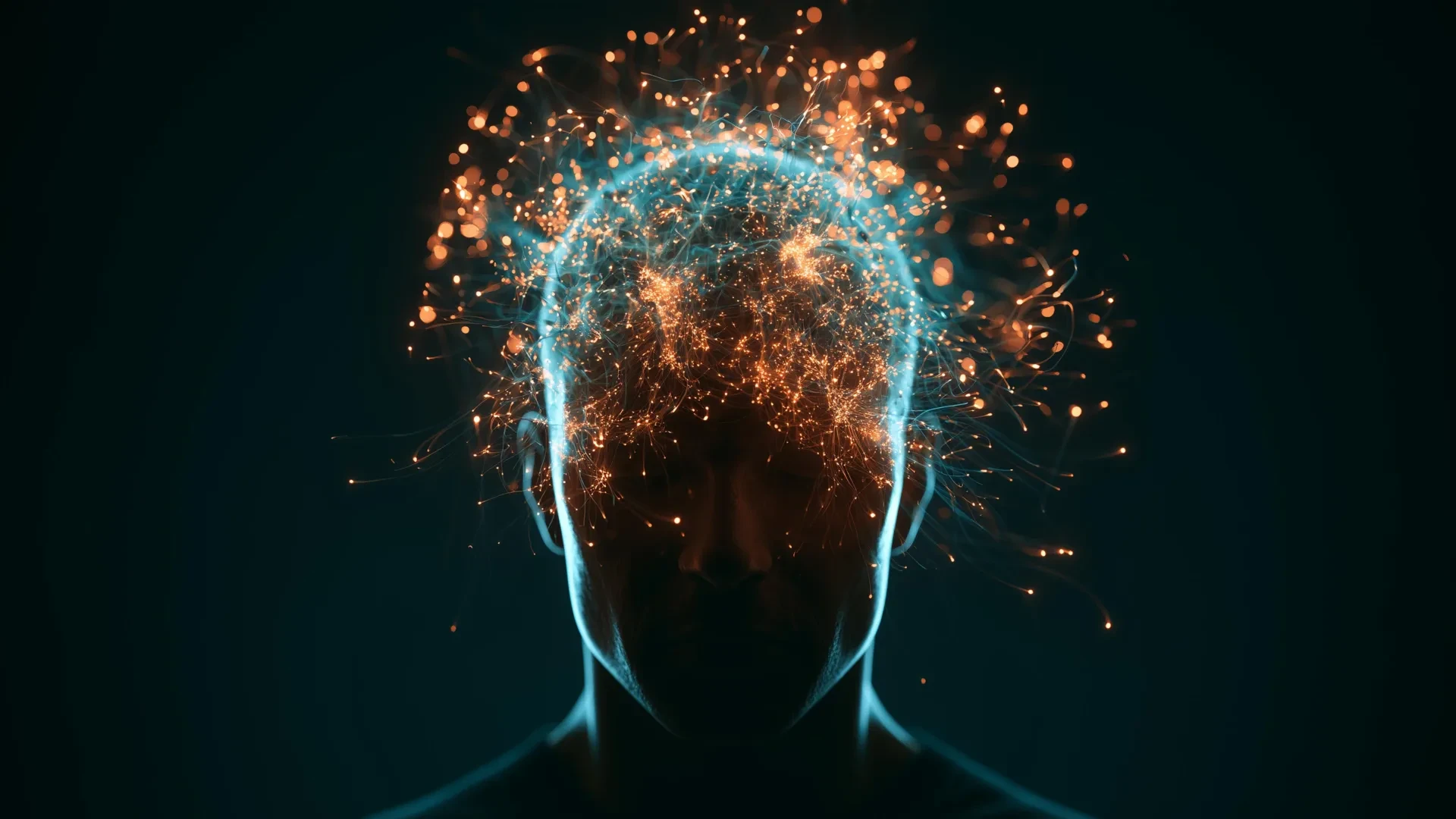
For decades, the medical community has viewed general anesthesia as a state of profound neural silence—a deliberate "turning off" of the cognitive processes that define our conscious experience. When a patient is under, the prevailing assumption has been that the brain, while kept alive and functioning at a basic level, ceases the complex tasks of interpretation, linguistic analysis, and anticipation. However, a groundbreaking study from Baylor College of Medicine, recently published in the journal Nature, is forcing neuroscientists to reconsider the boundary between the sleeping mind and the waking world.
The research reveals that even when a patient is fully unconscious, the brain remains remarkably busy. It is not merely a passive organ waiting for the anesthetic to wear off; rather, it continues to process sophisticated language, recognize patterns, and, most surprisingly, anticipate future information. This discovery challenges long-held assumptions about the relationship between consciousness and cognitive output, potentially opening new pathways for medical technology and our fundamental understanding of how the human brain creates the experience of "being."
Recording the Unconscious Brain
To peer into the mechanics of the unconscious mind, a team led by Dr. Sameer Sheth—a professor and Cullen Foundation Endowed Chair of Neurosurgery and a McNair Scholar at Baylor—leveraged a unique clinical opportunity. The team worked with patients already undergoing surgery for epilepsy at Baylor St. Luke’s Medical Center. These patients required the implantation of monitoring devices to locate the source of their seizures, providing an ethical and clinical window into the hippocampus, a brain structure critical for memory formation and information organization.
The hippocampus is situated deep within the temporal lobe and is essentially the brain’s librarian, filing away new experiences and organizing the flow of information. To capture the activity within this region, the researchers utilized state-of-the-art Neuropixels probes. These high-density silicon devices are capable of recording the electrical firing of hundreds of individual neurons simultaneously. By using such granular technology, the team could move beyond coarse observations of brain waves to see the precise, real-time responses of nerve cells to external stimuli.
"Our findings show that the brain is far more active and capable during unconsciousness than previously thought," said Dr. Sheth. "Even when patients are fully anesthetized, their brains continue to analyze the world around them."
The Evidence of Learning and Plasticity
The research team began their investigation by observing how the hippocampus reacted to sound. They played a series of repeating tones for the anesthetized patients, periodically interjecting a "deviant" or unexpected sound. In a fully conscious brain, the detection of such an anomaly triggers a well-documented reaction; the brain notes the pattern, identifies the deviation, and recalibrates its expectations.
Remarkably, the anesthetized brains exhibited the same behavior. Neurons in the hippocampus responded differently to the unexpected sounds, and as the experiment progressed, the neural response became more refined. The brain cells grew increasingly adept at distinguishing the anomalous tones from the repeating ones. This phenomenon—neural plasticity—is the bedrock of learning. It indicates that the brain is not just receiving input but is actively adapting its neural architecture to account for patterns in the environment, even in the absence of conscious awareness. This suggests that the fundamental machinery of learning does not require the "observer" of consciousness to be present to function.
Processing Language and Predicting the Future
Having established that the unconscious brain could track auditory patterns, the researchers decided to increase the complexity of the stimulus. They played short stories to the patients while continuing to monitor hippocampal activity with the Neuropixels probes. The results were startling. The neural firing patterns were not chaotic; they were structured in ways that corresponded to the grammatical and semantic categories of the language being spoken. The brain cells were firing in distinct clusters for nouns, verbs, and adjectives, proving that the hippocampus was parsing the meaning of the language rather than simply registering raw sound waves.
Perhaps most intriguing was the discovery of predictive coding. The researchers found that the neural activity contained information that could be used to forecast upcoming words in a sentence. When we listen to a story, our brains do not merely react to the words we hear; they are constantly making lightning-fast guesses about what is likely to follow, using context and experience to anticipate the narrative.
"The brain appears to anticipate what comes next in a story, even without conscious awareness," Dr. Sheth explained. Dr. Benjamin Hayden, a professor of neurosurgery at Baylor and a co-author of the study, noted the significance of this, stating, "This kind of predictive coding is something we associate with being awake and attentive, yet it’s happening here in an unconscious state."
This process of predictive coding is essential to human cognition. It allows us to navigate a complex, fast-paced world by effectively "filling in the blanks" before they are even spoken. Finding this process active during general anesthesia implies that the neural architecture for prediction is a foundational, perhaps even autonomous, feature of the brain that persists even when the higher-level "lights" of consciousness have been dimmed.
The Implications for Consciousness and AI
This study strikes at the heart of one of the greatest mysteries in science: the nature of consciousness itself. For years, scientists have equated consciousness with the active processing of information. If the brain can process language and perform predictive modeling while a patient is unconscious, what then is the specific role of consciousness?
The researchers suggest that awareness may not be tied to the activity of individual regions, such as the hippocampus, but rather to how information is coordinated and integrated across a vast, interconnected network. In this view, the hippocampus may be a worker that continues to process data independently, while the "executive" functions—those that broadcast this information to the rest of the brain to create a subjective experience—remain offline during anesthesia.
The study also creates an interesting bridge between human biology and artificial intelligence. Large language models (LLMs) operate on a similar principle of predictive processing, utilizing massive datasets to guess the next token in a sequence. While the biological mechanisms of the hippocampus and the digital architecture of an AI are fundamentally different, both systems utilize patterns to anticipate future inputs. By studying how the brain performs these tasks, researchers may gain insights into the optimization of AI systems, just as they gain a deeper understanding of human neurology.
New Frontiers in Medical Technology
Beyond the theoretical implications, the research has significant potential for clinical applications. The ability to record and decode language-related neural signals offers a promising future for brain-computer interfaces (BCIs). For patients suffering from strokes, traumatic brain injuries, or neurodegenerative conditions that render them unable to speak, this research could be transformative.
"Can we use these signals to deploy and run a speech prosthetic for some of the parts of the brain that are damaged by stroke or injury? These are questions that we can now consider in relation to this part of the brain," said Dr. Vigi Katlowitz, the study’s first author and a neurosurgery resident at Baylor. If scientists can successfully interpret the neural signatures of language processing—even those that occur below the threshold of awareness—they might one day be able to bypass damaged speech centers and use synthetic interfaces to help patients regain their voice.
Rethinking the Limits of the Mind
While the study is a significant milestone, the researchers remain cautious. These findings are specific to one type of general anesthesia and a specific brain region; whether these same mechanisms hold true during natural sleep, comas, or under different types of anesthetic drugs remains to be seen. Further research will be necessary to map these activities across other regions of the brain and to understand how these disparate areas interact when consciousness is absent.
Nevertheless, the findings are a profound reminder that the human brain is a dynamic, tireless engine of information processing. By demonstrating that the brain continues to interpret, learn, and predict even when we are completely "unplugged" from the world, the study forces a reevaluation of what it means to be conscious. As Dr. Sheth concluded, "This work pushes us to rethink what it means to be conscious. The brain is doing much more behind the scenes than we fully understand."