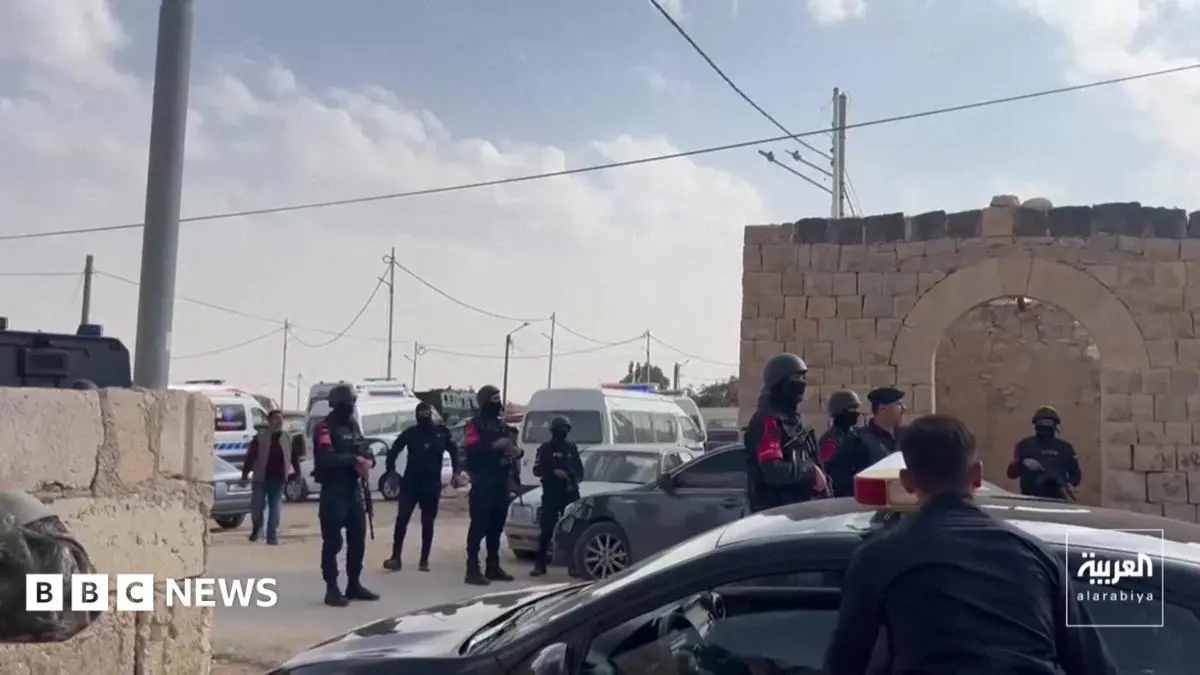
A somber gathering turned into a scene of unimaginable horror on Friday when two unidentified gunmen opened fire on a funeral service in the Karak governorate of central Jordan. The attack, which government officials have decried as a "heinous" act of violence, has left at least six people dead and 28 others injured, sending shockwaves through a nation that prides itself on its relative stability and social cohesion.
The assault occurred within the walls of a local church, where dozens of mourners had gathered to pay their final respects. According to accounts provided by witnesses and government spokespeople, the tranquility of the funeral was shattered when two attackers arrived at the site in a vehicle. The assailants, who remain unidentified, entered the church and immediately unleashed a barrage of gunfire, turning a place of mourning into a battlefield.
Mohammad al-Momani, a spokesperson for the Jordanian government, confirmed the tragic toll and announced that security forces had been rapidly deployed to the area to secure the perimeter and pursue the suspects. The government has characterized the incident as a targeted act of aggression, though the motives behind the shooting remain unclear. As of late Friday, no group or individual has claimed responsibility for the assault, leaving investigators and the public searching for answers regarding who orchestrated the violence and why they chose to target a funeral service.
One of the mourners present during the attack, Khaled Burqan, provided a harrowing account of the event to Jordan’s state-run television network, al-Mamlaka. According to Burqan, the gunmen were well-prepared and methodical. He reported that the two attackers were armed with a rifle and a pistol, and that they continued to fire upon the defenseless crowd for several minutes. The suddenness and duration of the attack meant that many of the mourners, who were caught off guard while observing traditional rites, had little opportunity to escape or defend themselves.
Footage that has since emerged, purportedly captured in the immediate aftermath of the shooting, depicts a scene of profound chaos and despair. The images show several victims lying on the ground, surrounded by the remnants of a service that had been violently interrupted. The visuals underscore the gravity of the situation, providing a grim testament to the toll exacted by the gunmen before they fled the scene.
The Karak governorate, located south of the Jordanian capital, Amman, is a region known for its historical significance and its diverse social fabric. While Jordan is a majority-Muslim country, it is home to a sizeable and long-standing Christian community that has historically integrated well into the broader national identity. The choice of a church as the site of the attack has led to intense speculation and concern among both local residents and international observers regarding the underlying intent of the perpetrators.
Violence of this magnitude is historically rare in Jordan, a nation that has often served as a pillar of stability in an otherwise turbulent Middle East. The country’s security apparatus is generally viewed as robust, and the Jordanian government has consistently worked to maintain domestic order and prevent the spread of sectarian or extremist violence. However, this latest incident serves as a stark reminder that even in regions accustomed to relative peace, the threat of targeted, lethal violence persists.
Jordan has faced security challenges in the past, and while deadly attacks have occurred, they are infrequent. The government’s swift response, including the deployment of additional security forces and the promise of a forthcoming briefing from the interior ministry, signals the high level of urgency with which officials are treating the incident. The interior ministry is expected to provide a detailed update on the status of the investigation, the search for the suspects, and any potential security measures that will be implemented in the wake of the tragedy.
The loss of six lives and the wounding of 28 others has brought the local community in Karak to a standstill. Funerals in the region are significant communal events, drawing extended family members, friends, and neighbors to show solidarity with the bereaved. The fact that the attackers chose this specific venue suggests a desire to maximize both the physical casualties and the psychological impact on the community.
As the authorities continue to process the scene, the focus remains on identifying the suspects who escaped in their vehicle. Security checkpoints have reportedly been established in the surrounding areas, and investigators are likely examining forensic evidence and witness testimonies to piece together the events that unfolded inside the church. The lack of an immediate claim of responsibility has only deepened the mystery surrounding the attack, leading experts to weigh various possibilities, ranging from domestic extremism to broader regional security threats.
The 28 injured individuals are currently receiving medical attention, with many being transported to hospitals across the governorate. The medical response, involving emergency services and local clinics, has been a critical focus of the immediate aftermath. The severity of the injuries, caused by the use of both high-powered rifles and pistols, highlights the lethal intent of the gunmen.
In the hours following the attack, the national discourse has been dominated by calls for unity and resilience. Officials have been careful to emphasize the "heinous" nature of the act, a term intended to condemn the violence while attempting to prevent any potential social fallout or sectarian tension that might arise from such a targeted assault on a religious institution. The government’s communication strategy aims to maintain calm while demonstrating that the state is fully capable of apprehending those responsible.
The international community is watching the situation in Jordan closely. Given the country’s strategic role in regional diplomacy and its history of maintaining a moderate stance, the attack is viewed not only as a domestic tragedy but as a potential point of concern for regional stability. Diplomatic channels are likely monitoring the Jordanian government’s next steps as they balance the need for security with the need for transparent communication.
For the residents of Karak, the coming days will be marked by grief and the daunting task of processing a trauma that has reached into the heart of their community. The funeral, which should have been a time of quiet reflection and community support, has now become a landmark moment in the governorate’s history—a day that will be remembered for the lives lost and the sudden, violent intrusion into their collective peace.
As the sun sets on the governorate, the presence of security forces remains heavy. The interior ministry’s forthcoming briefing is eagerly anticipated, as it will be the first official, comprehensive account of the investigation’s progress. Until then, the nation remains in a state of mourning, waiting to learn who was behind the attack and how such a significant breach of security could have occurred in a place of sanctuary.
The narrative of this event is still being written, with the investigators working against time to track the fleeing suspects and prevent any further incidents. While the tragedy has left deep scars on the families of the victims and the people of Karak, the resilience of the community is being tested in the face of what has been described as a truly senseless act of violence. The coming days will reveal whether this incident is an isolated occurrence or the beginning of a more complex challenge for Jordanian authorities.
For now, the focus is on the victims—the six whose lives were cut short and the 28 who are now beginning the long road to physical and emotional recovery. The government’s condemnation and the ongoing security mobilization are the first steps in an attempt to restore order to a province reeling from a day of unexpected and profound bloodshed. As the investigation continues, the people of Jordan look toward their leaders for answers, hoping that the perpetrators of this heinous attack will be brought to justice swiftly and decisively.