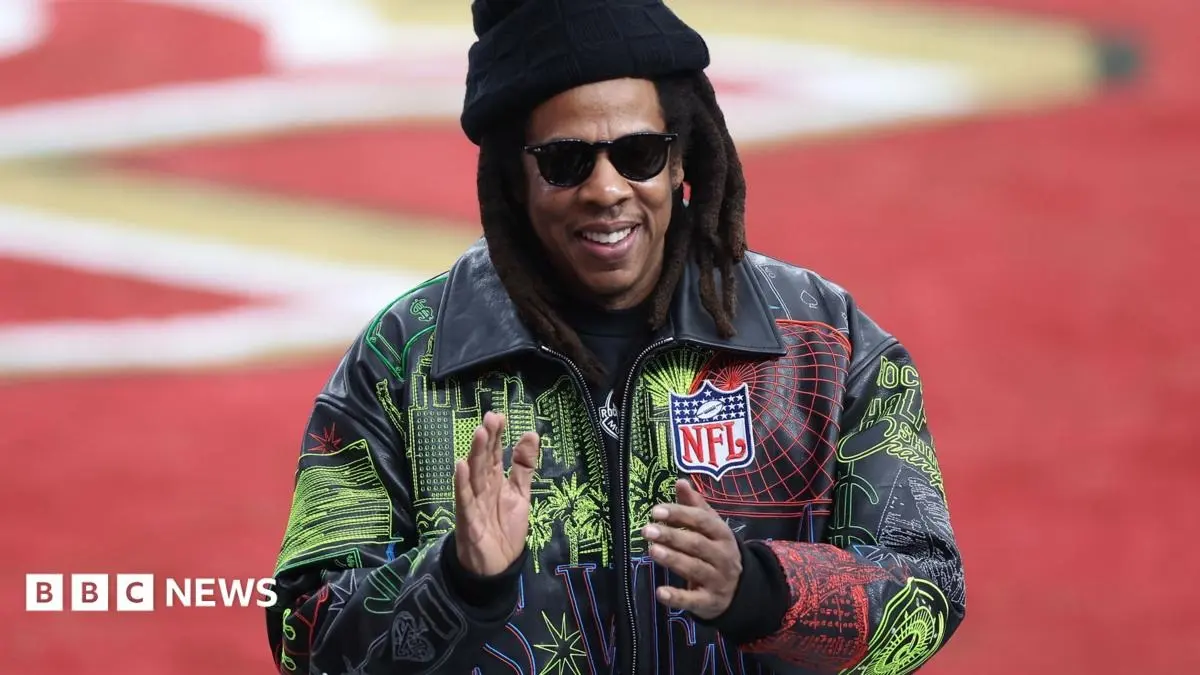
In a seismic development for the music and sports industries, the NFL has officially announced that hip-hop mogul Jay-Z will headline the Super Bowl LXI halftime show this coming February. The announcement marks a significant departure from the rapper’s behind-the-scenes role in the spectacle, signaling a climactic moment in his long-standing partnership with the league. While Jay-Z, born Shawn Carter, has been the primary architect of the halftime show’s creative direction since his company, Roc Nation, entered into a production partnership with the NFL in 2019, he has notably refrained from stepping into the spotlight himself—until now.
The news has sent ripples of anticipation through the global entertainment landscape, immediately igniting speculation regarding potential guest appearances. In a statement released following the announcement, the NFL alluded to the high-profile nature of the performance, noting that the conversation surrounding who might join the billionaire rapper on stage has already begun. "Anticipation as to who Jay-Z might have guest star at halftime for the big game will now kick off," the league stated. "Of course, his wife, Beyoncé, will be atop the list."
Super Bowl LXI is scheduled to take place on February 14, at a stadium near Los Angeles, a venue that holds particular significance for the artist. The announcement comes on the heels of two triumphant sold-out shows performed by Jay-Z at the very same stadium just last weekend. These performances were part of a high-profile tour celebrating the 30th anniversary of his seminal debut album, Reasonable Doubt, a project that cemented his status as a lyrical force and paved the way for his ascension to global superstardom.
Reflecting on the milestone, Jay-Z expressed a sense of culmination regarding his career trajectory. "From Reasonable Doubt to standing on the Super Bowl halftime stage, this has been a journey," the artist remarked. "Thirty years of music, work, and culture on the world’s biggest stage. This run continues to be a dream come true."
The decision to feature Jay-Z follows a string of critically acclaimed and commercially massive halftime performances. In recent years, the NFL has leaned heavily into hip-hop and R&B, showcasing artists such as Kendrick Lamar, Usher, Rihanna, The Weeknd, and Bad Bunny. The performance slot is widely considered the most coveted stage in music, drawing tens of millions of viewers globally and often serving as a cultural touchstone that defines the zeitgeist of the year.
The bar for success has been raised significantly by recent iterations of the show. Kendrick Lamar’s 2025 performance, in particular, set a new standard for the franchise, becoming the most-watched Super Bowl halftime show in history. That performance was not only a commercial juggernaut but also a critical success, earning the Emmy Award for Outstanding Music Direction. By stepping into this arena, Jay-Z is not only engaging with the legacy of the show but also accepting the challenge of matching the high-octane production values and cultural relevance that fans have come to expect.
NFL Commissioner Roger Goodell, who has worked closely with Jay-Z since the inception of the Roc Nation partnership, expressed immense enthusiasm for the upcoming performance. Goodell revealed that the prospect of Jay-Z performing on the halftime stage was a long-term goal for the league, one that he had personally championed since the very beginning of their business relationship.
"I couldn’t be more excited for fans around the world to experience the artistry, creativity and cultural impact he will bring," Goodell said in a statement. "When we first reached an agreement with Roc Nation to produce the show, I had just one request: that Jay-Z take the stage himself one day, whenever the moment felt right to him."
For Jay-Z, the timing appears to align with a broader retrospective of his career. As he navigates the three-decade mark of his professional journey, the Super Bowl performance serves as a testament to his enduring influence. Over the past thirty years, he has evolved from a burgeoning rapper from the Marcy Projects of Brooklyn into a global business titan and cultural icon. His resume is unparalleled in the rap world: he holds the distinction of being the first rapper to be inducted into the Songwriters Hall of Fame, a recognition of his profound impact on the craft of songwriting. Additionally, he is the recipient of 25 Grammy Awards and was inducted into the Rock and Roll Hall of Fame in 2021, further solidifying his legacy across genres.
The involvement of Roc Nation in the halftime show has been transformative for the NFL. Since 2019, the production has shifted toward more contemporary, artist-driven narratives that emphasize high-concept visual storytelling and deep integration of modern musical trends. By taking the reins as the headline performer, Jay-Z is effectively putting his own artistic signature on the platform he has spent years refining for others. This transition from producer to performer is expected to provide a unique vantage point, as he utilizes the full scope of his experience to curate a setlist that captures the breadth of his 30-year catalog.
The selection of the Los Angeles area for the game adds a layer of local resonance, particularly given the artist’s recent successful shows in the city. The synergy between his 30th-anniversary tour and the Super Bowl stage creates a narrative arc that ties his past, present, and future together. Fans who attended his recent stadium performances were treated to a retrospective of his early work, and many see the Super Bowl performance as an extension of that celebration on a much larger, global scale.
As the countdown to February 14 begins, the focus will undoubtedly remain on the logistics and the creative vision of the performance. While the NFL has remained tight-lipped regarding the specifics of the production, the sheer scale of Jay-Z’s discography—which includes hits like "Empire State of Mind," "99 Problems," "Izzo (H.O.V.A.)," and "Public Service Announcement"—offers a wealth of material to draw from. The challenge, as with all Super Bowl performers, will be to condense three decades of influence into a high-energy, fifteen-minute window that resonates with a diverse, international audience.
Beyond the music, the performance is also a celebration of the power of hip-hop as a dominant force in mainstream entertainment. Jay-Z’s tenure at the top of the industry has been defined by his ability to pivot between music, business, and social advocacy. His role in the NFL, which has included initiatives aimed at social justice and community development, has made him a controversial yet undeniable figure in the intersection of sports and culture. His performance on the Super Bowl stage will likely be scrutinized not just for its musicality, but for what it represents regarding the continued evolution of the league and its relationship with the artists who define the current generation.
The NFL’s decision to entrust the stage to one of its most important creative partners underscores a level of mutual trust and respect. Having served as the curator for the halftime show for several years, Jay-Z has had a front-row seat to the technical and artistic complexities of the event. He has seen firsthand how the world reacts to the spectacle, how the transitions between songs are managed, and how the visual elements must be synchronized with the audio to satisfy a massive, broadcast-ready audience.
As the winter months approach and the NFL season progresses toward the playoffs, the buzz surrounding the halftime show will only intensify. The announcement serves as a strategic launchpad for the rest of the season, maintaining interest in the league beyond the gridiron action. With the announcement of Jay-Z as the headliner, the NFL has secured a performer whose career is inextricably linked to the history of modern music. For Jay-Z, this is not just another show; it is the realization of a vision he helped cultivate, an opportunity to demonstrate why he remains one of the most significant voices in music history, and a chance to place a final, definitive stamp on a 30-year career that has already redefined the parameters of success.