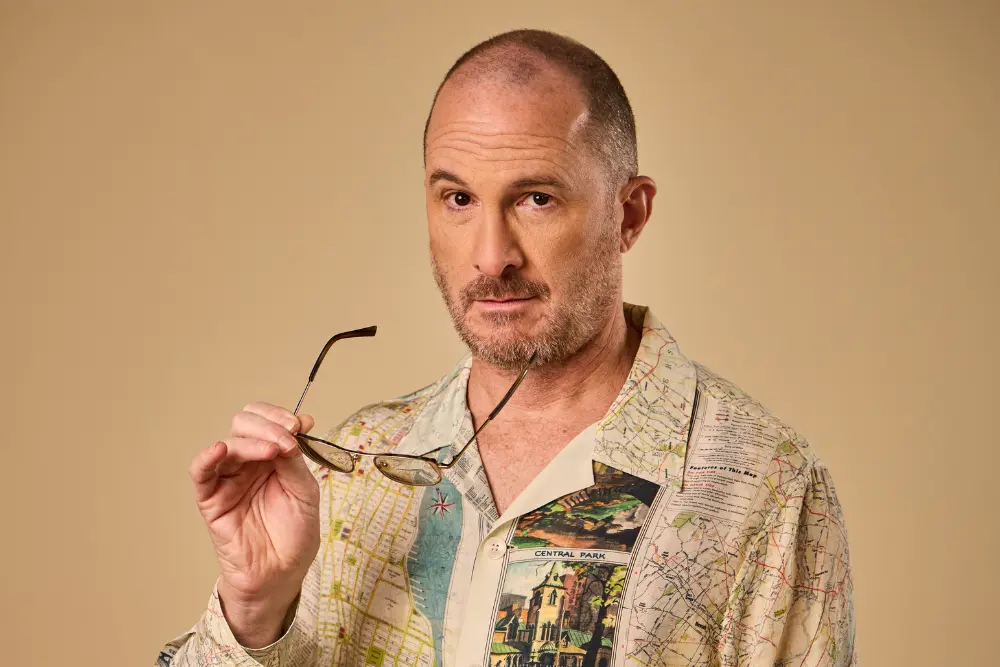
The 34th edition of the EnergaCAMERIMAGE International Film Festival, the world’s premier event dedicated to the art of cinematography, has announced that visionary filmmaker Darren Aronofsky will be the recipient of its prestigious Award for Director. The festival, which serves as a global hub for cinematographers, directors, and visual storytellers, is scheduled to take place from November 7–14 in the Polish city of Toruń. This honor serves as a formal recognition of Aronofsky’s unique visual language and his long-standing commitment to the collaborative process between a director and a cinematographer—a partnership that has defined his career for over two decades.
In a formal announcement released Thursday, festival organizers underscored the significance of the honor, noting that the award is a tribute to a director whose body of work consistently demonstrates the profound power of cinema. "Honouring Aronofsky at Toruń Camerimage is a tribute to a director whose work demonstrates the immense power of cinema when form becomes an integral part of the story being told," the organizers stated. This sentiment highlights a core pillar of the festival’s mission: celebrating films where the visual elements are not merely decorative but are intrinsic to the narrative structure, emotional weight, and psychological depth of the production.
Aronofsky’s career is perhaps most defined by his relentless pursuit of formal experimentation. His films are rarely traditional; instead, they often rely on visceral, subjective cinematography to pull the audience into the fragmented or heightened realities of his protagonists. Central to this aesthetic has been his enduring creative partnership with cinematographer Matthew Libatique. Their collaboration is one of the most storied in contemporary American independent cinema, beginning with Aronofsky’s debut and continuing through his most recent projects. Libatique’s ability to translate Aronofsky’s intense, often claustrophobic, and highly stylized scripts into tangible visual experiences has been a cornerstone of the director’s critical and commercial success.
The festival’s decision to honor Aronofsky is a natural alignment with the history of the director’s work. Since his explosive debut, he has been a filmmaker who views the camera as a psychological tool rather than a recording device. His feature directorial debut, the low-budget psychological thriller Pi (1998), remains a masterclass in independent filmmaking. Shot in stark, high-contrast black and white, the film captured the paranoid, mathematical obsession of its protagonist with a jittery, claustrophobic energy that earned Aronofsky the directing award at the Sundance Film Festival. It was a clear declaration of intent: Aronofsky was not interested in conventional storytelling, but in total immersion.
Following the success of Pi, Aronofsky solidified his reputation with the 2000 drama Requiem for a Dream. An unflinching look at the destructive nature of addiction, the film utilized aggressive editing and unconventional camera work—including the now-iconic "SnorriCam" rig—to physically manifest the characters’ spiraling states of mind. The film boasted a powerful ensemble cast, including Jared Leto, Jennifer Connelly, Marlon Wayans, and the legendary Ellen Burstyn. Burstyn’s devastating performance as a woman unraveling due to prescription drug abuse earned her an Academy Award nomination, cementing the film’s status as a milestone in visual storytelling.
As his career progressed, Aronofsky demonstrated an ability to pivot between different genres while maintaining his singular visual identity. His 2008 drama The Wrestler marked a shift toward a more gritty, handheld, and documentary-style approach. By following Mickey Rourke’s character with a raw, intimate lens, Aronofsky was able to extract a career-defining performance from the lead actor. The film’s success was global, culminating in the prestigious Golden Lion at the Venice Film Festival, a win that signaled his transition into the upper echelons of auteur cinema.
This momentum continued with 2010’s Black Swan, a psychological horror film set within the world of professional ballet. The film was a visual tour de force, utilizing sweeping, fluid camera movements to contrast with the sharp, jagged edges of the protagonist’s descent into madness. The film received five Academy Award nominations, including Best Picture and Best Director. Natalie Portman, who underwent rigorous physical training for the role, won the Oscar for Best Actress, a victory that underscored the effectiveness of the film’s intense, immersive visual style.
Throughout his career, Aronofsky has continued to challenge audiences and expand the boundaries of the cinematic form. His diverse filmography includes the ambitious, time-spanning narrative of The Fountain, the epic biblical scope of Noah, and the polarizing, allegorical home-invasion thriller mother!. Each film reflects his desire to push the medium of cinema to its limits, often through bold choices in lighting, lens selection, and frame composition.
In 2022, Aronofsky returned to the center of the cinematic conversation with The Whale. The film was notable not only for its quiet, emotional intensity but also for serving as the vehicle for Brendan Fraser’s career resurgence. By grounding the film in a singular, intimate location, Aronofsky and his cinematographer were able to focus entirely on the nuances of human connection and physical transformation. The project earned Fraser his first Academy Award, serving as a testament to Aronofsky’s ability to elicit powerful, grounded performances even within the most stylistically demanding frameworks.
Most recently, Aronofsky has ventured into the crime genre with the 2025 thriller Caught Stealing. Starring Austin Butler, Zoë Kravitz, and Regina King, the film represents the latest evolution in his visual repertoire. As he continues to work with high-caliber talent, the focus on the visual language of his films remains as sharp as ever, ensuring that his partnership with the cinematography community remains a subject of study and admiration.
The EnergaCAMERIMAGE festival itself occupies a unique space in the film industry. Unlike many other major festivals that focus primarily on actors or directors, Camerimage was founded specifically to champion the work of cinematographers. Since its inception, it has served as a platform for the people behind the lens to receive the recognition they deserve. The festival’s main competition, which awards the Golden Frog for outstanding cinematography, is one of the most coveted honors for directors of photography worldwide. By presenting Darren Aronofsky with the Award for Director, the festival is acknowledging that the role of the director is inextricably linked to the visual artistry of the film.
As the international film community prepares to gather in Toruń this November, the spotlight will be on the collaborative relationship that defines modern cinema. For Darren Aronofsky, the honor serves as a celebration of a career spent exploring the dark, beautiful, and complex corners of the human experience through the lens. It is a recognition of the fact that, for Aronofsky, the camera is the most vital tool in the storyteller’s kit, and that in the hands of a visionary director, it has the power to transform the screen into a mirror for the soul. The festival’s tribute reflects a deep appreciation for the director’s enduring influence on the craft of filmmaking and his ongoing legacy as one of the most distinctive visual stylists of his generation.