KRAKOW, POLAND – The 24-year-old gunman responsible for a harrowing mass shooting in the heart of Krakow has died in hospital, Polish authorities confirmed early Monday morning. The suspect, whose identity has not been publicly disclosed, succumbed to injuries sustained during a swift tactical intervention by police officers that authorities credit with preventing a significantly higher death toll.
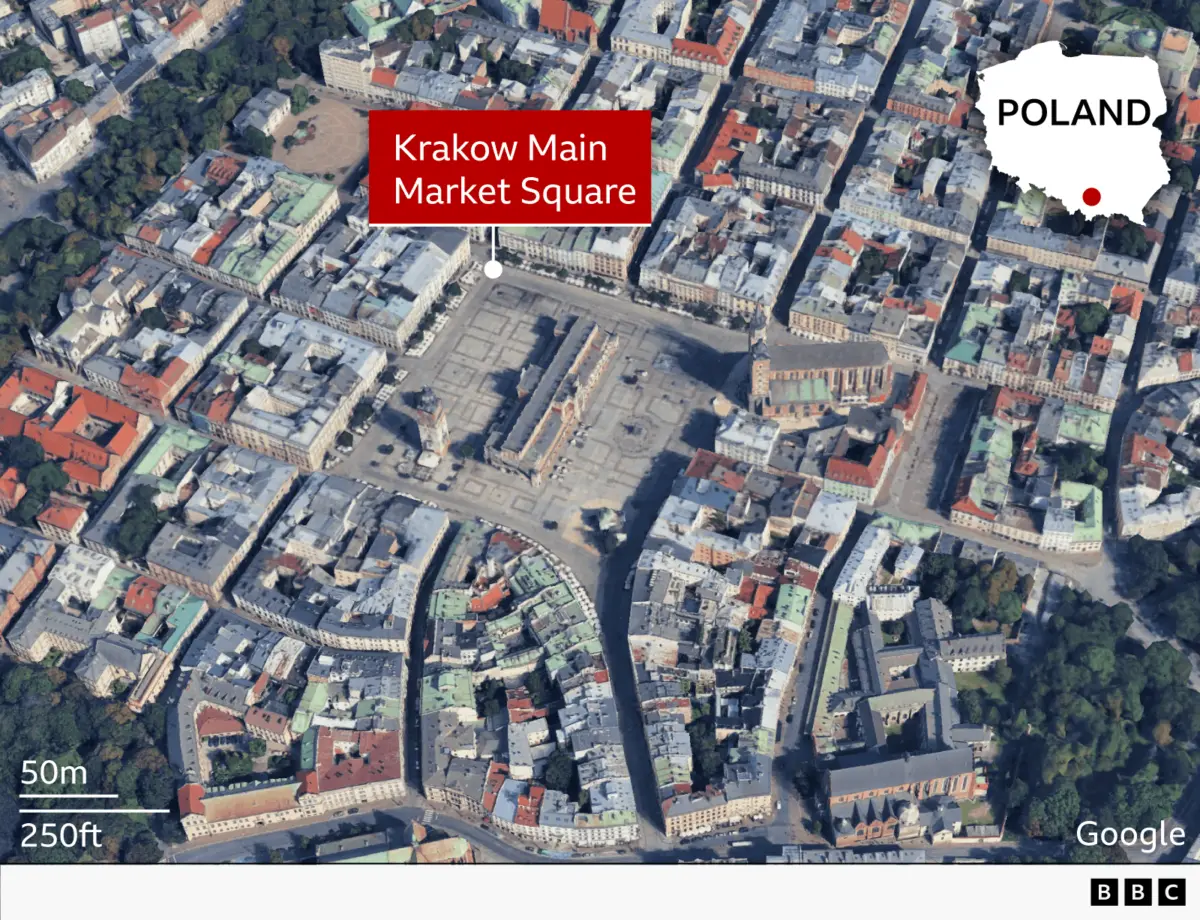
The tragedy, which has shaken the nation and prompted the Polish government to declare two days of national mourning, began on Saturday afternoon. At approximately 15:00 local time (14:00 GMT), the perpetrator opened fire in the city’s historic Main Market Square, a bustling hub for tourists and locals alike. The indiscriminate attack left six people dead and over a dozen others wounded before law enforcement officials were able to neutralize the shooter.
A Swift Response to a Prevented Massacre
According to official reports, the police response was immediate and decisive. Armed officers arrived at the scene within minutes of the first reports of gunfire. A brief but intense gunfight ensued, during which the gunman was struck by police fire. Officials stated that the suspect was incapacitated within three minutes of the commencement of his assault, a tactical success that likely saved countless lives in the densely populated area.
In the aftermath of the shooting, senior government officials began to piece together the profile of the attacker. While his name has been withheld pending further investigation, authorities characterized him as a 24-year-old Polish national. Preliminary investigative findings, as articulated by a government minister shortly after the incident, suggest the perpetrator was motivated by extremist "far-right ideologies." The official further described the man as an "ultra-nationalist," though the complexities of his radicalization remain a focal point for security services as they continue to review his background and digital footprint.
The Human Toll and Family Connection
The violence claimed the lives of six individuals: four Polish citizens, a British national, and an Austrian woman. However, the scope of the tragedy extended far beyond the confines of the Main Market Square. Following the shooting, Polish Prime Minister Donald Tusk arrived in Krakow to oversee the investigation and address the nation.

During the initial sweep of the suspect’s residence, police discovered three additional bodies—two women and one man—who were later identified as the gunman’s 53-year-old father, his 52-year-old mother, and his 21-year-old sister. These findings led investigators to conclude that the massacre had begun at the family home before the suspect proceeded to the city center. Reports from local media suggest that the attacker possessed a legal firearms permit and may have utilized weapons obtained from his own residence to carry out the attack.
The casualty list from the square itself is extensive, with 16 people requiring urgent medical attention. This group includes the perpetrator, two police officers, and citizens from Austria, Britain, Germany, Portugal, and Russia.
Heroism Amidst the Chaos
The scale of the carnage might have been even greater if not for the presence of two surgeons who happened to be dining near the square when the shooting erupted. Professor Michal Pędziwiatr and his colleague, identified by local media as Dr. Mateusz Wierdak, abandoned their meal to provide life-saving emergency care in the middle of a chaotic active-shooter scene.
Professor Pędziwiatr, speaking to the BBC, recounted the harrowing decision to step into the line of fire. "We saw the shooting attack. And what a surgeon can do in a situation like this? We decided to help the victims as soon as possible," he said. "We rushed into the area where the shooting was and started our rescue, because there were no ambulances available, there were no professionals around."
Dr. Wierdak is credited with performing a critical intervention on a gravely injured police officer. According to accounts provided by the surgeons, Dr. Wierdak used his bare hands to apply direct pressure and stem the bleeding from the officer’s wounds, maintaining the life-saving procedure until emergency medical services could reach the scene. On Sunday, officials reported that both injured officers had regained consciousness and emerged from comas, a testament to the rapid and courageous response of the two doctors.

National Reaction and International Solidarity
The impact of the event has reverberated through the highest levels of government. During his visit to Krakow, Prime Minister Tusk did not mince words regarding the nature of the crime. "Until now in Poland we haven’t had such drastic cases of terrorism," Tusk remarked. "That’s what we have to call this cruel attack on people’s lives here in Krakow."
The international community has also extended its sympathies to the people of Poland. UK Prime Minister Andy Burnham issued a statement expressing his profound distress over the incident. "I was shocked and saddened by the appalling shooting in Krakow," Burnham said. "My thoughts are with the families of those who have lost their lives, everyone injured and all those affected by this senseless violence. The United Kingdom stands in solidarity with the people of Poland."
As the city attempts to recover, the physical reminders of the violence have begun to dissipate. The security cordon surrounding the Main Market Square was lifted on Sunday evening, allowing the public to return to the historic site. However, the psychological toll on the city remains immense, with the two-day period of national mourning serving as a somber reflection of a tragedy that has forever altered the lives of the victims’ families and the community at large.
The investigation into the suspect’s motives and the events leading up to the attack continues, as police work to determine if he acted entirely alone or if others were aware of his intentions. As of Monday, the focus remains on the recovery of the surviving victims and the ongoing support for the families of those lost in the, as Prime Minister Tusk described, "cruel" and unprecedented act of violence.