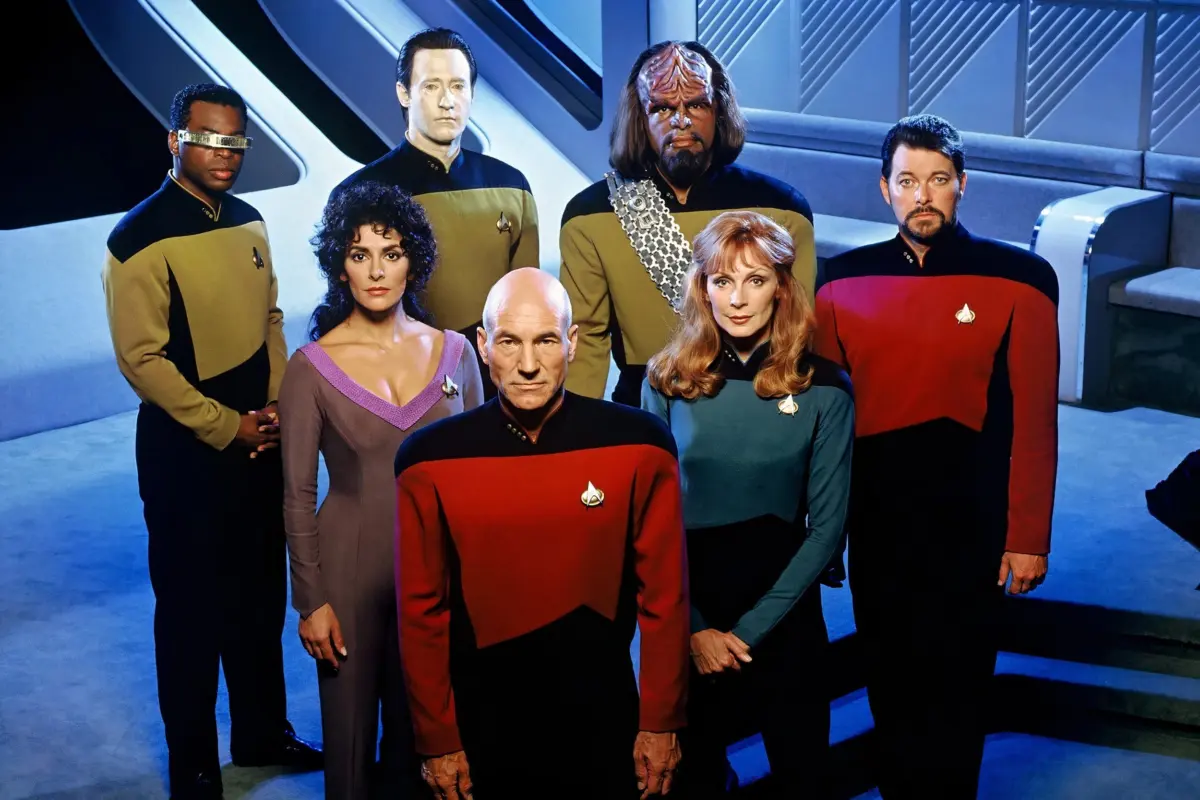
Nearly forty years after its initial premiere, Star Trek: The Next Generation (TNG) continues to stand as a towering achievement in television history, celebrated not merely as a staple of science fiction, but as a masterclass in character-driven storytelling, moral exploration, and philosophical inquiry. One of the enduring strengths of the series was its remarkable versatility, ensuring that audiences could never quite predict the nature of the adventure awaiting them on any given week.
In one episode, the USS Enterprise might find itself locked in a desperate struggle against an omnipotent cosmic threat or an enemy capable of dismantling the United Federation of Planets entirely. In the next, Captain Jean-Luc Picard might find his consciousness transported to a doomed alien world, living out an entire lifetime over the course of forty minutes. On other occasions, the stoic Klingon warrior Worf could be found reluctantly dressed in the tights of Robin Hood’s Merry Men, projecting an expression that suggested he would rather be stationed anywhere else in the galaxy.
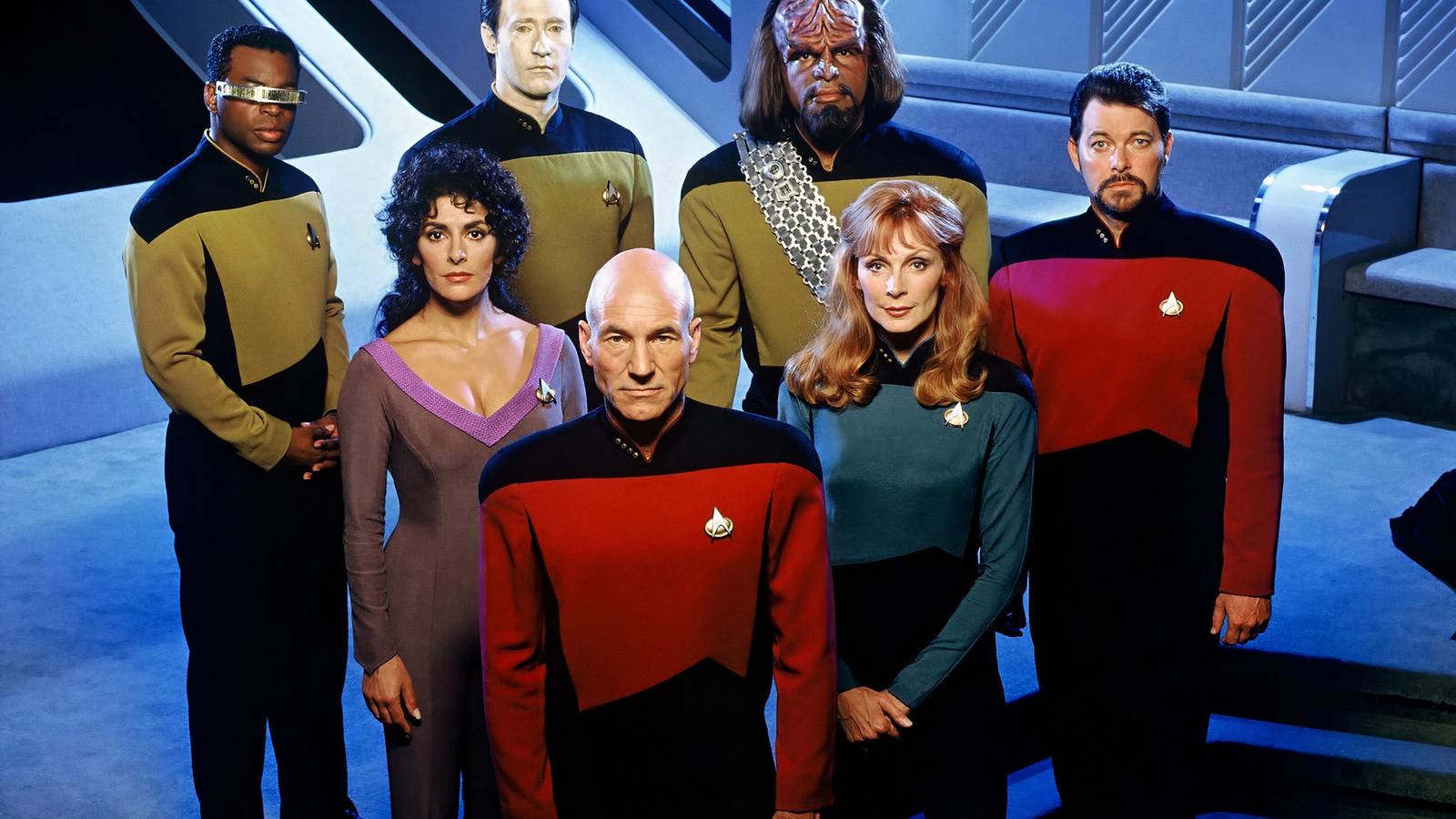
This structural and tonal variety formed a cornerstone of the show’s widespread appeal. Over the course of seven acclaimed seasons, The Next Generation successfully delivered heart-pounding science-fiction spectacles, grappled with complicated moral and ethical dilemmas, and occasionally induced genuine laughter from its viewers. Yet, what ultimately elevated the series from a conventional space opera to a cultural touchstone was not merely the high-concept plots, but the rich tapestry of characters and the deep relationships that developed among them. These interpersonal dynamics provided a tangible, human connection that anchored even the most far-fetched narrative conceits.
Decades later, the series’ finest episodes remain just as vibrant, thought-provoking, and deeply enjoyable to revisit. Some are universally remembered for their exceptionally ambitious intellectual concepts, while others endure because of a standout dramatic performance, a heartbreaking emotional turn, or a perfectly delivered line of dialogue. While not every installment on a retrospective list can claim absolute perfection, each possesses a distinct element that cements its place in television history. That enduring resonance remains one of the truest measures of great Star Trek.
10. "Cause and Effect" (Season 5, Episode 18)
Few hours of television in the Star Trek canon immediately capture a viewer’s attention quite like "Cause and Effect," which opens with the shocking and catastrophic destruction of the Enterprise. The narrative quickly reveals that the ship and its crew are trapped within a closed temporal causality loop that inevitably ends in total annihilation. With each repeated cycle, the crew experiences subtle instances of déjà vu, leaving behind fragmented clues that signal something is fundamentally broken in the timeline.
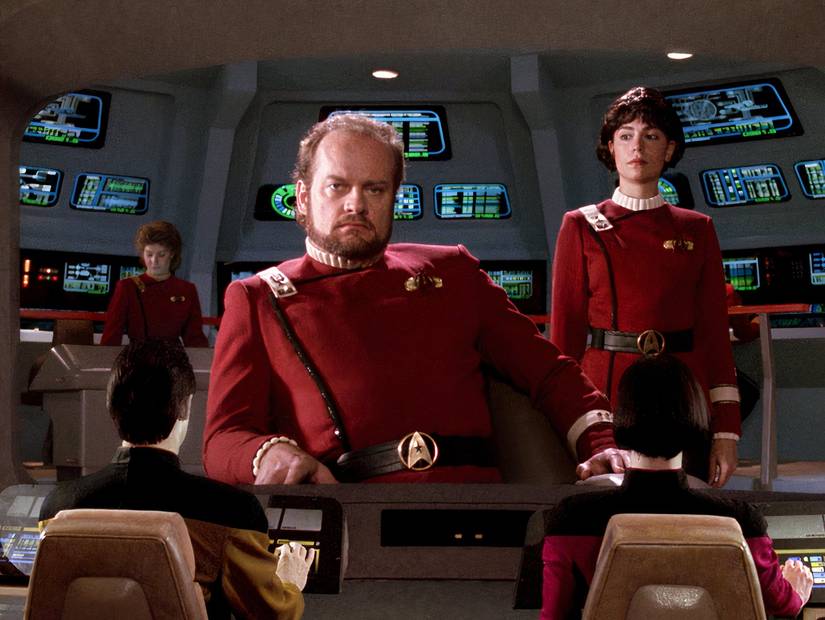
The episode operates as a brilliantly constructed science-fiction mystery, utilizing the crew’s familiar recreational poker games to cleverly piece the puzzle together. When the android officer Data begins consistently dealing threes during a game, the playing cards become the pivotal key to recognizing the loop and altering their course. In a delightful final flourish, just as the Enterprise successfully breaks free from the spatial anomaly, the episode concludes with a surprise cameo appearance by Kelsey Grammer as the captain of another Starfleet vessel, the USS Bozeman. It stands as a brilliantly executed narrative twist that rewards repeat viewings and showcases the series’ penchant for clever plotting.
9. "Qpid" (Season 4, Episode 20)
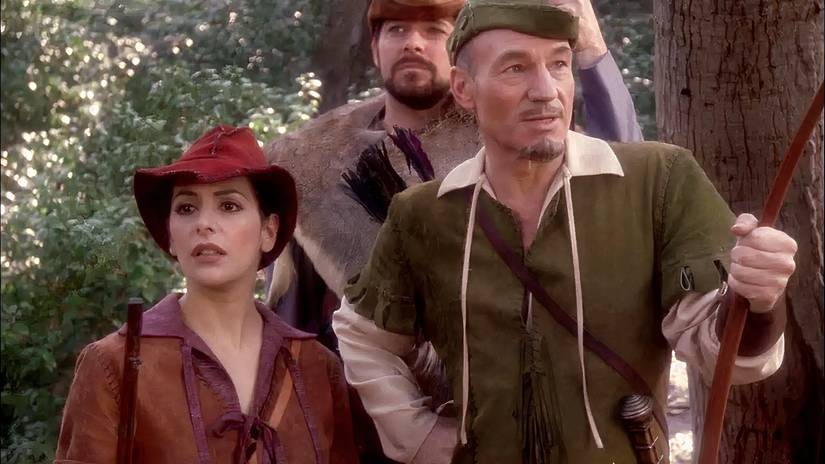
While Star Trek has occasionally been critiqued for taking itself too seriously, the franchise has consistently proven its capacity for sharp, self-aware humor. "Qpid" serves as a prime example of the lighthearted wit that The Next Generation could deploy to great effect. When the mischievous omnipotent entity known as Q, played with theatrical relish by John de Lancie, decides to interfere with Captain Picard’s complicated romantic relationship with archaeologist Vash, he transports the senior staff of the Enterprise into the classic legend of Robin Hood.
In this surreal scenario, Picard is cast in the role of the legendary outlaw, leading a band of outcasts through Sherwood Forest. The premise is delightfully absurd, but the commitment of the ensemble cast grounds the comedy. Michael Dorn’s portrayal of Worf is particularly memorable, culminating in the character’s exasperated declaration that he is "not a merry man." The line has deservedly endured as one of the most widely quoted pieces of dialogue in franchise history, serving as a welcome reminder that the series did not always require high-stakes galactic diplomacy to entertain its audience.
8. "Yesterday’s Enterprise" (Season 3, Episode 15)
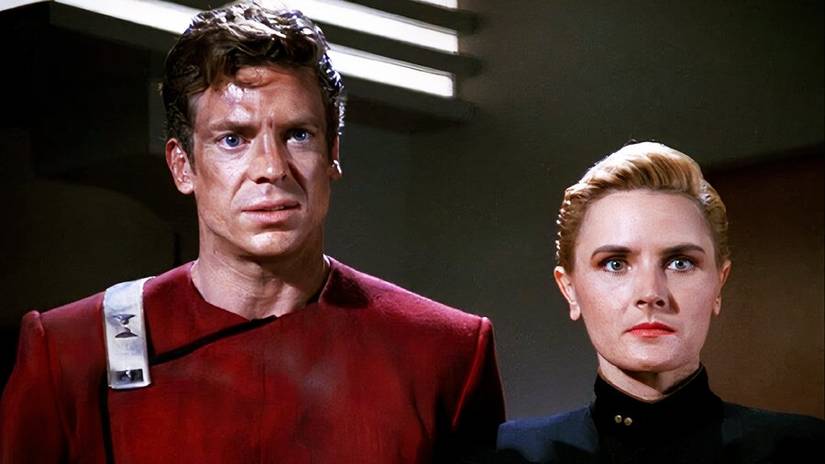
The fabric of history is instantaneously rewritten when the venerable USS Enterprise-C emerges unexpectedly from a temporal rift. In this altered reality, the Enterprise-D has been redesigned as a menacing warship, the Federation is suffering a devastating defeat in a prolonged conflict with the Klingon Empire, and Lieutenant Tasha Yar, who tragically died in the show’s first season, is inexplicably alive and serving aboard the ship. Only the enigmatic bartender Guinan senses that the universe has veered off its proper course, placing the heavy burden of command on Picard, who must decide whether restoring the timeline is worth knowingly sacrificing another Starfleet vessel and its crew.
"Yesterday’s Enterprise" is widely regarded as one of the finest alternate-reality narratives in the franchise, expertly illustrating how familiar and beloved characters adapt and change under duress. Beyond its tense geopolitical framing, the episode achieves a major narrative triumph by granting Tasha Yar a far more dignified and emotionally resonant farewell than her initial abrupt departure. It remains a poignant exploration of courage, duty, and the ultimate cost of sacrifice.
7. "Time’s Arrow, Parts I and II" (Season 5, Episode 26; Season 6, Episode 1)
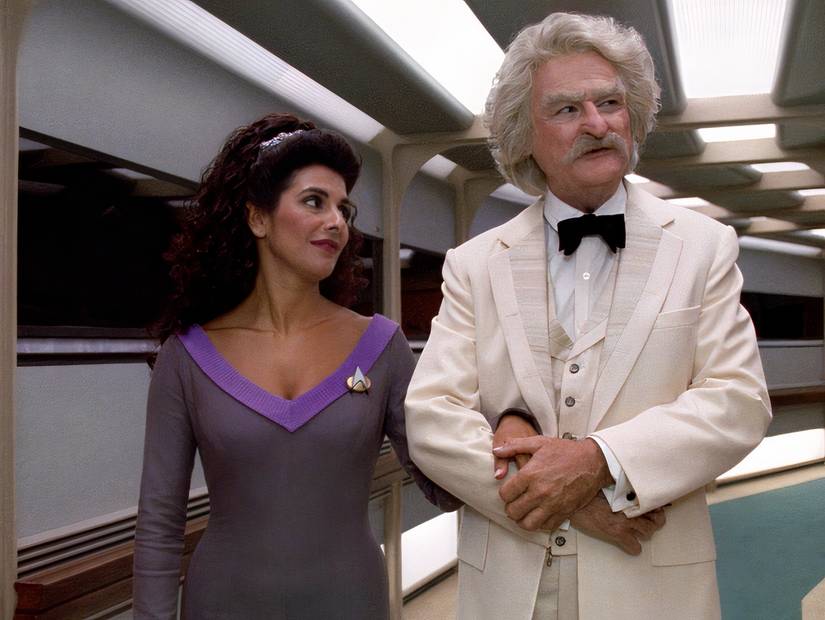
The discovery of Data’s severed metallic head during an archaeological excavation beneath San Francisco sets into motion one of the most imaginative time-travel arcs in the series’ history. The unfolding mystery transports Data’s functional body back to 19th-century Earth, where he inadvertently crosses paths with a skeptical Samuel Clemens, better known to history as the iconic author Mark Twain. Meanwhile, back in the 24th century, the crew of the Enterprise races to investigate a predatory alien species harvesting human energy across time.
This two-part adventure blends classic science-fiction tropes with historical drama, anchored by Jerry Hardin’s wonderfully eccentric performance as Twain. The author’s suspicious, exasperated attempts to comprehend Data and his futuristic companions provide substantial comedic and intellectual friction. Combined with Guinan’s mysterious, pre-existing historical ties to the era, the story offers an enormously rewatchable and inventive romp through time.
6. "The Measure of a Man" (Season 2, Episode 9)
An early masterpiece in the The Next Generation library, "The Measure of a Man" places Data’s foundational rights and future autonomy in immediate jeopardy when ambitious Starfleet cyberneticist Bruce Maddox attempts to compel the android to submit to a potentially destructive anatomical disassembly for research purposes. When Data refuses to comply and chooses to resign from Starfleet rather than submit, a formal legal hearing is convened to determine whether he possesses legal rights as an individual or should be classified merely as government property.
What follows is some of the most intellectually rigorous and thoughtful storytelling ever produced for television. Rather than offering easy answers regarding the dawn of artificial intelligence, the episode grapples with fundamental questions of consciousness, self-determination, and the moral hazards of reducing a sentient being to utilitarian objects. Patrick Stewart delivers a powerhouse dramatic performance as Picard, delivering a blistering defense of individual liberty that resonates even more profoundly in an era dominated by rapid technological advancements in artificial intelligence.
5. "All Good Things…" (Season 7, Episode 25)
Concluding a beloved, long-running television series is notoriously difficult, yet The Next Generation managed to stick its landing with one of the most acclaimed series finales in science-fiction history. The narrative finds Picard unstuck in time, involuntarily shifting between three distinct periods of his life—his past as a junior officer, his present command of the Enterprise, and a future where he is elderly and infirm—while attempting to solve a cosmic mystery orchestrated once again by Q to test humanity’s evolutionary worth.
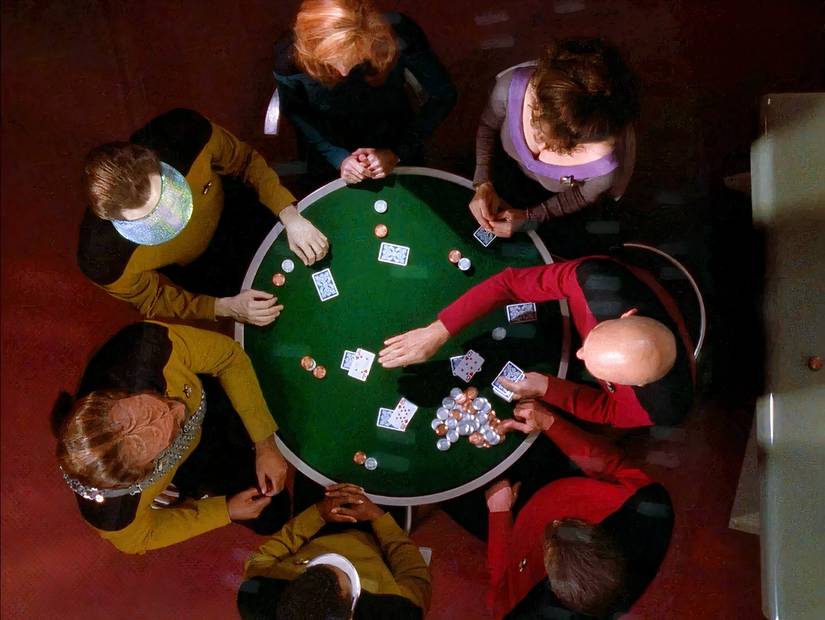
While the finale deftly balances complex temporal mechanics with high-stakes drama, its most enduring moment is remarkably intimate. After maintaining a strict, professional emotional distance from his senior staff throughout the entire run of the series, Picard finally accepts an invitation to join his officers for their regular weekly poker game. The gesture serves as a poignant, understated farewell to both the characters and the dedicated audience that watched them grow over seven seasons.
4. "Darmok" (Season 5, Episode 2)
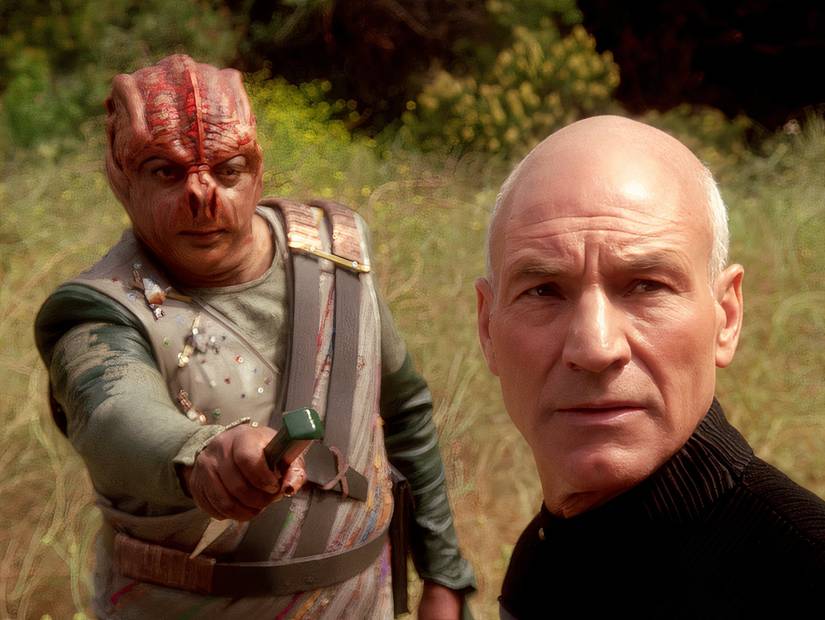
Effective communication sits at the very heart of the idealized future envisioned by Star Trek, yet "Darmok" introduces one of the most fascinating linguistic hurdles in the franchise. When the Enterprise makes first contact with the Tamarians—a species whose complex language consists entirely of narrative allegories, historical allusions, and cultural metaphors—even the universally reliable translator fails to bridge the gap. Captain Picard is subsequently stranded on a hostile planet alongside the Tamarian captain, Dathon, where the two must forge a mutual understanding to survive a dangerous indigenous predator.
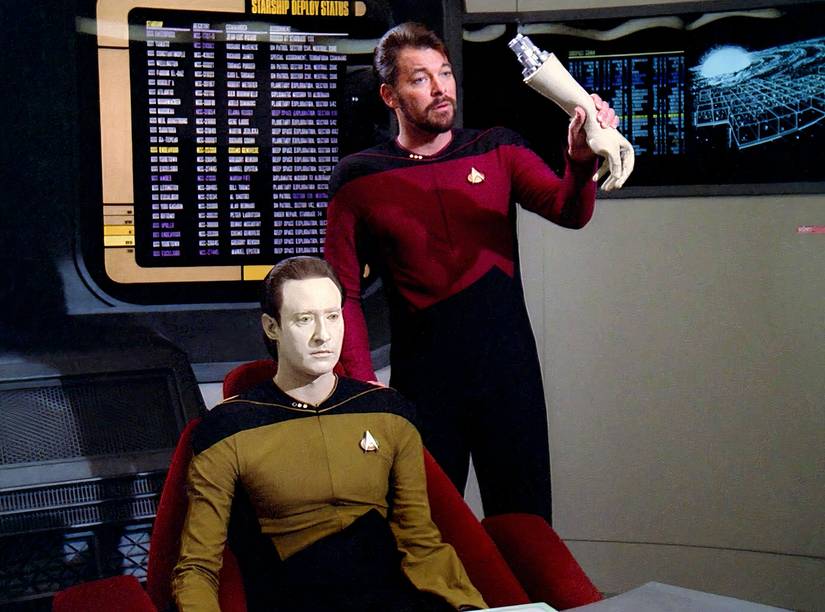
The brilliance of the episode lies in its minimalist staging and thematic focus. Stewart and guest actor Paul Winfield deliver exceptional performances, slowly building a bridge of comprehension through shared peril and exchanged stories. The phrase "Darmok and Jalad at Tanagra" has since permeated popular culture as shorthand for the power of shared language and cultural connection.
3. "The Inner Light" (Season 5, Episode 25)
Struck unconscious by a mysterious alien probe of ancient origin, Captain Picard awakens to find himself residing on a dusty, unfamiliar world as a man named Kamin. Although he initially insists that he is a Starfleet captain commanding a starship, the passage of years wears away his resistance, and he gradually accepts his new reality, establishing a family, raising children, and experiencing decades of profound joy and eventual heartbreak as the planet’s sun prepares to go supernova.
"The Inner Light" stands out precisely because it subverts every expectation of standard television science fiction. There are no space battles, no invading fleets, and no desperate races against the clock to save the Enterprise. Instead, the episode invites the audience to invest fully in the quiet dignity of an ordinary life unfolding over decades. Patrick Stewart’s subtle, emotionally resonant performance turns a high-concept premise into an unforgettable meditation on memory, legacy, and mortality, proving that the series could achieve greatness without ever firing a phaser.
2. "The Best of Both Worlds, Parts I and II" (Season 3, Episode 26; Season 4, Episode 1)
While the Enterprise crew first encountered the relentless, cybernetic collective known as the Borg in an earlier season, "The Best of Both Worlds" elevated the threat into something intensely personal and terrifying. Picard is forcibly assimilated, transformed into the mouthpiece of the collective known as Locutus. Deprived of their captain and facing an existential threat to the Federation, Commander William F. Riker is forced to step into the role of captain and make a devastating tactical choice.
The first half of the story concluded with one of the most iconic cliffhangers in television history, featuring Riker giving the chilling order to fire upon the Borg vessel knowing full well that Picard was aboard. The resolution of the arc established lasting psychological trauma that would shape Picard’s character for years to come. More importantly, the gripping two-parter established that even the most formidable and competent captain in Starfleet was not entirely invincible.
1. "Tapestry" (Season 6, Episode 15)
Following a routine mission that results in a catastrophic injury to his artificial heart, Picard awakens in what appears to be a celestial waiting room, where Q is waiting to offer him a second chance. The entity grants Picard the opportunity to undo the single greatest regret of his youth—the impulsive bar fight that originally resulted in his heart being pierced. Picard eagerly alters his past, only to return to the present and discover that by removing his youthful mistakes, he has inadvertently stripped away the ambition, passion, and willingness to take risks that forged him into a great leader.
"Tapestry" serves as a profound exploration of personal growth, regret, and the formative nature of mistakes. By erasing his youthful indiscretions, Picard becomes a cautious, unexceptional desk officer devoid of the inspiring qualities that define his command. Stewart and de Lancie display incredible chemistry, balancing existential philosophy with sharp wit as Picard is forced to confront a difficult truth: that our mistakes and follies are often the very threads that weave our character, leaving viewers with an enduring high-water mark for The Next Generation.