Every corner of the literary web carries its own weight of history, contemporary debate, and artistic exploration. From the anniversary of one of the most famous theatrical disasters in modern history to cutting-edge discussions on artificial intelligence, politics, and the art of the novel, the cultural landscape offers a rich tapestry of reflection this week. As readers and writers navigate the complexities of modern publishing, historical memory, and global crises, the digital literary sphere continues to serve as a vital forum for examining how stories are told, preserved, and transformed.
Looking Back: The Infamous Premiere of Anton Chekhov’s The Seagull
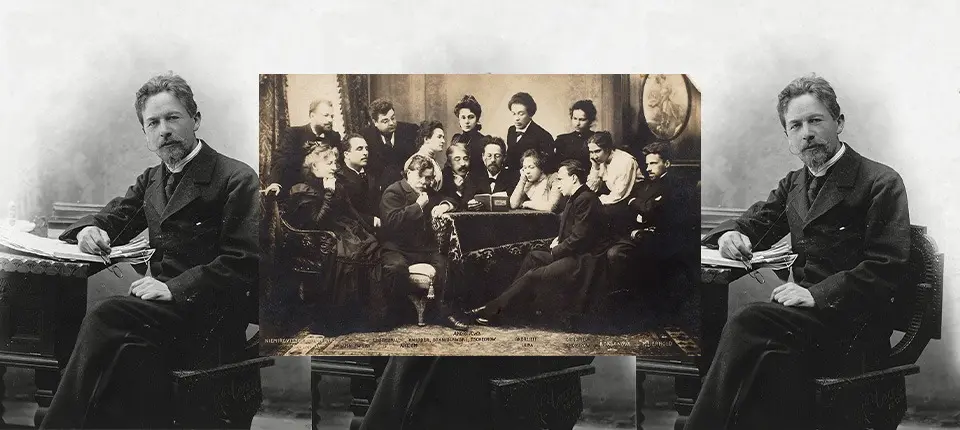
History often hinges on moments of profound disappointment, and few moments match the sheer despair of Anton Chekhov on October 17, 1896. On this day in St. Petersburg, Chekhov’s seminal play The Seagull premiered to a disastrous reception. The audience’s harsh rejection of the production left the playwright entirely crestfallen, prompting him to utter a vow that would become legendary in theatrical lore: “Not if I live to be seven hundred will I write another play.”
Fortunately for world literature, Chekhov did not stick to his vow. Despite the disastrous opening night at the Alexandrinsky Theatre—which was largely blamed on inadequate rehearsals and a bewildered audience unaccustomed to his revolutionary approach to naturalism—The Seagull eventually found its footing. When the Moscow Art Theatre, under the visionary direction of Constantin Stanislavski, mounted the play two years later in 1898, it became a triumph and cemented Chekhov’s legacy as one of the greatest dramatists in history. Today, the initial flop stands as a poignant reminder that groundbreaking art often defies immediate comprehension, requiring time, the right collaborators, and a maturing audience to truly reveal its genius.
Conversations on Craft, Storytelling, and Modern Literature
Moving from the stages of 19th-century Russia to contemporary literary discourse, recent discussions on Lit Hub highlight the myriad ways authors approach the monumental task of storytelling. In a compelling dialogue, Adam Johnson sits down with Amitav Ghosh to discuss The Wayfinder, unpacking the complexities of narrative structure and asking how writers manage the many ways to tell a single story.
Craft and the physical act of writing also take center stage in other reflections. Novelist Will Maclean explores the delightfully chaotic process of filling a notebook to eventually give birth to a novel, while Bonnie Garmus speaks with Jane Ciabattari about penning a coming-of-age story centered around poets and poetry. Meanwhile, filmmakers and critics are examining how cinema reflects our cultural understanding of poets, with three recent films shedding light on how society views the lives and works of writers.
The intersection of place, memory, and personal history permeates several other new releases and essays. E. L. Shen writes about how the process of writing helped her understand her assassinated ancestor, bridging generations through the power of narrative. In Southern California, Melissa King reflects on what cooking and care meant growing up Cantonese-American, while Josefine Kals remembers the late writer, professor, and pen pal Stephen Dixon, honoring a literary life dedicated to the craft of fiction.
Navigating Global Crises, Technology, and Social Justice
Beyond traditional literary criticism, writers this week are grappling with urgent geopolitical realities, technological shifts, and historical reckonings. The ongoing humanitarian catastrophe and genocide in Gaza have fundamentally reshaped the Middle East, prompting deep reckonings within civilization itself and forcing intellectuals to confront the shifting paradigms of global politics and human rights.
On the domestic front, questions of justice, civil rights, and mentorship resonate deeply. Al Sharpton shares poignant memories of his late mentor, Jesse Jackson, while Anand Giridharadas examines how Sharpton has worked for decades to shape narratives of justice in America. History also offers vital lessons through figures like Biddy Mason, the remarkable Black matriarch who played an instrumental role in building early Los Angeles, and through explorations of medieval European witch hunts, which shed light on systemic historical violence against nonconformist women.
The digital age has brought its own unique crises, not least of which is the economic squeeze felt by ordinary citizens. Analysts and cultural critics are examining why rent remains exorbitantly high, pointing the finger at greed-driven corporate algorithms that manipulate housing markets. Concurrently, the publishing world finds itself in a paradoxical state, with publishers suing big tech companies over copyright infringements on one hand while eagerly embracing artificial intelligence tools on the other—a contradiction that has profound implications for the future of writing and intellectual property.
Environmental Consciousness, Regional Identities, and the Joy of Reading
Nature, place, and the preservation of landscapes also demand attention across the digital literary sphere. Writers are advocating for the preservation of boglands and peatlands, highlighting the unlikely beauty and hidden ecological dangers of these vital ecosystems. In contrast to persistent cultural stereotypes, essays exploring rural American life demonstrate that rural existence cannot be flattened into a single narrative, meaning something entirely different to each person who calls the countryside home.
For those seeking lighter fare or recommendations for their ever-growing "to-be-read" piles, the literary web offers plenty of inspiration. David Naimon shares what is currently on his nightstand, while Peter Brown, author of The Wild Robot, discusses the elements that make a truly great read-aloud book. Ghost story enthusiasts can dive into seven literary ghosts recommended by Bonnie Jo Campbell, and poetry lovers can enjoy Eric Amling’s new poem, "Cruise Control."
From historical explorations of the Venetian ghetto and Jewish history to independent press bestsellers in fiction and nonfiction, the literary internet continues to capture the vast spectrum of human experience. As publishers, critics, and authors look to the past, like Chekhov licking his wounds in 1896, and face the uncertainties of an algorithmic future, the written word remains an indispensable tool for understanding our world.