As the literary world turns its attention to the intersection of history, contemporary culture, and the digital landscape, this week’s digital discourse offers a sprawling look at the forces shaping storytelling today. From historical literary milestones that forever altered the course of dramatic arts to urgent conversations surrounding technology, geopolitics, and the enduring power of the written word, readers and writers alike have much to ponder.
Looking Back at a Dramatic Miscalculation in St. Petersburg
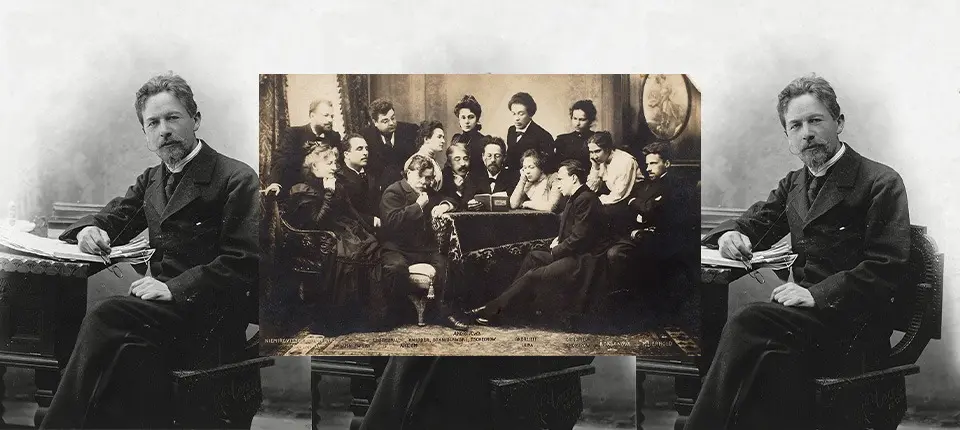
Every great literary legacy has its humbling beginnings, but few are as famously dramatic as the debut of Anton Chekhov’s The Seagull. On this day in 1896, the iconic play premiered in St. Petersburg to a notoriously harsh and unforgiving audience, resulting in an outright theatrical flop. The catastrophic reception deeply shook the celebrated author, prompting him to declare in despair, "Not if I live to be seven hundred will I write another play."
Fortunately for world literature, Chekhov’s dramatic retirement was short-lived, paving the way for a timeless body of work that continues to define modern theater. Yet, this historic misfire serves as a striking reminder of how even the most visionary artistic breakthroughs can initially be misunderstood by the contemporary public—a theme that echoes across many of the discussions circulating online this week.
Conversations on Craft, Collaboration, and Culture
Beyond historical retrospectives, the literary internet is currently brimming with deep dives into the mechanics of storytelling and the lives of those who craft them. In a compelling discussion on Lit Hub, Adam Johnson sits down with fellow acclaimed author Amitav Ghosh to explore The Wayfinder, discussing the myriad ways an author can approach telling a single, cohesive story.
The conversation surrounding modern authorship extends into personal reflections and unique creative journeys. Bonnie Garmus, author of Peck & Peck, recently spoke with Jane Ciabattari about the intricate process of writing a coming-of-age novel deeply rooted in poets and poetry. Meanwhile, Will Maclean offers a candid look at the messy reality of drafting, discussing what it truly means to completely "fuck up a notebook" in the process of bringing a novel to life—a sentiment likely to resonate with writers at any stage of their career.
For those looking to understand the broader currents of contemporary literature, Oksana Lutsyshyna provides an essential guide to new Ukrainian literature, highlighting the vital work of witnessing through the writings of Artur Dron, Andriy Lyubka, and Lena Lyagushonkova. These works underscore the profound resilience and necessity of literature in times of crisis, mirroring how broader geopolitical shifts continue to demand artistic documentation and response.
Confronting History, Identity, and Social Realities
Literature has always served as a mirror to society, and this week’s essays and interviews confront complex historical and modern realities head-on. Discussions range from global conflicts, such as how the ongoing devastation and genocide in Gaza has fundamentally reshaped the political and cultural landscape of the Middle East, to deeply entrenched domestic issues.
In a poignant piece examining the roots of economic anxiety, writers explore how greed-driven corporate algorithms have exacerbated housing crises, fueling the widespread public frustration that the rent is simply too damn high. Other essays turn an analytical eye toward the past, examining the systemic slaughter of nonconformist women during medieval European witch hunts, and exploring why certain aesthetic choices, such as the ubiquity of painting interior walls white, carry myriad hidden cultural meanings.
Identity and heritage also take center stage in several standout pieces. E. L. Shen reflects on how the act of writing helped her understand and connect with an assassinated ancestor, bridging historical divides through personal narrative. Similarly, readers are introduced to Biddy Mason, the remarkable Black matriarch who played a foundational role in building Los Angeles. These narratives enrich our understanding of history by centering voices that have often been marginalized or overlooked in traditional accounts.
Cultural history finds expression through the lens of photography and the arts as well. Jean-Pierre and Eliane Laffont share their evocative documentation of the radical social changes that swept through America during the 1960s and 1970s counterculture movements. Meanwhile, contemporary cinema is interrogated through a new critical lens, with critics examining what three recent films reveal about our evolving cultural perceptions of poets and poetry.
The Digital Age, Publishing, and the Future of Books
As the publishing industry navigates an increasingly digital and automated world, pressing institutional questions are coming to the fore. A prominent debate making waves across the literary web asks a pointed question: Why are traditional publishers suing big tech companies over intellectual property concerns with one hand, while simultaneously embracing artificial intelligence tools with the other? This paradox highlights the uneasy truce between the traditional trade and emerging technologies.
Simultaneously, the foundational role of journalism and print media in democratic societies is reexamined, with scholars and critics exploring how historical newspapers helped democratize knowledge and foster civic participation.
Amidst these macro-level industry shifts, readers continue to seek out personal and eccentric literary recommendations. Bonnie Jo Campbell shares a curated list of seven literary ghosts designed to haunt readers just in time for the season, while Peter Brown, author of The Wild Robot, reflects on the qualities that make a truly great read-aloud book for audiences of all ages. For those building out their seasonal reading lists, David Naimon shares his current and upcoming "To Be Read" pile in the latest annotated nightstand feature, accompanied by the week’s five essential book reviews.
The landscape of independent publishing remains vibrant, highlighted by the latest Independent Press Top 40 Bestsellers list for both fiction and nonfiction, showcasing the diverse array of titles capturing readers’ imaginations away from the major corporate imprints.
Whether through discovering new poetry like Eric Amling’s "Cruise Control," exploring the hidden dangers and unexpected beauty of preserving our natural boglands and peatlands, or examining the multifaceted realities of rural American life far beyond tired cultural stereotypes, the literary internet this week reflects a community deeply engaged with the complexities of the past, the urgency of the present, and the uncertainties of the future.