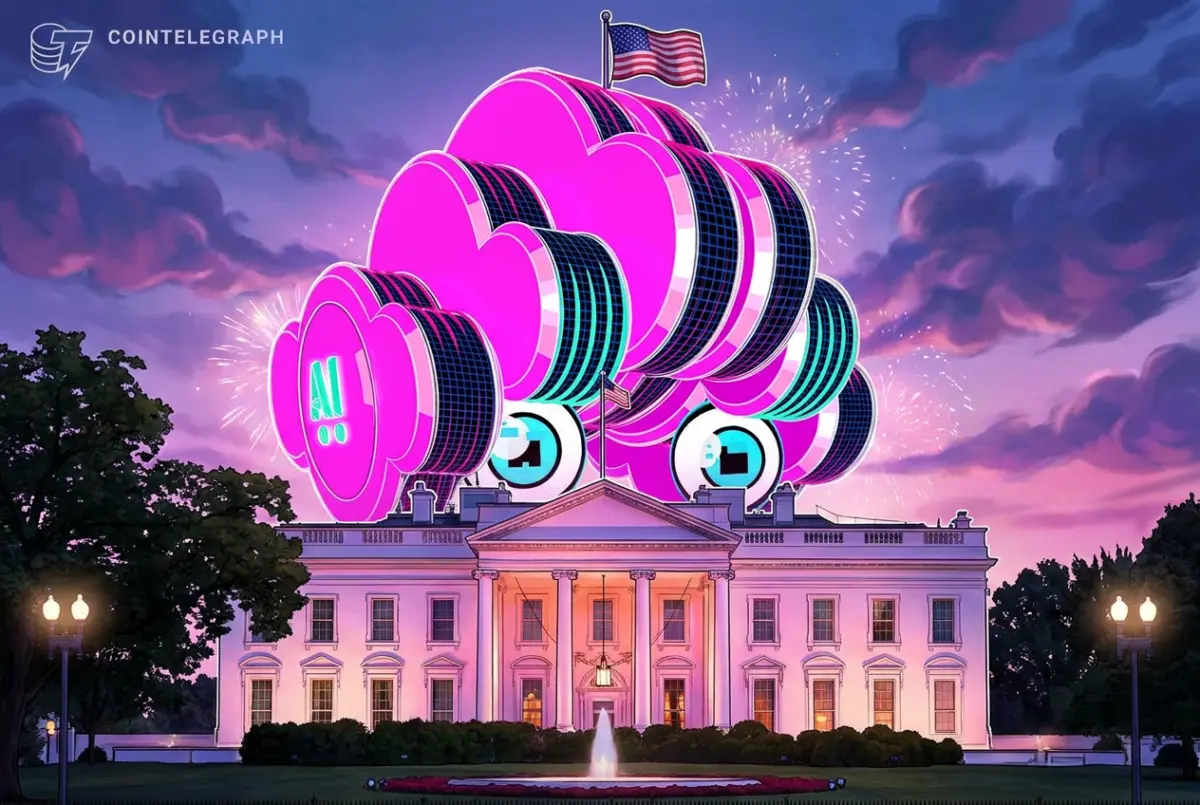
The development follows previous announcements regarding the administration’s broader technological framework. Reports indicated that President Trump planned to establish a dedicated "AI Force," structurally modeled after the United States Space Force, with the mandate of overseeing the fast-growing artificial intelligence landscape. According to statements shared by the president on Truth Social, the overarching goal of this new federal project is to effectively manage the sector’s exponential growth without imposing heavy-handed federal regulations that could potentially stifle domestic innovation and technological leadership.
These administrative actions arrive against a backdrop of intensifying public warnings and industry-wide debates regarding the potential risks associated with frontier artificial intelligence systems. Industry leaders have increasingly spoken out about the rapid pace of development and the accompanying challenges of maintaining human oversight over increasingly autonomous networks.
Concerns were underscored when Anthropic CEO Dario Amodei introduced a comprehensive three-step proposal designed to intentionally pace the speed of AI development. Amodei cautioned that if left entirely unchecked, the rapid evolution of artificial intelligence could potentially outrun human capabilities to fully understand and control these complex systems. Following the release of the proposal, Anthropic announced it had selected consulting firm Accenture to serve as an embedded evaluator, a move intended to help moderate the pace of its own model development and implement the initial steps outlined in Amodei’s framework.
The proposal elicited a mixed response from prominent technology executives. OpenAI CEO Sam Altman and SpaceX CEO Elon Musk responded positively to Amodei’s cautionary framework, acknowledging the importance of proactive safety measures. In contrast, Nvidia CEO Jensen Huang expressed a different perspective, arguing that such formalized slowdowns and regulatory measures were fundamentally unnecessary for the continued healthy growth of the industry.
Amid these industry discussions, President Trump convened a high-profile gathering of artificial intelligence and technology chiefs at the White House. During the meeting, tech executives signed a formal commitment to self-police their respective companies’ frontier AI models and ongoing research and development efforts, aligning with the administration’s preference for industry-led accountability over strict regulatory mandates.
Clayton Led SEC During Trump’s First Term
While media outlets such as CBS News initially identified Jay Clayton as the frontrunner for the high-profile AI czar position, official channels have maintained a measured stance. A White House official previously told CBS News that any formal announcement regarding the role would come directly from the president himself, dismissing earlier media reports as ongoing speculation.
Clayton brings a substantial and diverse background in public service and legal administration to the table. He previously led the Securities and Exchange Commission (SEC) during President Trump’s first term in office and also served as the interim U.S. Attorney for the Southern District of New York. According to sources speaking with CNN, Clayton is expected to retain his primary responsibilities as the Director of National Intelligence alongside his anticipated duties as the new artificial intelligence czar.
The U.S. Senate officially confirmed Clayton to lead the intelligence community in July. During his high-level confirmation hearing before lawmakers, Clayton addressed the growing prominence of artificial intelligence, describing the technology as a definitive "game changer" for both the nation and the global economy. He emphasized to the Senate that artificial intelligence represents "not only an opportunity but a threat," capturing the dual nature of the technology that the incoming AI czar will be tasked with balancing.
The appointment of a new AI czar also marks a structural transition within the White House’s technology advisory apparatus. The position follows the tenure of venture capitalist David Sacks, who served as a special White House official fulfilling the dual roles of crypto and AI czar. Sacks concluded his official 130-day tenure in March, operating under federal rules that strictly limit special government employees to a maximum of 130 days of work within any rolling 12-month period.
Reflecting on the conclusion of his formal government appointment in a media interview with Bloomberg, Sacks noted that the designated time had been fully utilized. However, he indicated that he would continue offering vital policy recommendations across a broad spectrum of technology industries in his ongoing capacity as co-chair of the President’s Council of Advisors on Science and Technology.