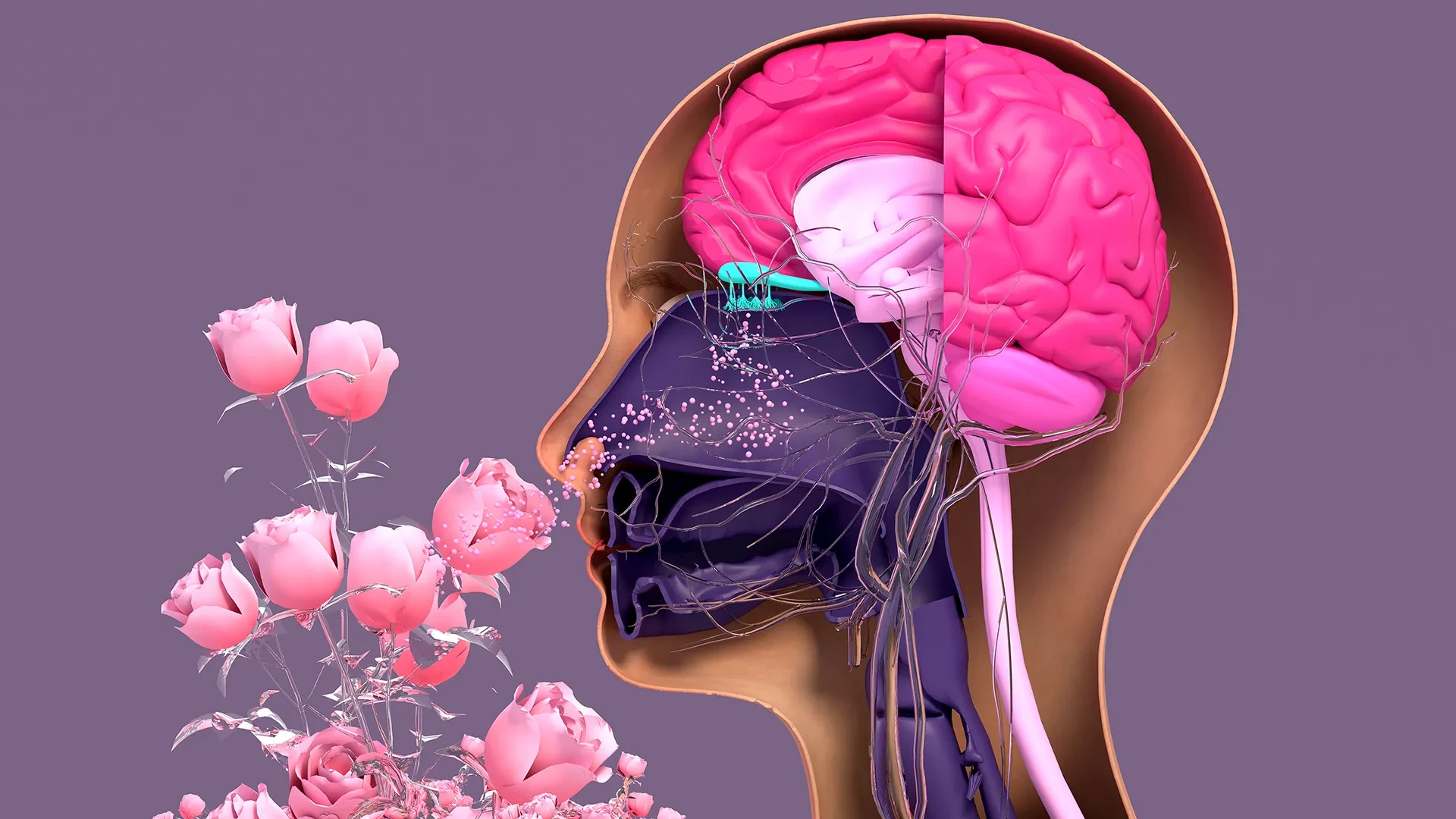
Researchers at the Tufts University School of Medicine and the Graduate School of Biomedical Sciences (GSBS) have unlocked a significant mystery regarding how the nose repairs itself. Utilizing a newly devised three-dimensional model to study the regeneration of nerve tissue, the team discovered that a specific type of stem cell, long assumed to be dormant, actually plays a pivotal role in maintaining the human sense of smell. This breakthrough offers a promising new avenue for understanding—and potentially reversing—the loss of smell caused by aging, viral infections, and chronic disease.
Unlike the central nervous system, where nerve damage is often permanent and catastrophic, the sensory neurons within the nasal cavity possess a remarkable, lifelong capacity for regeneration. Despite being exposed to the harsh, unpredictable external environment, these neurons are constantly replaced. However, this regenerative engine is not infallible. Significant stressors, such as severe viral infections like COVID-19, long-term exposure to airborne toxins, or the natural degradation that accompanies the aging process, can inhibit the function of these cells or prevent them from replicating altogether. The result is often a partial or complete loss of smell, a condition that can have profound impacts on an individual’s quality of life, nutritional health, and mental well-being.
To better understand the mechanisms behind this failure, the Tufts research team developed a novel, accessible 3D olfactory tissue mouse model, or organoid. By creating these miniature, functional representations of nasal tissue, the scientists have gained a clearer window into how neurons are continually formed and why that critical process begins to falter as a person grows older or becomes ill. Their findings, published recently in the journal Cell Reports Methods, map out a sophisticated dialogue between two distinct types of stem cells found in the nose: horizontal basal cells (HBCs) and globose basal cells (GBCs).
According to the researchers, these two cell types do not act in isolation; rather, they appear to be deeply interdependent, working in concert to foster the development of new smell-sensing nerve tissue. Brian Lin, a research assistant professor in the Department of Developmental, Molecular and Chemical Biology and senior author on the study, highlights the paradigm-shifting nature of these observations.
"Our research suggests that these two stem cells may be interdependent," Lin explains. "One type that we thought was largely dormant—HBCs—may actually play a crucial role in supporting the production of new neurons and the repair of damaged tissue."
By utilizing the 3D organoid model, the team successfully identified a specific subpopulation of HBCs, characterized by the production of the protein KRT5. These cells, previously sidelined by many researchers as relatively inactive, were found to be actively supporting the generation of new olfactory neurons. When the researchers selectively depleted these KRT5-marked cells from the organoid cultures, the formation of new neurons was significantly impaired, confirming that these cells are essential, active participants in the regenerative cycle rather than mere bystanders.
The implications of this study extend further into the aging process. The team expanded their research by observing cells derived from mice at various stages of life. Upon growing these cells within the 3D model, they noted a distinct decline in the regenerative capacity of cells taken from older mice. Lin suggests that this decline is likely tied to a diminishing population of GBCs as the organism ages. While this hypothesis requires further empirical testing, the researchers are optimistic that understanding this decline could eventually lead to interventions designed to "rejuvenate" these cell populations, potentially restoring olfactory function in aging populations.
An Accessible Tool for Scientific Discovery
The development of this 3D model was driven by a need for efficiency and accessibility. Lead author Juliana Gutschow Gameiro, a former Ph.D. student visiting GSBS from the State University of Londrina in Brazil, spearheaded the effort to create a model that could be replicated in laboratories with limited funding and specialized equipment.
The urgency of this work has only increased in recent years. The global COVID-19 pandemic brought the fragility of the sense of smell into the public consciousness, as millions of individuals reported persistent olfactory dysfunction after infection. Furthermore, the loss of smell is a well-documented, early clinical marker for neurodegenerative conditions such as Parkinson’s disease. As a result, the field of olfactory research has seen an influx of interest from investigators across a wide variety of disciplines, many of whom may lack the specialized expertise of dedicated stem cell biologists.
"We wanted to develop an easy-to-use model so that non-stem cell biologists and those working in labs with limited resources could use it to better understand how olfactory neurons regenerate and what happens that causes that process to diminish or fail completely," Lin says. By lowering the barrier to entry for studying these complex biological processes, the team hopes to accelerate the pace of discovery across the global scientific community.
Moving Toward Human Organoid Research
The transition from mouse models to human applications represents the ultimate goal of the Tufts team. They envision using these findings as a foundation for developing a human-derived organoid that could eventually serve as a platform for screening pharmacological treatments. Such a tool could provide a revolutionary way to test drugs specifically aimed at patients who suffer from chronic anosmia, or the total loss of smell, and other sensory-related conditions.
Organoids have already proven their value in clinical research, having been successfully developed for lungs, kidneys, and other vital organs. These structures allow for pre-clinical trial research that is significantly faster, less expensive, and potentially more predictive of human outcomes than traditional animal models or standard 2D cell cultures. However, the nose presents unique biological hurdles.
"It’s challenging to get pure olfactory tissue from humans," Lin notes. The standard collection method involves using a brush, similar to a COVID-19 testing swab, which is inserted deep into the nasal cavity under anesthesia to harvest cells. A primary complication in human subjects is that respiratory stem cells and olfactory stem cells are often collected together in this process, making them difficult to isolate for laboratory study. In the mouse model, these cells are more easily distinguished, but replicating that precision in human samples remains a significant technical barrier.
The research team is now focused on overcoming this challenge. Their next major objective is to develop a reliable, cost-effective technique to separate human olfactory stem cells from other nasal tissues and successfully encourage them to thrive in a laboratory environment. If successful, this would provide a vital, scalable platform for drug discovery. By bridging the gap between basic stem cell biology and clinical application, the researchers at Tufts are moving closer to a future where the loss of smell—whether from age, illness, or infection—is no longer a permanent condition, but a challenge that modern medicine can address. As the team continues to refine their methods, the prospect of targeted, restorative therapies for the olfactory system remains a primary focus of their ongoing investigations.