Welcome to today’s edition of the literary internet, where we explore the intersections of history, poetry, and the digital spaces that celebrate books and writing. In the daily rhythm of literary milestones and reflections, certain historical dates carry an enduring weight, bridging the personal lives of iconic authors with the public fascination that surrounds their work. Today’s spotlight falls on a momentous and poignant day in literary history—one that involves America’s quintessential poet and a pioneering English critic whose admiration for his verse blossomed into a profound, if ultimately unrequited, devotion.
THE BEST OF THE LITERARY INTERNET
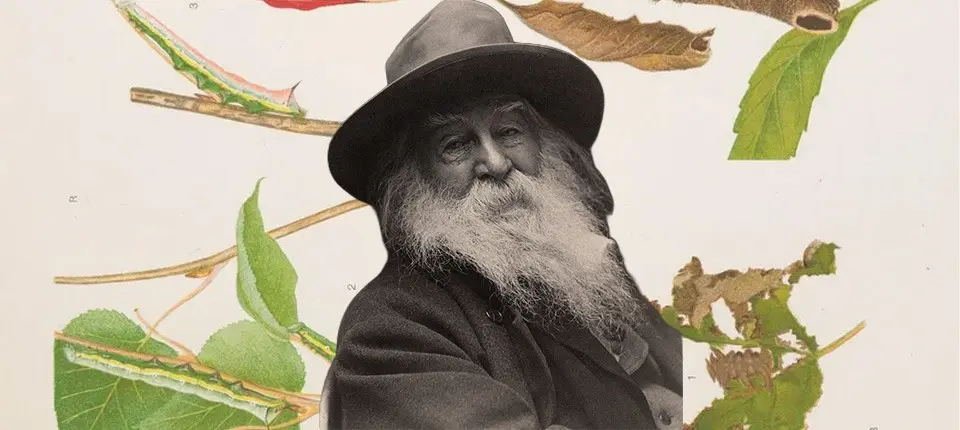
As readers, scholars, and writers navigate the digital landscape of contemporary literary culture, looking back offers a vital perspective on how literary legends were perceived in their own time. Today’s historical entry takes us back to November 3, 1871, marking a fascinating chapter in the biography of Walt Whitman. On this day, the celebrated author of Leaves of Grass formally declined a marriage proposal from Anne Gilchrist, an English writer and critic whose passionate embrace of Whitman’s poetry had already cemented her place in the history of transatlantic literary fandom.
To understand the weight of this historical moment, one must look at the unique cultural ecosystem of the late nineteenth century, where transatlantic mail routes served as lifelines for artistic and intellectual exchange. Anne Gilchrist, an accomplished writer in her own right and the widow of Alexander Gilchrist—the biographer of William Blake—first encountered Whitman’s poetry through the 1868 English edition edited by William Michael Rossetti. Unlike many Victorian readers who were scandalized by the raw sensuality, unconventional free verse, and democratic fervor of Leaves of Grass, Gilchrist experienced a profound spiritual and intellectual awakening upon reading the collection.
So moved was she by Whitman’s verse that she penned a famous essay titled "An Englishwoman’s Estimate of Walt Whitman," which was eventually published in America. In her writings and private correspondence, Gilchrist articulated a deep, transcendent admiration for the poet, seeing in his work a revolutionary celebration of the human body, the soul, and the democratic spirit. Her letters to Whitman grew increasingly affectionate, eventually culminating in her bold proposal to cross the Atlantic and join her life with his in America.
In an era characterized by rigid social conventions, Gilchrist’s forwardness was nothing short of revolutionary. She was an independent intellectual who understood the unconventional nature of her gesture, yet she was driven by a sincere conviction that her spiritual and artistic kinship with Whitman formed a valid foundation for union. However, Whitman, whose personal life and complex network of relationships have long been a subject of intense scholarly analysis, responded with characteristic caution and gentleness. While he deeply respected Gilchrist’s intellect and was profoundly moved by her fierce advocacy for his work, he gently declined the proposal, advising her against making such a monumental transatlantic journey for a relationship that could not be what she envisioned.
Despite the rejection, the story of Walt Whitman and Anne Gilchrist did not end in bitterness. Instead, their relationship evolved into a rich, lifelong intellectual friendship. Gilchrist did eventually travel to the United States a few years later, living in Philadelphia and Camden, New Jersey, where she became part of Whitman’s inner circle of friends and admirers. Her presence in America allowed her to experience firsthand the artistic community surrounding the poet, further cementing her legacy as one of his most perceptive and loyal critics.
As we traverse the digital literary landscape today, stories like this remind us of the powerful, sometimes transformative connections that art can forge between individuals across vast geographical and cultural divides. Whether through the pages of a nineteenth-century poetry collection or the modern hum of the literary internet, the dialogue between authors and their readers continues to evolve, shaped by the same fundamental human desire to be understood through art.