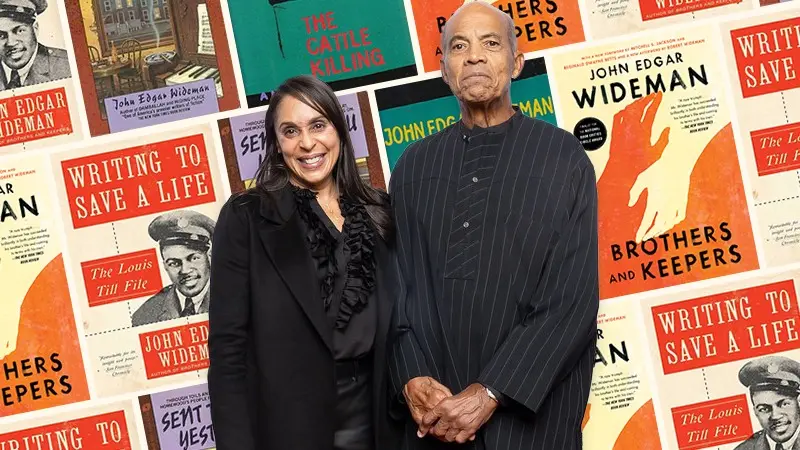
Legendary American author John Edgar Wideman was honored for nearly six decades of vital literary contributions on Monday, October 26, 2026, receiving the prestigious Lewis H. Lapham Award for Literary Excellence at the second annual Harper’s Magazine Awards Ceremony. Held at the historic Morgan Library & Museum in New York City, the evening brought together luminaries of the literary world to celebrate a career defined by moral clarity, formal innovation, and an unwavering interrogation of the American experience.
Among the evening’s most poignant moments was the tribute delivered by Pulitzer Prize-winning poet and author Natasha Trethewey. Providing an edited transcript of her remarks, Trethewey reflected not only on the vast scope and enduring impact of Wideman’s sprawling bibliography—spanning novels, short fiction, memoir, and nonfiction across more than twenty books—but also on his profound influence as a mentor and teacher during her formative years as a graduate student at the University of Massachusetts.
For nearly sixty years, Wideman has published essential, ground-shaking work that grapples directly with the legacies of America’s troubled and fraught past. His writing addresses collective history alongside individual trials, probing deeply into the intersections of race, culture, and politics. Throughout his career, he has investigated the ongoing quest for justice in a world that continually fluctuates between degrees of fairness and inequity, approaching these monumental themes with a distinct ferocity, independence of mind, searing vision, and uncompromising moral clarity.
Trethewey recalled that her first encounter with Wideman’s work came in 1992, just as she was preparing to enter the MFA program at the University of Massachusetts. She picked up Sent for You Yesterday, the third installment in his renowned Homewood Trilogy, the masterpiece that earned Wideman the first of his two prestigious PEN/Faulkner Awards. Even though Trethewey had firmly decided to pursue poetry rather than fiction, Wideman was the exact person she wanted to study with, drawn by the gravitational pull of his extraordinary prose and intellectual rigor.
Choosing to study under Wideman proved to be one of the best decisions of her life. His mentorship offered a tutorial far beyond the standard creative writing workshop, enriched by his unique way of moving through the world with grace, dignity, wit, and a piercing intellect. These qualities remained steadfast even when he faced severe personal hardship and suffering in his own life.
Trethewey shared a deeply personal memory from early in her graduate career, illustrating the profound impact of Wideman’s mentorship. Sitting in his office one afternoon, she felt utterly distraught after a prominent poetry professor dismissed her creative work—and her very reasons for writing. That professor had told her to unburden herself of being Black, to unburden herself of the death of her mother, and to simply pour her heart out into traditional lyrical poems.
Deeply shaken by the invalidation of her lived experience, Trethewey sought out Wideman. She recalled how he listened intently, his gaze turning toward the window where it seemed he could see far beyond the physical room and the immediate moment, looking forward and backward across time and space. With characteristic simplicity and profound weight, he offered a directive that completely altered her trajectory: "You have to write what you have to write."
Simple as it was, that single pronouncement served as a pivotal turning point in Trethewey’s life as an aspiring writer. It carried the emotional and artistic weight of being given permission by the highest possible authority—a writer whose own courageous personal reckoning in his groundbreaking 1984 memoir, Brothers and Keepers, she already knew intimately. Years before Trethewey would have to grapple with the painful reality of her own brother’s incarceration and the divergent paths their lives took, she turned to Wideman’s memoir, and would return to it again and again for its enduring lessons.
Brothers and Keepers demonstrated a mastery of form that accomplished a stunning melding of Wideman’s voice with that of his incarcerated brother, Robby. For Trethewey, that fusion was a remarkable act of empathy and an exemplary model of the ethical approach required when writing about the lives of other people—particularly those who have been stripped of a platform from which to tell their own stories.
Acknowledging the well-documented psychological and artistic damage that can frequently be inflicted within competitive academic graduate programs, Trethewey expressed her belief that Wideman understood precisely what his steady encouragement could mean for a young writer, and especially for a young Black writer. She drew a parallel to the title of his deeply researched, imaginative meditation on the intertwined historical tragedies of Emmett Till and his father, Lewis Till, Writing to Save a Life. Wideman intuitively understood her profound need—in order to survive and to write—to save a life: not only her own life in the immediate aftermath of staggering personal tragedy and trauma, but also the lives of the people she loved, her community, from being erased, forgotten, diminished, and pushed to the cultural margins. For Trethewey, this realization remains the greatest lesson she received as a young poet, a priceless gift from a literary master who has sustained a fierce, uncompromising reckoning across his entire career.
Trethewey also recounted the indelible impression left upon her by the release of Wideman’s historical novel The Cattle Killing, from which she was fortunate enough to hear him read during her time at UMass. Sitting on the floor of a packed Memorial Hall, absorbing the intensity of his language and his nearly hypnotic prose, she arrived at a deeper realization regarding the writer’s craft. She understood the critical importance of contending with personal history alongside and through a rigorous engagement with public history. She recognized that the true role of a writer is to relentlessly seek the truth, to confront difficult, uncomfortable knowledge in the service of enlarging the world’s understanding, and to view artistic expression as a vital means of redress—which is, in its highest form, a form of justice.
As the author of more than twenty books encompassing novels, short fiction, memoir, and nonfiction, John Edgar Wideman has long been hailed as a master of language, a generational talent, and one of the premier fiction writers in American history. Within the esteemed, competitive world of American letters, he stands not merely among our celebrated literary luminaries, but as a foundational figure whose body of work has undeniably shaped, and continues to define, what the American literary canon at its absolute best is and should be.